
Bullet trains may first ply reworked Dhaka-Ctg route
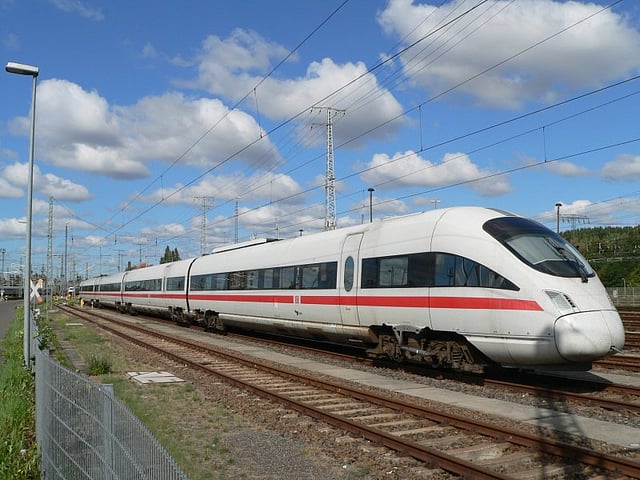
The government is set on introducing high-speed rail in the country, with the commercially vital Dhaka-Chittagong route earmarked for installation of the advanced tracks to support high-speed railway travel.
Travellers between Bangladesh’s two most economically vibrant centres, capital Dhaka and port city Chittagong, may expect a reduction of nearly two hours in their travel time (one-way), on a route slightly tweaked via Comilla-Laksam that will be almost 90 kilometres shorter.
Talking to UNB, a Railways Ministry official said that the Dhaka-Chittagong route is the most important corridor under Bangladesh Railways. Its total length of 320.8kms is inflated by following a path that goes Dhaka-Tongi-Bhairab-Akhaura-Brahmanbaria-Comilla-Feni-Chittagong, or the exact opposite for the return leg.
The Railways Ministry official also said that prime minister Sheikh Hasina during her visit to the Ministry of Railways on 23 October, 2014, asked the Ministry to take up the initiative to introduce high speed train, also popularly known as ‘bullet trains’, on this important railway route.
Under the circumstances, the Ministry of Railways prepared a draft for a feasibility study to this end titled ‘Conducting feasibility study and detailed design for constructing speedy railway track on Dhaka-Chittagong via Comilla/Laksam route’.
The cost of the feasibility study alone, to be conducted by December 2018, has been estimated at Tk 109.57 crore.
Secretary to the Railways Ministry Feroz Salah Uddin said the feasibility study would weigh all pros and cons from the introduction of high-speed rail travel on this important route, the related reduction in the length of the route, and how much of a boost would result in terms of economic activity.
He said that after the feasibility study, it would be possible to determine the estimated cost for implementing the technology advanced . “With the introduction of high-speed train, the travel time between Dhaka and Chittagong would be reduced to only two-and-a-half hours.”
Feroz was also very optimistic about getting the nod for the project from the ECNEC soon.
A Planning Commission official said the new railway line would not only help cut the journey time for the passengers but also ease the movement of goods meant for trade. Meanwhile, the Bangladesh Railway has upgraded most of the 320-km Dhaka-Chittagong railway line with double-gauging track with financial support of the Asian Development Bank.
According to the sources, the project will need 3000 acres of land, while 100 megawatts of uninterrupted electricity would be required to operate 10 trains simultaneously at speeds of 200 kilometres per hour.
There would be arrangements for both transporting passengers and goods on the proposed route, but carrying passengers would get priority.
With the introduction of express railway, Railways Ministry officials said an extensive communication would be established with the Chittagong Seaport side by side with the scope created for inter-divisional communication.
In future, multi-directional rail links would be set up instead of the existing capital-centric unidirectional rail system. The travel cost will be lower in the high speed train, in comparison with air and bus routes.