
155 CC cameras in Dhaka closed for 4 years
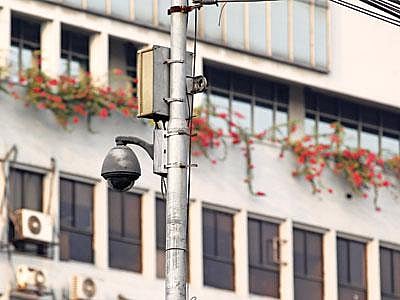
As many as 155 closed circuit (CC) cameras, set up at 59 key points of the capital, have been remaining closed for the past four years.
There are two CC cameras at the SAARC fountain intersection, where journalist Zaglul Ahmed Chowdhury was killed in a road accident on 29 November.
It was assumed that the CC cameras would help identify the bus that hit him. But investigation revealed that not only those two but also all the CC cameras in the city have long been remaining closed.
Several officers of Dhaka Metropolitan Police (DMP) have told Prothom Alo that the cameras were used unofficially to keep watch to a certain extent during the cricket World Cup, but these have been closed ever since. The contractors have even handed these over to the police telecom department. And 70% of the project cost has already been paid to the contractors.
It has been learnt from the project documents and from the officials of the department concerned that the police headquarters took up this Tk 270 million project seven years ago to keep the entire city under the surveillance of CC cameras and to direct the traffic through digital boards. After the project tenure was extended three times, the final project cost stood at Tk 601 million. Work on the project ended four years ago, but the police still have not taken over the project.
A senior police official, on condition of anonymity, told Prothom Alo they have apprehensions about this project. They are not eager to take over the project in fear of future legal repercussions.
Nausher Ali, deputy inspector general (DIG) of the police telecom, told Prothom Alo, the police headquarters will decide whether they will take over the project or not.
Under the present system, the police control room exchanges information only through wireless. During its last term (1998), the Awami League government undertook the 'Dhaka Metropolitan Control Room Modernisation Project'. The objective of the project was to set up CC cameras in various key points of the city and control crime and the traffic system centrally; to update commuters on the traffic situation through display boards; to completely digitalise the police radio communications system; and to improve the walkie-talkie management. A Brunei-based firm, Folec Communications, got the project deal.
Several DMP officials have told Prothom Alo, initially the project cost was Tk 270 million but this later went up to Tk 410 million. Then another Tk 200 million was spent on setting up a control room. The project cost finally stood at Tk 614.1 million.
The costly equipment is being wasted, lying unused year after year as the project hasn't been taken over. The cameras and digital boards lie untended on the roads. The warranty for after-sales service is also expiring. If this continues, the entire Tk 610 million will go to waste.
Kazi Zakaria, local representative of the contractors Folec Communications, told Prothom Alo, Folec has written to the home ministry stating that the project had ended in 2010. The after-sales service warranty has also expired. They do not want to take responsibility for the project anymore. They want to close down office and leave.
Home ministry sources have said they issued a letter to the police headquarters on 29 October, asking why the project had been left lying unsettled for so long. The police have not responded.
Gazi Mozammel Huq, assistant inspector general (AIG development), told Prothom Alo, "I myself am confused as to why the project isn't being taken over since everything is in order." He said, "According to the committee related to the handing over, there is no problem in taking the project over."
Other than 155 CC cameras, 31 traffic display boards have been set up on important roads under this project. A control room (command, control, communications) has been set up on Abdul Ghani Road. Also under this project, the police have been given 23 advanced TETRA-system terrestrial trunked radio walkie-talkies as well as automated vehicle identification systems in 30 patrol cars. The police used this technology for about one and a half years on trial basis and then all of this was closed down.
The police had formed a 12-member committee to see if the work was carried out in accordance to the project contract. The committee report said that the manner in which the project design had been given was incorrect. Initially it has been thought that the entire system would be wireless. The cameras would be radio operated. However, at the end of the project it was seen that the radio waves were being blocked by tall buildings and so many of the cameras were disconnected from the control room and the wireless was not working properly.
At the beginning of the year it was decided to use wire for communications if the project was to start. Accordingly, the police signed an agreement with BTRC for optical fibre connection. BTRC was paid Tk 50 million to connect all cameras and display boards with the optical fibre. BTRC completed its optical fibre work in March this year. Another committee was formed to monitor if everything was functioning properly. The committee submitted its report on 18 March, saying that everything was operative. Then letters began to be issued for taking over the project.