
Hello Kitty at 40
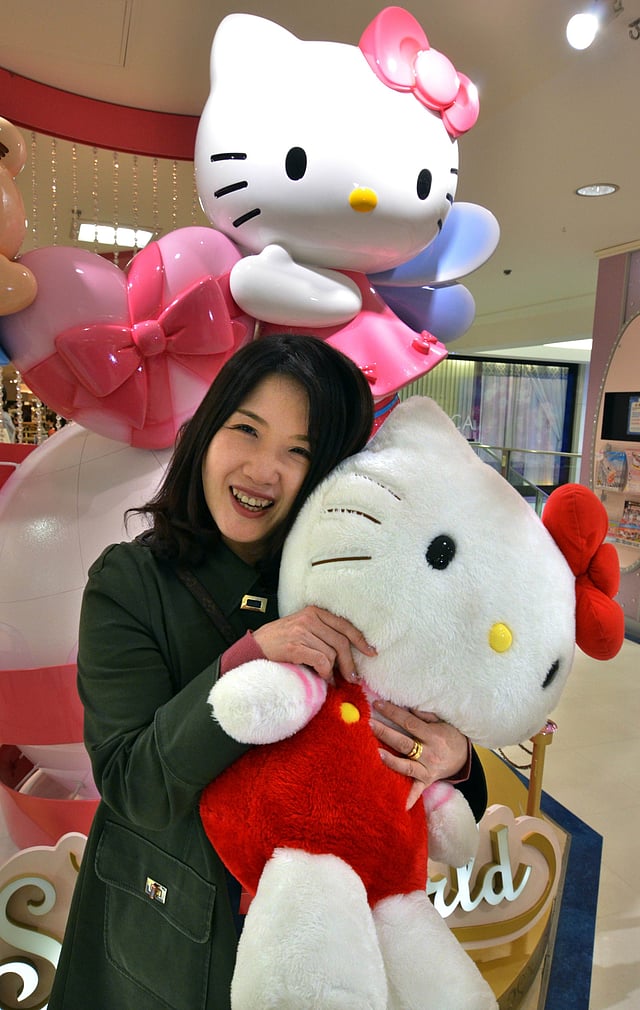
As a Japanese schoolgirl in the 1970s, Kazumi Kaminaga had never seen something as cute as Hello Kitty when she first laid eyes on the moon-faced, mouthless character in a shop.
"There were hardly any 'kawaii' products when I was in elementary school," said the now 51-year-old mother, using the Japanese word for cute.
"It was such a shock...She was really 'kawaii'."
With Kitty set to celebrate her 40th birthday on Saturday, Kaminaga has become a life-long collector of a brand phenomenon that appears on more than 50,000 products -- including a dress made for pop diva Lady Gaga—and spawned an estimated multi-billion dollar industry.
The character is licensed to appear on everything from sundries and clothing to electronics and aircraft—sex toys are a myth—in 130 countries and territories.
First released in 1974 and appearing on a coin purse the following year, Kitty is far from just kids stuff these days. Its creator Sanrio says Kittymania is actually driven by adults like Kaminaga, who spoke to AFP as she shopped for a birthday card for her boss—a man.
"There was a trend born in Japan and other Asian countries in the 1990s that it wasn't childish for adults to have products with these characters' images," said Sanrio spokesman Kazuo Tohmatsu.
"It was a major change in values and it also happened in America and Europe in the 2000s."
Kitty's enduring legacy is her appeal to all ages, but particularly grown ups, despite her child-like pink bow and a registered height of five apples.
"Hello Kitty gives adults some licence to play, to express a part of themselves that other parts of their lives may not allow," Christine Yano, a US-based anthropologist specialising in the character told AFP in an e-mail.
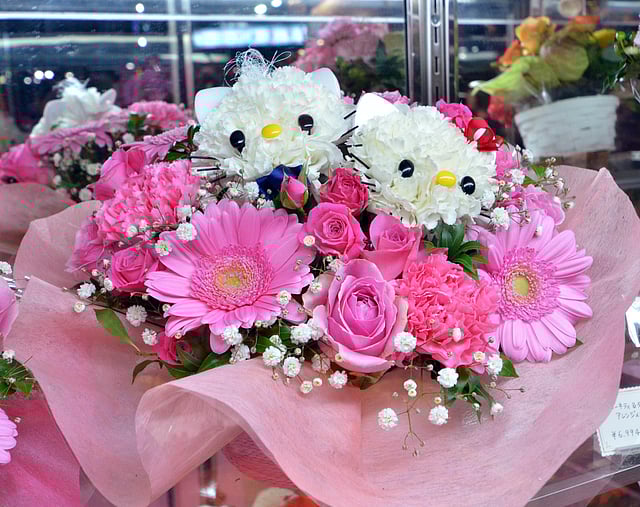
Western attitudes towards cute culture also changed partly because Japanese manga and anime's popularity made things from Japan "more acceptable and even desirable," said Yano, author of "Pink Globalization: Hello Kitty's Trek Across the Pacific."
Over the years, Kitty has shaken up her look with tinges of punk, while linking with fashionable brands has helped keep up the appeal with some "edginess", Yano added.
Kitty was also a product of her time, appearing three decades after Japan's bitter defeat in World War II when the previously devastated country was firmly back on its feet and children had pocket money to spend.
Kitty got a boyfriend, Dear Daniel, when Japanese teen celebrities started openly dating, and a Persian cat named Charmmy Kitty when pets became all the rage among Japanese women.