
A tale of two hospitals
Why are all mothers not Mother Teresa?
This question persisted in my mind when the hapless Parveen Begum was thrown out of a hospital in Azimpur and gave birth out in the open, on the streets. Her infant died.
The baby had emerged into the city from the undernourished uterus of its poverty-stricken mother, crying out for its rights. But we didn’t understand its cries. The doctors, the nurses, not anyone of us understood. When one life enters the world, we are bound to make space for the new one. But we did not. None of us did. The rhythm of life ended no sooner than it began.
Parveen had been turned away from two hospitals in the capital city, then turned up at the third—Matrisadan O Shishushasthya Prashikhhyan Kendra in Azimpur. A doctor entered the labour room and told her she needed a caesarean and it would cost 1500 taka. Parveen was penniless and so was pushed out into the streets. There she lay under the sky and the little guest entered this world, crying out for shelter, for security. But who would take on a guest whose mother couldn’t even afford a paltry 1500 taka? We shut our doors in the face of the new arrival. The little one couldn’t bear the ignominy.
The doctors, nurses and guards watched from the confines of the hospital as Parveen writhed in the throes of labour and gave birth. No one came forward. In a little while, the new born lay there, lifeless. This reproachful farewell of the little baby, chilled blue in neglect, could not even put a dent in the armour of our dignity.
And why should it? Not all patients are the same in Dhaka city. The humanitarian element in our hospitals is still under construction, at least three metres under. But there are certain physicians who are extremely humanitarian. They keep patients for months on end in the hospital cabins without any apparent illness or ailment. They may push the likes of Parveen out onto the streets, but they keep these patients for indefinite periods of time for unavoidable reasons.
The symptoms of these patients are invisible. They suffer from DNS or Doctrine of Necessity Syndrome. It mostly afflicts the rich and powerful prison convicts.
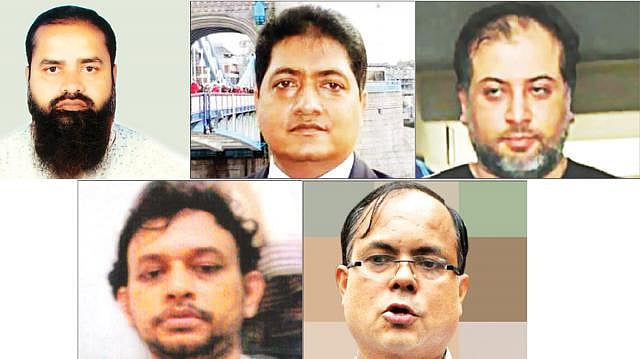
Yesterday Prothom Alo published a report on such prisoners who are back in hospital on pretext of illness. The report gave details of their ailments. The report revealed that these DNS patients included convicted murderers, persons convicted of misappropriating billions of taka, persons caught with over 100,000 yaba tablets and more.
The most talked-about DNS patient (detractors accuse him of pretending to be a patient) is Amanur Rahman Khan, member of parliament from Tangail -3 (Ghatail). This prisoner, accused of murder, was admitted to a cabin in Dhaka Medical College Hospital on 25 September for ‘better medical treatment’. He had already spent three months in hospital. The journalists have nothing better to do and so reported on this. The report sent him back to jail on 9 May. He faces 47 cases includes five murder charges.
Another patient crucially afflicted by DNS is top terror Tofail Ahmed Joseph, serving a life sentence. I’ve heard of him since my college days. He was in hospital, was sent back to jail for an interval and is back in the hospital bed again. This time, the physicians say, his feet have swollen up. Before this he was in hospital for a 20-month stretch, without any serious illness. On 8 May he was taken back to prison. Then after four months on 24 September he was admitted to Bangabandhu Sheikh Mujib Medical University (BSMMU) Hospital. He had been condemned to death in 1999 on charges of murder. The Appellate Division later curbed the death sentence and sentenced him to life imprisonment.
Destiny’s managing director Rafiqul Ameen is probably more famous than Tata or Birla. The manner in which he managed to pocket Tk 40 billion of public money surely warrants study by economic experts. He was been in hospital for the last two months, suffering from DNS. He’s spent most of his time at the BIRDEM hospital ever since his arrest.
There is no provision to accommodate prisoners at BIRDEM, but the convicted yaba dealer Amin Huda has been there for months. He was taken back to jail on 7 May after 18 months at BIRDEM. A month and a half after that, he was back at BIRDEM in different rooms at different times. He has been convicted to 79 years imprisonment in two yaba-related cases.
Sunamganj district Jubo League convenor and president of the district’s industries and trade association Khairul Huda alias Chapal was arrested on 15 August for corruption in the construction of the hoar embankment in Sunamganj. He developed ‘chest pains’ after just one week at Dhaka Central Jail and was admitted to BSMMU as a patient. He has been there since then.
The physician of Dhaka Central Jail Biplob Kanti Biswas is the one who recommends transfer of prison patients to hospital. He told Prothom Alo that Joseph had been in jail for long and that is why he was sent to hospital. Amin Huda and Rafiqul Amin are a bit unwell. Khairul Huda had to be sent to hospital due to certain lobbying in this regard.
Dhaka’s senior jail super Jahangir Kabir told Prothom Alo, “Prisoners will have to be sent to hospital if they need the treatment.”
So that means that there are two types of patients in Bangladesh. One type has no money, no dignity, no respect, no honour, nothing. They are the common patients.
The other types have everything. They are VIP patients afflicted with DNS. They are limited in number. VIP Prisoner Hospital Limited is for them. There are two types of hospitals and physicians for these two types of patients.
Such ambiguity has existed from times immemorial. But the question inevitably arises, why will the Parveens, the Seemas and the Yasmins of our society simply be blown away in the wind? Why will they be so easily torn apart by sharp claws, like a delicate scarf or the thin layer of cream on milk’s surface? Why will all mothers not be Mother Teresa? Why will all fathers not be Father Regan?
*Sarfuddin Ahmed is a poet and journalist. This piece, originally published in Prothom Alo Bangla Online, has been rewritten in English by Ayesha Kabir