Relatives of ‘Bangladeshi IS family’ worried
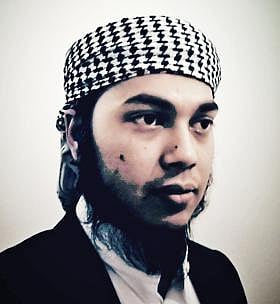
Bangladesh-born ISIS computer hacker Saiful Haque Sujan became involved in the extremist ideology of the Islamic State in Iraq and Levant (ISIL) once he migrated to the United Kingdom in 2003.
Saiful persuaded his family members—his wife, children, and brothers—to join the ISIL, aka ISIS or IS.
Saiful was killed by a US airstrike near Raqqa, the terror group’s capital in Syria. His parents are now in jail Bangladesh.
His elder brother Ataul Haque is now in hiding in Spain. His relatives in Bangladesh are worried over Saiful’s wife, Saima Akhtar Mukta, and three children who, they think, are now in Syria.
Saiful’s mother-in-law Anjuman Ara Begum told the Prothom Alo that she had spoken to her daughter last two months back. Her daughter Saima herself had called her up.
“We knew that they [Saiful’s family] returned to London after their Bangladesh visit in 2014. Now we see in media reports that they did not go back to London but went elsewhere and my son-in-law has died,” said Anjum Ara Begum.
She said she has no information about the whereabouts of her daughter and grandsons. “We can’t even sleep at night.”
According to a report of the Daily Mail, Saima is now staying in Raqqa. British detectives think that Saiful family went to Turkey from Dhaka to go to Syria.
Saiful’s family members said Saiful and his elder brother Ataul got married to twin sisters. Ataul’s wife Shaila Aktar Hira died at the time of giving birth to a child about five years back.
Since then, Saima was raising Shaila’s son Amanul Haque. Saima’s first son Noman Haque was born in UK in 2011 and her younger son is now at one.
Family members said Saiful was so humble and brilliant. His transformation to become an ISIS activist has stunned his family members.
They said they saw a change in Saiful’s lifestyle since 2013. Saiful uploaded his bearded pictures clad in long garments on Facebook in 2013.
He also started posting religious status at that time. He posted his last Facebook status on 8 November, about month before his death.
Saiful’s close relatives said they think that Saiful had inspired his family members to join the IS.
A few days before the death of Saiful in US airstrike in Syria, Bangladesh detectives arrested his father Abul Hasnat, his 15-year brother Hasanul Haque alias Galib Mahmud, his brother-in-law Tajul Islam Shakil and two others on charge of their possible links to militancy.
Dhaka Metropolitan Police’s joint commissioner (Detective Branch) Monirul Islam, however, doubted whether Saiful who was killed in Syria is at all a Bangladeshi. “We are not sure yet whether that Saiful is a Bangladeshi.”
Saiful’s brother-in-law Shakil, who was arrested in Dhaka, stayed in UK from 2009 to 2015.
Shakil’s mother Anjuman Ara said that her son came back home last year after completing aeronautical engineering and a diploma course.
When Ataul went to Spain for his son’s treatment, he made Shakil in-charge of the Dhaka-based iBacs.
According to Anjuman Ara, Shakil is not a militant.
According to close relatives, Saiful was born in 1984 at Pakurtia village of Tungipara in Gopalganj.
Saiful passed HSC exam in 2003 from a private college of Dhaka.
In the same year, Saiful came to Britain as a student in 2003 and settled in Cardiff with his wife Saima Akter.
In 2005 when Saiful was a student set up an IT firm called iBacs.
A report published on UK-based daily The Telegraph says Saiful did a wonderful job as a businessman.
According family sources, Saiful’s elder brother Ataul did not continue his education in a dental college in UK. Rather, he engaged himself in Saiful’s business and opened its Dhaka outlet later.
Saiful called his step-brother Ehsanul to UK, too.
Ehsanul said he had been in UK for around six months to have IT education in his brother’s organisation. He, later, came back home and got enrolled in class VII.
Saiful’s third brother Galib, who was a brilliant student and received two scholarships in school, failed recently in SSC exam.
After his mother’s death, Galib was brought up by one of her aunts in Khulna.
His cousin said Galib turned a boy with extremist ideologies by the company of his father and brothers when he came to their Dhaka residence.
Sidney Jones, director of the Jakarta-based Institute of Policy Analysis and Conflict, said in one of his analyses that IS not just draws young people but influences their families to follow its ideologies.
Bangladesh Institute of Peace and Security Studies president ANM Moniruzzaman, a retired major general, said women in various countries are getting motivated by extremist ideologies and through this a platform is emerging for families’ engagement in terror activities.
This trend has potential risk of spreading in Bangladesh as well.