Special interview
Taliban are waging a war on women in Afghanistan: Zahra Nader
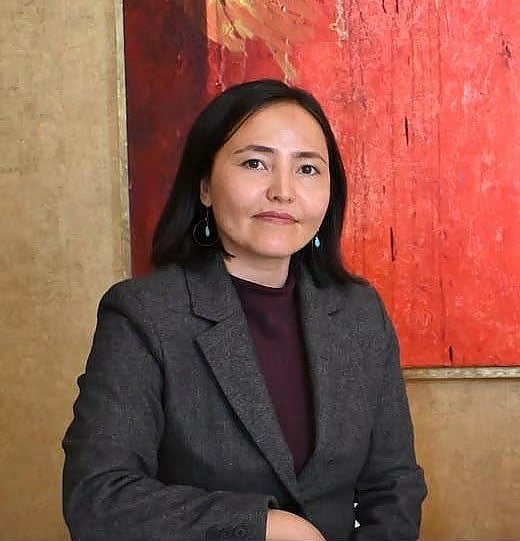
Zahra Nader is an Afghan journalist who once worked for The New York Times in Afghanistan. Now living in exile in Canada, she runs Zan Times, an online news portal (zan means "woman" in Dari, one of Afghanistan’s official languages). In an interview with Monzurul Islam for Prothom Alo, Nader spoke about what drew her to journalism, what life is like for Afghan women under Taliban rule, and where she still finds hope. The interview was taken on the sidelines of an event marking the 30th anniversary of the Konrad Adenauer Stiftung (KAS) Media Programme Asia in Chiang Mai, Thailand.
Before we talk about Afghanistan today, could you tell me a little about your childhood? What do you remember about going to school for the first time after your family returned from Iran?
Zahra Nader: My family fled to Iran when the Taliban first took over Afghanistan. I was six. There was a lot of racism against Afghan refugees in Iran. What hurt me most was that I wasn’t allowed to go to school. That left deep scars. Even after all these years, I haven’t forgotten what I went through.
For a long time, my biggest dream was simply to go to school. That’s why what’s happening in Afghanistan today is so personal to me. I know what it means to be denied the right to an education.
My family returned to Afghanistan around 2003, I think, and settled in Kabul. That was when I went to school for the first time. It was about an hour from home and didn’t have a proper building. Most of the classrooms were in tents donated by UNICEF. But I was happy. I could finally go to school, dream of becoming somebody and hope that one day I might serve my country.
What drew you to journalism? Was there a story you covered in Afghanistan that made you feel this was the work you wanted to do?
Zahra Nader: As a child, I wanted to be a teacher. Journalism wasn’t on my list. I came to it by accident. One day I walked into the office of a news weekly in Kabul. I was writing poetry at the time. They published one of my poems and offered me an internship, which I gladly accepted.
I stayed because, as a woman from a marginalised community in Afghanistan, I found some power in journalism. People like me weren’t usually in a position to ask questions, talk about politics or hold people in power to account. Journalism gave me that opportunity.
I remember writing for my university newspaper about the lack of electricity in my neighbourhood. The minister had promised that all of Kabul would have electricity within 40 days. Years later, my neighbourhood still had none. So I asked: Why don’t we have electricity? Why hasn’t it reached our community?
That story helped me see what I could do as a journalist. I could bring problems that were often invisible to the wider public into the conversation. And once people were talking about them, there was at least a chance that something might change.
All our journalists inside Afghanistan use pen names. None of them publishes under her real name. It’s too dangerous. We also withhold our sources’ real names and try to leave out details that could identify either a source or a reporter.
What led you to leave Afghanistan for Canada, and how did the move change your work as a journalist?
Zahra Nader: I was working for The New York Times when I left Afghanistan in 2017. By then, the security situation was very tense. Almost every day on my way to work, I thought a bomb might go off and we could become collateral damage in the war. My son was four. I wanted him to grow up with the rights and opportunities I hadn’t had as a refugee child in Iran.
In Canada, I found it very difficult, if not impossible, to continue working as a journalist. As an Afghan woman who had come to Canada, I didn’t feel encouraged to pursue journalism. Some people suggested I get a job at a coffee shop and have a second child. That was the future they saw for me. It wasn’t the one I wanted.
I went to university instead. I did a master’s in communication and culture and started a PhD in women’s and gender studies. I was doing my PhD in Canada when the Taliban returned to power.
During a discussion at the event, you drew a parallel between the US-led "war on terror" and what the Taliban are doing in Afghanistan. How would you describe what the Taliban are doing to Afghan women, and why do you use those words?
Zahra Nader: When the Taliban took over, women were their first target. In the first week, women were told to stay home and not come to work. Within the first month, girls were told they couldn’t go to school. Then women were shut out of universities. They lost the right to travel on their own and to choose what to wear. The Taliban are waging a war on women in Afghanistan.
I call it a war because the aim is to remove women from society altogether. They are trying to build a dystopia in which only one gender exists in public life: men. That doesn’t mean life is good for men in Afghanistan. But if you look at what the Taliban have done over the past five years, you can see how central the removal of women from public life is to what they’re trying to achieve.
Women did take to the streets at first. The Taliban suppressed the protests and imprisoned women. Some women were killed because of their activism. It’s much harder for women to protest openly now. But I see resistance happening quietly. A woman turns her basement, living room or kitchen into a classroom for six or seven girls from her neighbourhood. I see that as preparation for a life beyond the Taliban.
Can women still work as journalists inside Afghanistan? If a young woman wants to report a story today, what barriers would she face?
Zahra Nader: There’s no decree that explicitly says women are banned from journalism. But the Taliban’s vice and virtue law completely bans women’s voices from being heard and their faces from being seen in public. Women are also required to be accompanied by a male guardian when they go out. All of that affects their ability to report.
In cities like Kabul, there are still some outlets where you might hear a woman narrating a report without showing her face. Some women also work at radio stations in the provinces, sometimes in offices where men and women are kept apart. But they have very little room to report independently, especially on issues such as women’s rights, school closures or women’s health.
Some women work without pay in the hope of getting a letter that says they’ve worked at a station. Their families have to cover the cost of getting them to and from work. They can also be turned away from press conferences. When my colleagues or I call Taliban officials for comment, some refuse to speak to us because they consider it sinful to speak to women. Others simply won’t talk to journalists.
In most parts of Afghanistan, women no longer work openly in the media. But some are still reporting in secret, including for newsrooms in exile like ours.
What made you start Zan Times? What did you want the newsroom to do?
Zahra Nader: I started Zan Times in 2022. I felt a huge sense of responsibility. I also felt guilty. I was safe in Canada, where my rights and freedoms were protected, while millions of Afghan women and girls were losing theirs.
I grew up in Kabul. I went to school and university there. The freedoms I had, however limited, allowed me to get an education, work in public and become a journalist. Now those same opportunities were being denied to millions of women and girls. I felt I had to do something. And I remembered that I was a journalist.
I took leave from my PhD and used my savings to build the newsroom. I thought: If the Taliban are shutting women inside their own homes, can we give them a chance to work from home? Can we train them to become journalists and give them a place to publish their reporting?
That’s why Zan Times exists. We wanted to create opportunities for women journalists and resist the Taliban’s attempt to erase women from Afghan public life.
I hope people in Bangladesh will stand in solidarity with Afghan women. If you feel there’s nothing you can do for Afghanistan, at least learn from what happened to us. Take it as a warning so that it doesn’t happen in your country. And if you can act, one way to show solidarity is to ask your government not to legitimise the Taliban or treat relations with them as normal.
You mentioned that Zan Times received hundreds of applications for just 12 fellowship places. How did that fellowship come about, and what did the response mean to you?
Zahra Nader: In 2024 and 2025, we trained about 70 women from across Afghanistan. We could cover their internet costs, but we couldn’t pay them a stipend. We realised that wasn’t sustainable. How can I expect someone to learn on an empty stomach when she’s thinking about where her next meal will come from?
So we set up a 10-month fellowship for 12 women. We wanted to offer online training and mentoring, as well as a monthly stipend so they could support themselves and their families while learning and working with us.
Applications opened on 19 January 2026 and closed on 5 February. We received 860 applications for 12 places. We were overwhelmed. What inspired us was how many women were still willing to take the risk of becoming journalists and reporting on what was happening in their communities. They still had hope. They wanted to do something.
Your reporters inside Afghanistan use pen names. How do you decide whether a story can be published safely?
Zahra Nader: All our journalists inside Afghanistan use pen names. None of them publishes under her real name. It’s too dangerous. We also withhold our sources’ real names and try to leave out details that could identify either a source or a reporter.
But sometimes leaving out names isn’t enough. If we think publishing a story could put a colleague or a source at risk, we often decide not to run it.
When you hear from young Afghan women who still want to study, work or tell their own stories, what do they say about the future they want? What gives you hope?
Zahra Nader: A colleague in Afghanistan once sent me an interview with a girl who was about 15 or 16. I cried listening to it. There was so much pain in her voice. Even now, when I think of her, I feel sad.
She said the world was moving forward, developing new technology and going to the moon, while Afghan girls couldn’t even walk down the street on their own. They were denied that freedom simply because they were girls. She couldn’t go to school and was weaving carpets. Without an education, she said, she couldn’t see a future for herself. But she wanted people to listen to Afghan girls and make sure this wouldn’t be their future.
Women did take to the streets at first. The Taliban suppressed the protests and imprisoned women. Some women were killed because of their activism. It’s much harder for women to protest openly now. But I see resistance happening quietly. A woman turns her basement, living room or kitchen into a classroom for six or seven girls from her neighbourhood. I see that as preparation for a life beyond the Taliban.
I see hope in the journalists who work with me, too. They know their lives could be at risk if they’re caught reporting for Zan Times. They still choose to do it.
I hope people in Bangladesh will stand in solidarity with Afghan women. If you feel there’s nothing you can do for Afghanistan, at least learn from what happened to us. Take it as a warning so that it doesn’t happen in your country. And if you can act, one way to show solidarity is to ask your government not to legitimise the Taliban or treat relations with them as normal.