Opinion
Economy and reforms: LDC graduation window extended, challenges remain
On 29 October 2026, during the 81st Session of the United Nations General Assembly UNGA), a decision was adopted to grant Bangladesh an additional three years to prepare for its graduation from the Least Developed Country (LDC) category. Consequently, Bangladesh will now potentially graduate from the LDC group on 24 November 2029 instead of 24 November 2026.
This decision accords Bangladesh vital extra time to prepare. It also creates an opportunity to retain international support measures and trade preferences accorded to LDCs for a longer period. However, additional time alone will not eliminate the structural vulnerabilities of the economy. For that, concrete actions and tough decisions are imperative. Bangladesh must leverage this opportunity to execute significant and effective economic reforms.
The UN Committee for Development Policy (CDP) reviews the progress of LDCs every three years based on three criteria: Per Capita Gross National Income (GNI), the Human Assets Index (HAI), and the Economic and Environmental Vulnerability Index (EVI). A country is considered for graduation if it meets the requisite thresholds in two consecutive triennial reviews. Bangladesh met these criteria for the first time in 2018 and again in 2021, prompting the CDP to recommend its graduation from the LDC category.
In view of the severe damage inflicted on the economy and development trajectory by the Covid-19 pandemic, the UN exceptionally granted Bangladesh, Laos, and Nepal a five-year preparatory period. As per the UN General Assembly resolution of 24 November 2021, Bangladesh’s graduation date was initially fixed for 24 November 2026. Under the latest decision, Bangladesh and Nepal have been granted a further three-year extension.
This additional timeframe offers Bangladesh a strategic window to address readiness gaps and implement plans for mitigating post-graduation challenges. During the preparatory phase, certain international support measures and trade benefits available to LDCs may continue under existing rules. However, uniform privileges will not apply across all markets, nor will the duration of these benefits be identical. Therefore, Bangladesh must immediately initiate bilateral engagements with its major trading partners. In particular, it must seek clarity regarding post-graduation tariff rates, rules of origin, and market access conditions.
The burden of enhancing competitiveness cannot rest on exporters alone. If the costs of power, energy, transport, logistics, customs clearance, and financing remain prohibitive, businesses cannot reduce unit production costs unassisted. The government must elevate the quality of these public services, while facilitating access to easy financing, technical advice, skill development programmes, and streamlined product certification systems.
To remain competitive in international markets, relying solely on duty-free access will not suffice. Prolonged port clearance delays, high transport costs, uninterrupted energy shortages, complex customs procedures, low productivity, and a narrow export basket must be addressed urgently. Operational efficiency at ports and in transport networks must be enhanced. Production lead times and costs must be curtailed. International labour rights and environmental standards must be upheld. Concurrently, businesses should be incentivised to produce higher value-added goods. Exporters also require targeted support to comply with rules of origin and technical requirements in global markets.
In this context, trade agreements can play a pivotal role. Bangladesh has already entered into several trade negotiations, notably the Economic Partnership Agreement (EPA) with Japan and the Comprehensive Economic Partnership Agreement (CEPA) with South Korea, both of which represent positive steps forward. However, before signing further agreements, the market dynamics of prospective partner countries, high-potential sectors, and specific contractual terms must be rigorously evaluated.
These agreements should look beyond mere import-export tariffs to encompass trade in services, investment, customs clearance, product standards, rules of origin, digital trade, and technological cooperation. Yet, signing agreements does not automatically equate to success. The true benchmark of success will lie in the extent to which export volumes and investment inflows increase, new technologies are transferred, and domestic enterprises benefit.
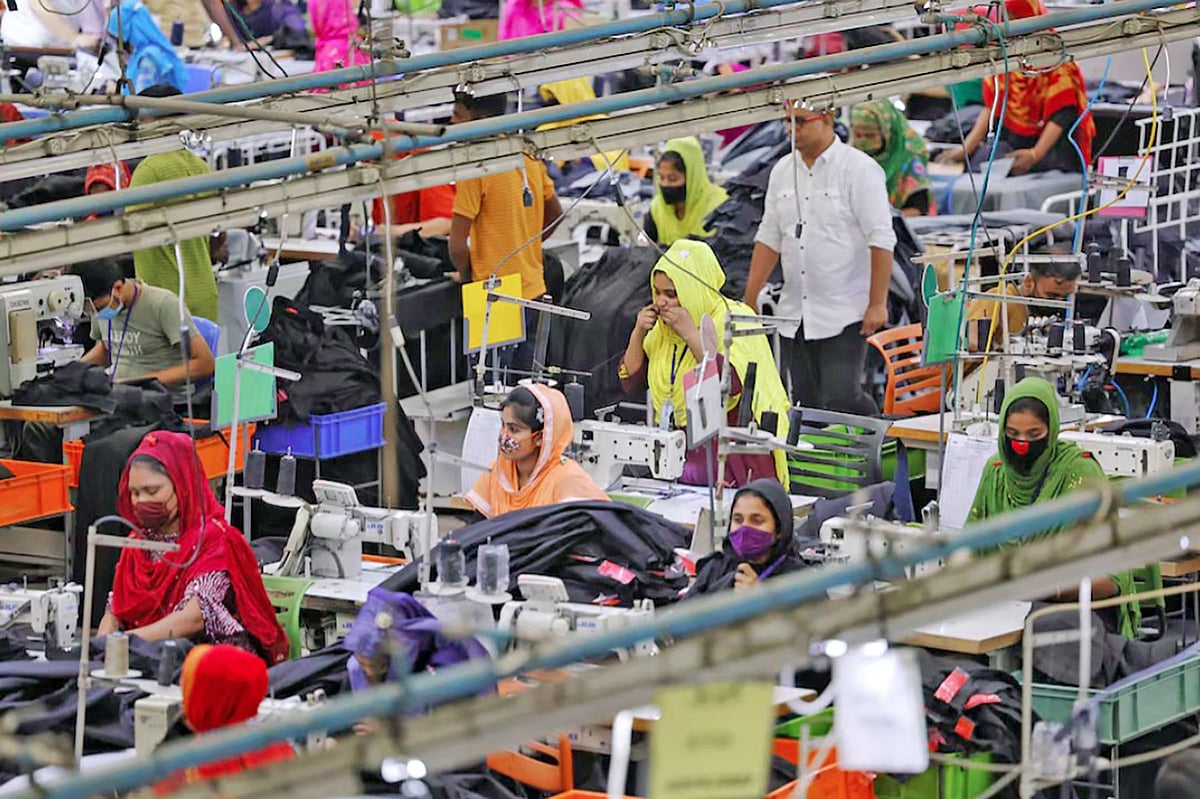
Bangladesh’s export basket remains overwhelmingly dependent on ready-made garments (RMG). Diversifying away from this concentration to boost non-RMG exports is critical. Potential exists to expand exports in pharmaceuticals, leather goods, processed agricultural products, light engineering goods, and IT-enabled services. Achieving this requires manufacturing goods to international standards, building a skilled workforce, ensuring uninterrupted power and energy supplies, modernising transport logistics, and reducing the cost of doing business. Furthermore, small and medium enterprises (SMEs) require financial and technological assistance to enable their entry into new export markets.
The burden of enhancing competitiveness cannot rest on exporters alone. If the costs of power, energy, transport, logistics, customs clearance, and financing remain prohibitive, businesses cannot reduce unit production costs unassisted. The government must elevate the quality of these public services, while facilitating access to easy financing, technical advice, skill development programmes, and streamlined product certification systems. Such measures will enable commercial enterprises to adopt modern machinery, conserve energy, minimise waste, and boost productivity, thereby creating new product lines to penetrate wider markets.
Reforming the import tariff regime is equally crucial. A major share of the government’s revenue is derived from import-stage taxes. However, high tariffs and supplementary duties inflate the import costs of raw materials and machinery for export-oriented industries, This in turn drives up production costs and erodes competitiveness in international markets.
That is why, tariff structures must be gradually simplified and rationalised through a clear, medium-term roadmap. Unnecessary tariff slabs should be consolidated, aligning duty structures with production and export needs. However, an abrupt reduction in tariffs could undermine government revenue. To offset this, revenue collection from direct income tax and Value Added Tax (VAT) must be enhanced by broadening the tax base and improving the efficiency of tax administration. Reducing reliance on import taxes will safeguard public spending in critical sectors such as education, health, and emergency infrastructure.
The extension of Bangladesh’s LDC graduation timeline comes at a juncture when the domestic economy has been grappling with multi-year headwinds. Under current circumstances, restoring macroeconomic stability must remain the paramount priority. Controlling inflation, bolstering revenue generation, mitigating external sector pressures, and enforcing good governance in the banking sector are indispensable for stimulating investment and production. Resolving these challenges demands deep-seated structural reforms.
The government’s Smooth Transition Strategy (STS) for LDC graduation must also be rigorously implemented. Its primary objective should be to preserve Bangladesh's export competitiveness, employment levels, and development momentum as LDC-specific preferences are phased out. The extra three years must not be viewed merely as a deferral of the deadline; this period must be utilised effectively to rectify economic vulnerabilities, enhance productivity, and prepare Bangladesh for international competition.
* Fahmida Khatun is an economist and Distinguished Fellow at the Centre for Policy Dialogue (CPD)
* Views expressed are the writer's own
* The opinion has been rewritten in English by Shameem Reza