
Hurricane Maria killed over 4600 in Puerto Rico: Study
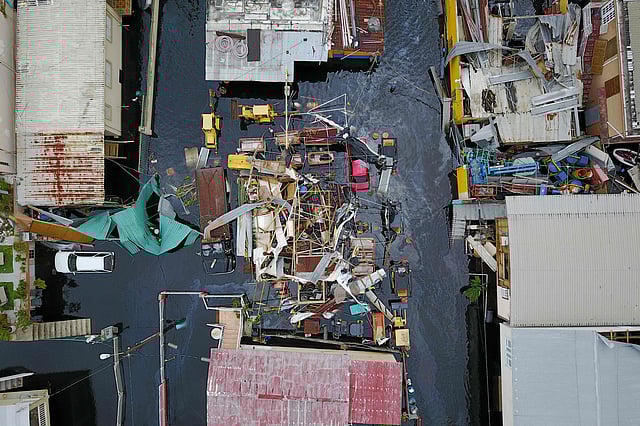
Hurricane Maria, which pummelled Puerto Rico in September 2017, is likely responsible for the deaths of more than 4,600 people, some 70 times more than official estimates, US researchers said Tuesday.
The government-provided death toll stands at just 64, but experts say an accurate count was complicated by the power outages and widespread devastation wreaked by the storm, which caused $90 billion in damage and is ranked as the third costliest cyclone in the United States since 1900.
Earlier independent investigations had put the true toll at closer to 1,000.
But the latest estimate, compiled by researchers at Harvard University, came back far higher-at 4,645 deaths from the day of the storm, 20 September until 31 December 2017.
For comparison, the death toll from 2005’s Hurricane Katrina-the costliest hurricane in US history-was far lower, estimated at 1,833.
Most deaths after Hurricane Maria hit Puerto Rico are blamed on interruptions in medical care due to power outages and blocked or washed out roads, said the report published in the New England Journal of Medicine.
“Approximately one-third of post-hurricane deaths were reported by household members as being caused by delayed or prevented access to medical care,” said the report.
“We have always expected the number to be higher than was previously reported,” said Carlos Mercader, director of Puerto Rico’s Federal Affairs Administration.
The island’s administration commissioned another study to be carried out by George Washington University into the death toll, which will be released soon, Mercader said.
“Both studies will help us better prepare for future natural disasters and prevent lives from being lost,” he said.
Researchers went door-to-door at 3,299 homes randomly selected from across the US territory, home to some 3.3 million people.
Survey-takers used criteria from the US Centers for Disease Control and Prevention to determine if a person’s death could be blamed on the hurricane.
By definition, this could be either forces related to the event such as flying debris, or unsafe or unhealthy conditions in the three months afterward, including loss of necessary medical services.
The surveys were taken from January to February 2018, a time when, researchers noted, “many survey respondents were still without water and electricity.”
To avoid bias, people were not paid for their responses, and were informed that their answers would not gain them any additional government aid.
If a family member was reported missing but not known to be deceased, researchers counted them as alive.