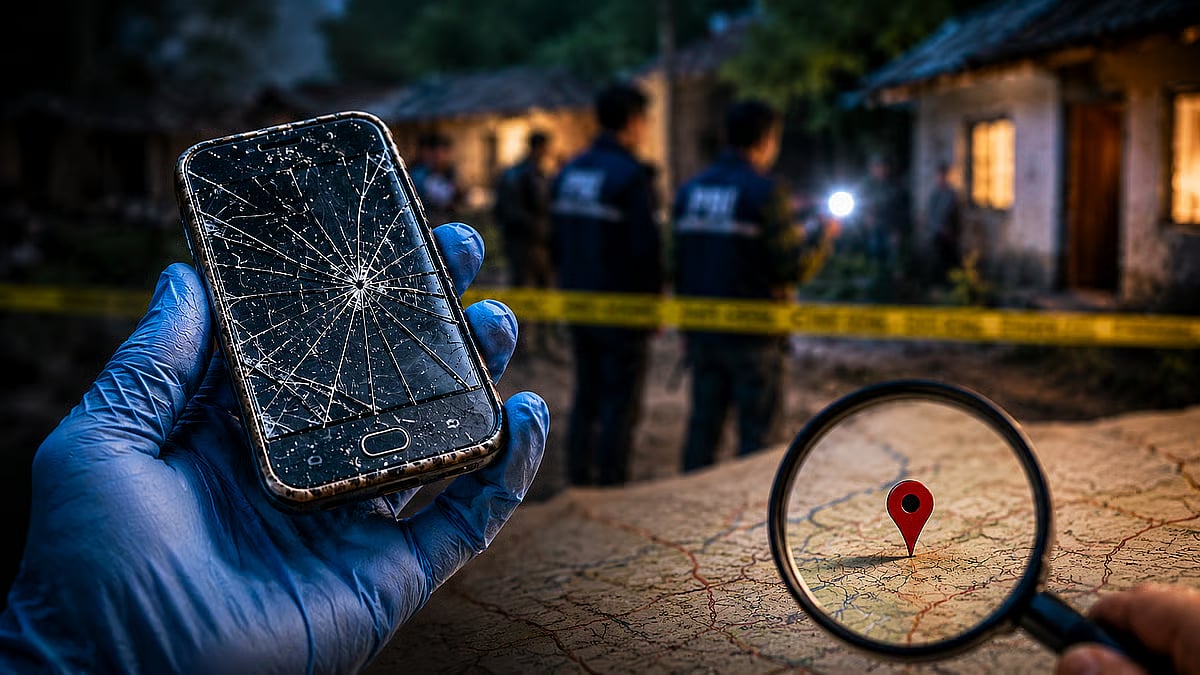
A mobile phone, looted in the wake of a murder, passed sequentially through the hands of eight different individuals. It was sold repeatedly—sometimes for Tk 500, sometimes for Tk 700. Having found no initial leads in the case, investigators tracked down the missing handset nearly a year later, inadvertently leading them straight to the architects of the crime.
This breakthrough finally unravelled the mystery behind the high-profile double murder of a mother and son in Bagmara, Rajshahi.
On the night of 23 November 2014, Aklima Bewa, 55, and her son Jahid Hasan, 28, were hacked to death with sharp weapons at their residence in Deula village under Bagmara Upazila. The following day, Aklima’s other son, Dulal Uddin, filed a murder case at Bagmara police station.
Initially, the case was investigated by the local Bagmara police. Although they arrested five individuals during the preliminary probe, it was subsequently revealed that none of them were involved in the killings.
A year later, the investigation was transferred to the Police Bureau of Investigation (PBI). It was then that detectives turned their attention to the mobile phone that had gone missing from Aklima’s possession after the murder.
By that time, after changing hands eight times, the phone had reached a man in Netrokona. This handset became the pivotal piece of evidence that turned the entire investigation around.
Clue in the missing phone
The PBI investigation revealed that the victim’s mobile phone had been taken from the crime scene immediately after the murders. Thereafter, it was systematically resold from one person to another. Investigators initiated their search by tracking the phone’s IMEI number.
Every stage of the chain was meticulously scrutinised, establishing who had passed the phone to whom and the exact sums exchanged. The investigation disclosed that a man named Habibur Rahman had stolen the phone from the crime scene after the mother and son were slaughtered.
PBI sources revealed that Aklima had a long-standing dispute with Abul Hossain Master, as well as a separate conflict with her neighbour, Habibur Rahman.
According to the PBI, a chronological review of the phone’s ownership chain led to the arrest of seven individuals. Among them were the deceased Aklima’s cousin-in-law, Abul Hossain Master, and her neighbour, Habibur Rahman.
PBI sources revealed that Aklima had a long-standing dispute with Abul Hossain Master, as well as a separate conflict with her neighbour, Habibur Rahman. It was Abul Hossain Master and Habibur Rahman who masterminded the plot, hiring contract killers to execute the mother and son. Habibur Rahman, who had taken the mobile phone, was directly involved in planning the double homicide.
Speaking to Prothom Alo, the Chief of the PBI and Additional Inspector General of Police, Mostafa Kamal, stated, “A mobile phone was the critical clue in this double murder case. The victim’s phone was looted after the killings and subsequently circulated among eight people. However, by painstakingly tracing the sequential chain of custody of that handset, we were ultimately able to unearth the mystery behind the murders.”
Contract killers brought from 18 Kms away
Detailed accounts of this investigation have been published in a book titled ‘Porichoyhin Oggatonama Mritodeho Ebong Clueless Murder Mamlar Todonto’ (Investigation of Unidentified Bodies and Clueless Murder Cases), released by the PBI Headquarters in January this year.
A mobile phone was the critical clue in this double murder case. The victim’s phone was looted after the killings and subsequently circulated among eight people. However, by painstakingly tracing the sequential chain of custody of that handset, we were ultimately able to unearth the mystery behind the murders.Chief of the PBI and Additional Inspector General of Police, Mostafa Kamal
The PBI probe established that Aklima’s cousin-in-law, Abul Hossain Master, was a local influential figure (matbar). The two had been locked in a long-standing feud over various matters. Simultaneously, Habibur Rahman had been harboring a grudge against Aklima over disputes related to the illicit drug trade. Driven by these grievances, Abul Hossain Master and Habibur Rahman conspired to assassinate Aklima.
According to PBI data, Habibur Rahman was tasked with hiring the contract killers. Five hitmen were recruited from various areas within the Durgapur Upazila of Rajshahi.
In accordance with the plot, on the night of 23 November 2014, Abul Hossain Master rode his motorcycle to guide the contract killers to the crime scene from a location 18 kilometres away. The killers followed his motorcycle directly to the front of Aklima’s house.
The PBI stated that between 8:30 pm and 9:15 pm, Aklima and her son Jahid Hasan were slit at the throat and killed with sharp weapons. During the execution of the crime, another accomplice stood guard outside on a motorcycle. Following the assassination, the killers looted Aklima’s mobile phone and swiftly fled the scene.
Death penalty for 3
Following an exhaustive investigation and judicial process, the court delivered its verdict on the Aklima-Jahid murder case in September 2019.
The court sentenced three individuals, including Abul Hossain Master and Habibur Rahman, to death. The third individual handed the capital punishment was Abdur Rajjak, a resident of Debipur in Durgapur. Rajjak was a dismissed member of the Border Guard Bangladesh (BGB) and was the leader of the contract killers.
Furthermore, the court sentenced Abdullah Al Kafi and Ruhul Amin of Shyampur in Durgapur, Rustam Ali of Khidrakashipur village, and Monirul Islam alias Monir of Khidralakshmipur village—all of whom participated in the killings—to rigorous life imprisonment.