Referendum
Citizens will give opinion with a single “Yes” or “No” vote on 4 issues
The parliamentary election and the referendum will be held on the same day. The referendum will be conducted on four issues. On referendum day, people will express their opinion by voting either “Yes” or “No” on a single question that encompasses these four issues.
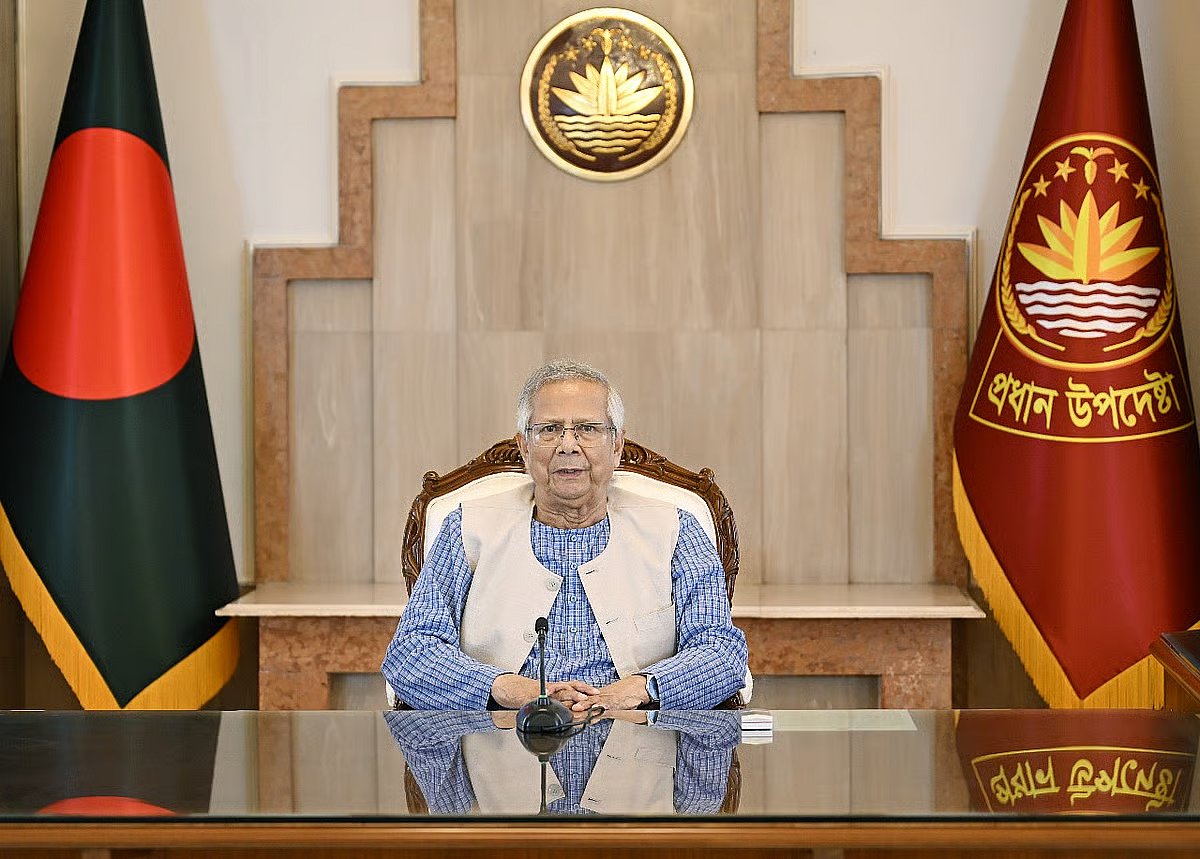
At 2:30pm today, Thursday, Chief Adviser Professor Muhammad Yunus announced these decisions in an address to the nation. Earlier, the Advisory Council of the interim government approved the July National Charter (Constitution Amendment) Implementation Order, 2025.
In his address, the Chief Adviser said, “After considering all aspects, we have decided that the referendum will be held on the same day as the upcoming national parliamentary election. In other words, like the national election, the referendum will also be held on the same day in the first half of February. This will in no way hinder the reform objectives.”
He added that the necessary legislation for holding the referendum would be enacted in due course.
The Chief Adviser said that, in line with the July Charter, the question to be presented on the referendum ballot had also been finalised.
He then read out the question in his speech: “Do you approve of the July National Charter (Constitution Amendment) Implementation Order, 2025, and the following proposals for constitutional reform as recorded in the July National Charter?”
The four proposals are as follows:
a. The caretaker government during election, the Election Commission, and other constitutional institutions shall be constituted in accordance with the process described in the July Charter.
b. The next Parliament shall be bicameral. A 100-member upper house will be formed based on the proportion of votes received by political parties in the national election, and any constitutional amendment will require approval by a majority of the upper house.
c. The 30 reform proposals on which political parties reached consensus under the July National Charter — including increased representation of women in Parliament, election of the Deputy Speaker and parliamentary committee chairs from the opposition, term limits for the Prime Minister, enhanced powers of the President, expansion of fundamental rights, judicial independence, and strengthening of local government — shall be binding on the parties that win the upcoming election.
d. Other reforms outlined in the July Charter shall be implemented according to the commitments made by political parties.
The Chief Adviser said, “On referendum day, you will express your opinion on these four matters by casting a single ‘Yes’ or ‘No’ vote.”
He further stated that if the majority of votes in the referendum are in favor of “Yes,” a Constitutional Reform Council will be formed with the representatives elected in the upcoming parliamentary election. These representatives will simultaneously serve as members of Parliament. The Council will amend the Constitution within 180 working days from the date of its first session. Within 30 working days after the completion of constitutional amendments, an upper house will be formed proportionate to the votes received by each party in the national election. The term of the upper house will last until the final working day of the lower house.
The Chief Adviser concluded by saying that, in accordance with the pledge of the July Charter, steps will be taken to incorporate the July National Charter into the Constitution.