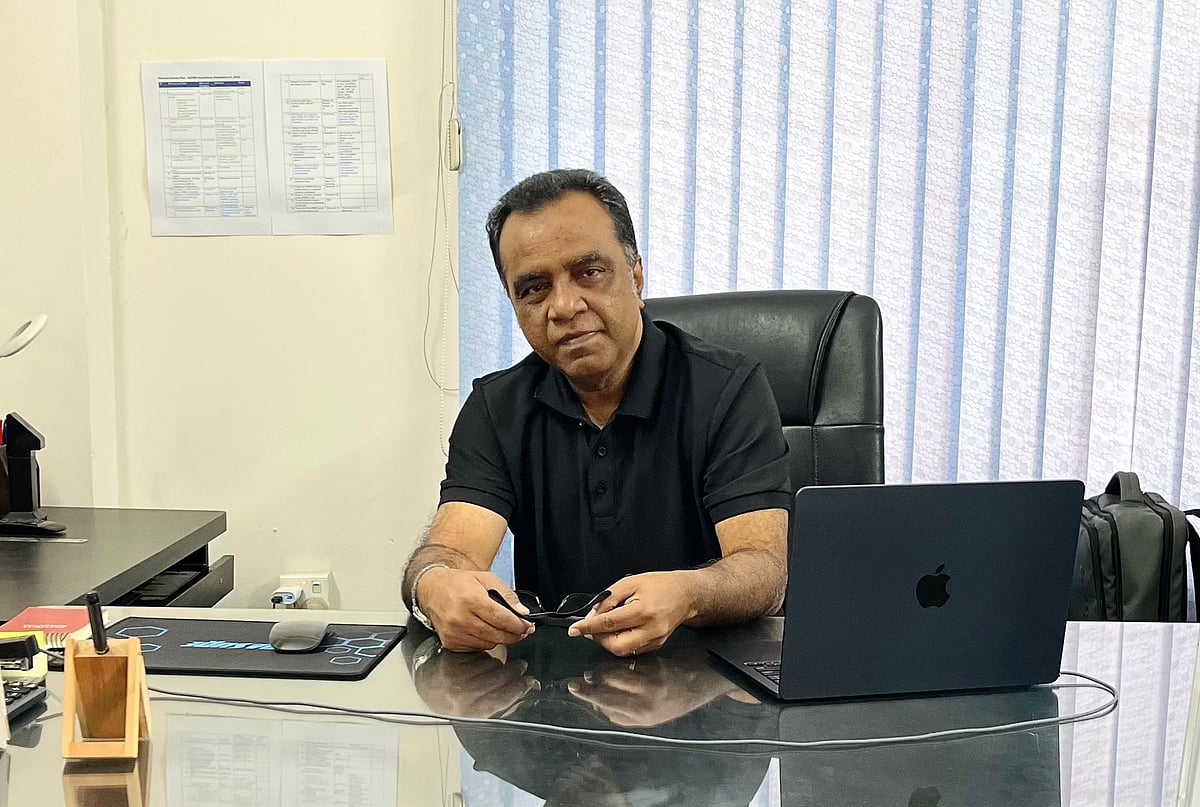
Exclusive Interview: Hassan Imam Shaon
Success stories often overshadow the dangers of irregular migration
Hassan Imam Shaon is a development practitioner with 30 years of experience in migration, CTIP, and public health. He is the Managing Director of DEVCOM Ltd., specialising in strategic planning, programme design, research, evaluation, and capacity building. Hassan has worked extensively as a consultant with the Government of Bangladesh, UN agencies, donor organisations, and leading NGOs, including IOM, ILO, SDC, UNDP, UN Women, CARE Bangladesh, World Vision, Save the Children, Winrock International and others. He is the former Programme Head of BRAC Migration Programme.
In an interview with Prothom Alo, he talks about various issues of labour migration, including human trafficking, irregular migration, particularly to Europe, and more. The interview has been taken by Rabiul Islam.
How do you view labour migration to Europe?
Hassan Imam Shaon: Migration to Europe has two sides, regular and the other is irregular. A huge number of workers have migrated to Europe through irregular channels. A key issue that deserves attention is that there has been very little research so far into why people become so desperate and why they are willing to take such extreme risks at any cost. More research is needed to understand this behaviour.
There are several factors behind irregular migration, such as the lucrative job market in Europe. Another important factor is the influence of middlemen. By middlemen, I mean everyone involved in the chain—relatives, friends, smugglers, traffickers, and others. As you know, this entire network contains both good and bad elements, but the harmful side is by no means insignificant.
These middlemen charge migrants large sums of money. They influence workers and, in some cases, their families by encouraging them to migrate. As a result, many migrant workers become extremely desperate and feel that they must leave by any means necessary.
Many people are taken to Libya with the promise of being sent to Italy. Once they reach there, they are tortured, and their captors call their families demanding money. Eventually, they are put on boats, which often sink, leading to death. There are countless such incidents. Yet people continue to take these risks. Why?
Hassan Imam Shaon: There are several reasons. First, there is a particular mindset involved. Earlier, I spoke about behaviour, but behaviour is rooted in beliefs. Many people believe that such tragedies will not happen to them. This belief exists because success stories are more visible. We hear about boat capsizes and migrant deaths when they make the news, but overall, many people do manage to reach their destinations. So aspiring migrants think, “Others have succeeded, I can too.”
As mentioned earlier, another factor is the influence of middlemen, who often downplay the dangers. Even if they mention the boat journey from Libya to Italy, they describe it as something trivial. They might say, “It’s just like crossing a canal. Haven’t you seen large rivers in Bangladesh?” Through such narratives, they convince migrants that they will somehow make it through.
Finally, most migrants are young people. Young people often have a mindset that nothing changes without taking risks. They believe that unless they take risks, their lives will never improve. So they feel compelled to take those risks.
It is not that all of them are unaware of the dangers. Many know about deaths, disappearances, and people whose bodies never return home. Some know of migrants who go missing without any news reaching their families. Yet they still go. That is why I say they perceive migration as a risk worth taking at any cost.
There is another issue—the networks of middlemen often conceal crucial information. They do not provide a complete picture of how difficult and dangerous these journeys really are.
Doesn't the state share this responsibility? Surely no migrant should have to become a victim of such tragedies or lose their life in this way. What can the state do?
Hassan Imam Shaon: The state has a great deal of responsibility. That does not mean migrant workers have no responsibility; they also need to seek information and understand the risks. But my question is: how much are the state, civil society organisations, and NGOs doing to ensure that accurate information reaches workers, their families, and their communities? How many campaigns or awareness-raising activities have been conducted at the community level so far?
The government tells people not to migrate irregularly. But that alone is not enough. Across the world, both documented and undocumented migration continue to take place and will continue to do so. The challenge is to reduce irregular migration and show people the right way by establishing legal pathways with European worker-receiving countries.
Europe remains a major attraction. I do not have the exact figures, but there are perhaps near about 1 million Bangladeshis living there. When so many Bangladeshis are earning a livelihood in Europe, it naturally creates aspirations among others. Therefore, the Bangladeshi government should create more legal pathways for migration.
If you look at government data, most workers are still being sent to Middle Eastern countries, with some going to Malaysia, South Korea, and Singapore. However, some of these markets are either limited or facing challenges. Since overseas employment and remittances are so important to Bangladesh, people will continue seeking opportunities abroad. The real question is whether enough is being done to ensure that this migration takes place through safe and legal channels.
I believe that the government still has a lot to do in this regard. How many awareness campaigns have been conducted in the districts from which irregular migration to Europe is most common? How effectively have people been informed? Some NGOs, including large organisations like BRAC, and UN agencies like IOM and ILO are working on the reintegration of EU returnee migrants, often with support from the European union and other development partners, helping returnees rebuild their lives.
However, when I worked for an NGO, I once told a senior European Commission official that reintegration alone would not stop irregular migration. Awareness and prevention efforts must also be strengthened.
You mentioned that Europe has demand for skilled migrants and professionals. We have been hearing about this demand for years, but why is it not translating into opportunities?
Hassan Imam Shaon: The EU has some initiatives. A study conducted a few years ago, funded directly by the European union and involving organisations such as the International Centre for Migration Policy Development (ICMPD), researched these issues. One initiative that emerged was the Talent Partnership project, currently being implemented by the International Labour Organization (ILO) with support from the EU.
Without going into all the details, one point stands out. The project perhaps set a target of training around 3,000 workers and preparing them for the European labour market. But if, over several years, the goal is only to send 3,000 workers, one must ask whether this is sufficient given the scale of migration demand. As a pilot, it may be fine, but the government needs to work on a much larger scale with the support of the EU, ILO and other development partners so that we can send more migrants to Europe through regular channels.
The reason progress has been slow is that many foundational steps are still missing. Take caregivers, for example. How prepared is Bangladesh to train workers for caregiving jobs in Europe? There has been some success in sending caregivers to Japan, including both men and women. In the studies we conducted, we recommended developing caregiver training specifically tailored to European requirements.
Caregiving is not just a technical occupation; it also requires strong language skills and interpersonal abilities. It is a highly sensitive profession. The same applies to sectors such as information technology and other professions where workers could potentially be sent abroad. Bangladesh lacks sufficient training programmes, adequate language instruction, and formal agreements with destination countries. These are all major gaps.
If Bangladesh wants to expand migration opportunities to Europe, it must develop a comprehensive system similar to the Employment Permit System (EPS) used for South Korea. However, that system is yet to improve, but such a system would need to be adapted for European countries, despite the challenges involved. The fundamental problem, as you suggested, is a lack of adequate initiative.
Migration and remittances are vital to Bangladesh’s economy and foreign exchange earnings. Europe clearly offers significant opportunities, especially for skilled and professional workers. So the question remains: why are there not more agreements with European countries that would allow Bangladesh to train workers, equip them with language and professional skills, and send them through legal channels in significant numbers—10,000 or 20,000 workers over a few years, for example?
Hassan Imam Shaon: That is a question that ultimately the government itself is best placed to answer.
The EU has moved to establish “return hubs” for migrants. How do you view this move?
Hassan Imam Shaon: It is too early to comment on this, as it is a very recent development. My point is that we do not support irregular migration, but return hubs may violate the rights of migrant workers.
When European countries establish return hubs or deportation centres, it may create a situation where even documented migrants face harassment and stigmatization. We need to ensure justice and protect the rights of migrants. Therefore, we have to closely observe how the EU handles these return procedures and whether it adopts a rights-based, transparent, and meaningful approach to the reintegration of migrants.