Hasan Ferdou's column
Fall of Sheikh Hasina and lessons from history
A search on YouTube will still reveal the video. Former Prime Minister Sheikh Hasina is there, accompanied by a group of Bangladeshi artists and actors. Swaying and clapping, they sing: “Tumi Bondhu Kala Pakhi, / Ami Jeno Ki” (“You are a black bird friend, / What about me?”). Smiling, Hasina at one point takes her sister Rehana’s hand and brings her to join the festivities. Neither the powerful Prime Minister of a poor country nor her aides could have imagined in that joyful moment that there would come a day when this song would end, when this celebration of stars would fade, and they would have to flee their own home, their own country like thieves.
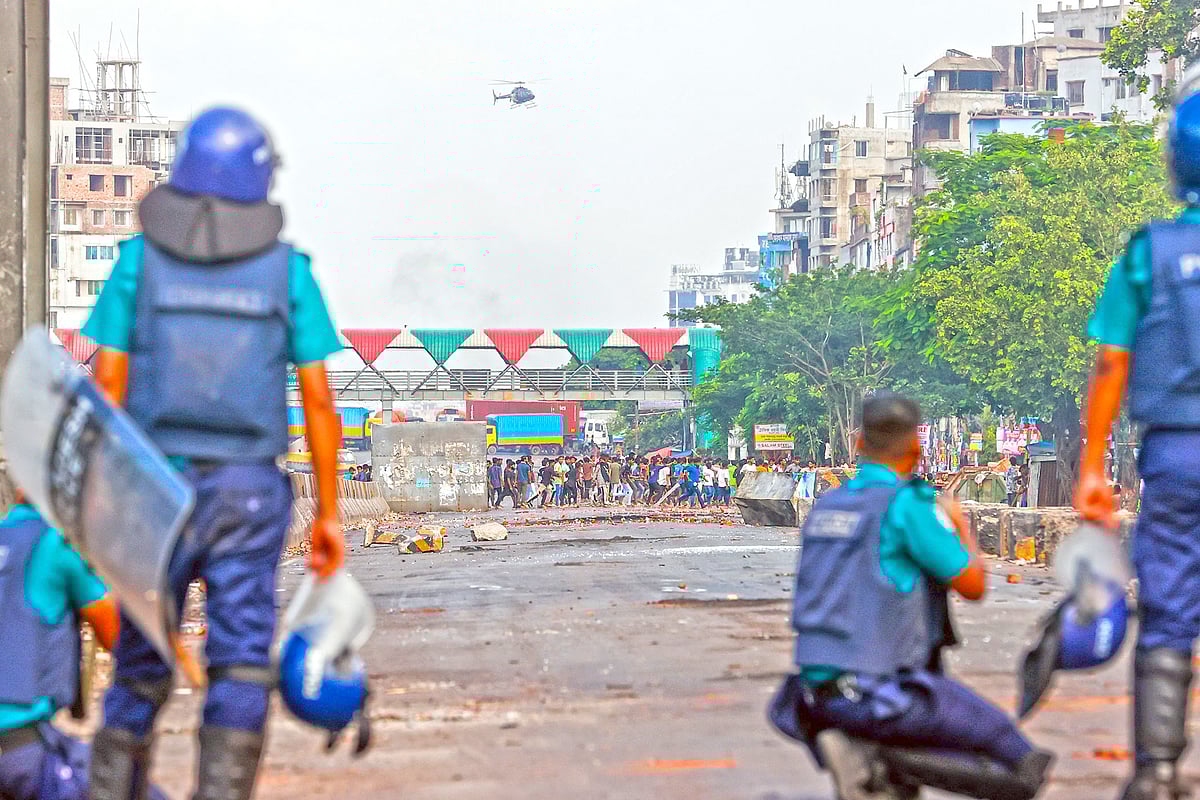
On 5 August last year, when Hasina and her sister left the country carrying four suitcases, fear and deep concern replaced smiles on their faces. Reports in the media reveal that she was hesitant in making decisions. Despite knowing that thousands of people were advancing toward the Ganabhaban, she instructed her loyal military forces to use lethal weapons to stop the protests. The military chiefs refused. As a last resort, she contacted her son Joy, a US citizen, who was abroad. He reportedly told her, “Mom, no more delay.” Helpless, Hasina is said to have muttered to herself before boarding the helicopter: “I did so much, and this is the reward!”
She is not the only powerful person to have been forced to flee in the face of mass anger. One can recall examples such as East Germany’s Erich Honecker, Iran’s Shah Reza Pahlavi, the Philippines’ President Ferdinand Marcos, or Afghanistan’s President Ashraf Ghani.
Hasina’s fall bears a close resemblance to Marcos’. After ruling the Philippines as a dictator for 21 consecutive years, Marcos fell to public wrath. The day was 25 February, 1986. Three years earlier, the popular opposition politician Senator Aquino had been assassinated. People believed Marcos was responsible for that death and erupted in protest. To avoid political unrest, Marcos unexpectedly called an election in February 1986. But allegations of massive fraud led to rejection of the election results and intensified the protests. He believed that at least the US forces stationed in the Philippines would come to his rescue.
On 24 February, while all of Manila was in turmoil, Marcos waited anxiously in the Malacanang Palace with his wife Imelda, counting the hours until the US forces intervened. He repeatedly tried to speak to US President Reagan. Finally, a call came—but not from Reagan; it was from his special envoy, Paul Laxalt. “Mr. President, the time has come to leave,” Laxalt told him. Fear and shock turned Marcos pale. He looked at his wife Imelda and said mournfully, “That means it’s all over.” Shortly after, a US military helicopter landed in the palace lawn, and Marcos fled. His last words as he left were reportedly: “So, this is how it ends.” And so it all ended.
History teaches us
History has taught us that no matter how powerful you are, the misuse of power will eventually be your downfall. The people whose name you used to seize power will one day pull you from your throne. This fall often comes swiftly, before you even realise it. Reza Shah, Ferdinand Marcos, or Sheikh Hasina—each followed a remarkably similar trajectory of power, with comparable rises and falls. For them, the state, the government, and leadership became one and the same. They were not only the centre of all power but also its source. This is the main reason dictators fall. A leader becomes the axis around which everything else revolves. When that axis is threatened, no one remains to save it.
Consider Sheikh Hasina. Such an immensely powerful person, yet when danger arrived at her doorstep, no one stood by her. Even the military forces she had long controlled vanished in times of crisis.
Those in power do not cling to authority through sheer force alone; they must weave a compelling narrative to justify their survival. Hasina in Bangladesh, the Shah in Iran, Hosni Mubarak in Egypt, or Ceausescu in Romania—each presented themselves as indispensable to their country. They began to see themselves as the ultimate controller of everything. Marcos once said, “If I am not here, the country will be swept away in floods.” Hosni Mubarak, Egypt’s powerful dictator, declared when faced with demands for resignation, “If I leave, Egypt will fall apart.”
These stories were often amplified by loyal aides. Whether the people believed them or not, these leaders probably believed their own narratives. Recall Hasina’s stunned expression when she fled; she could not comprehend that the people for whom she had risked her life were demanding her resignation. In 1989, Romanian President Ceausescu faced a similar moment. Claiming it was “impossible, it cannot be,” he appeared on 21 December on the balcony of the Romanian Communist Party headquarters in Bucharest to address the crowd. He said, “I have ensured your prosperity; Romania and its people are united behind my leadership.” Upon hearing this, the assembled crowd laughed loudly.
Hasina, too, made the same claim—not once, but many times. To legitimise her claim, hired writers and politicians were always ready. For example, at the India Economic Summit in 2019, Salman F Rahman wrote that the secret factor behind Bangladesh’s extraordinary success is Sheikh Hasina.
But there comes a time when the people no longer believe the carefully crafted stories. Even threats of political repression cannot hold them back.
For those in power, the trajectory of their own downfall may not always be apparent. That is why, when Iran’s Shah heard from his trusted general Badrei, “The time has come for you to leave,” or when Sheikh Hasina was told by another general, “The helicopter is ready,” fear and astonishment simultaneously appeared on their faces. Even if the leader fails to understand, many of their loyal followers abandon them first. They flee before anyone else, as Fazle Noor Taposh and others did when they left with their families.
From Hasina’s fall and the subsequent verdict sentencing her to death, we can see that no leader—no matter how powerful—is indispensable. Fear or fabricated narratives do not guarantee eternal rule. George Orwell wrote, “All tyrannies rest upon deceit and force; but once deceit is exposed, their reliance is only on power. And that power, too, eventually evaporates like frost, leaving the fallen tyrant’s face stunned and terror-stricken.”
#Hasan Ferdous is an essayist and columnist
#Opinions expressed are the author’s own