Pahela Baishakh being celebrated
Pahela Baishakh, the first day of Bangla calendar, is being celebrated amid traditional festivities and enthusiasm despite various restrictions prompted by last year’s women assault on Dhaka University campus, reports news agency UNB.
The festivities began at dawn with the artistes from Chhayanaut welcoming the day with Tagore’s famous song ‘Esho hey Baishakh, esho, esho (Come o Baishakh, come)’ under the banyan tree at the Ramna Park.
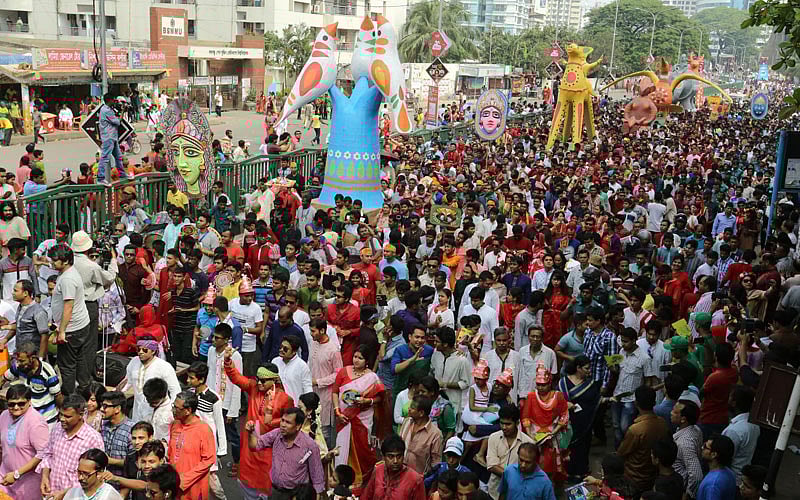
True to their centuries old tradition, people from all walks of life are thronging different popular and historic spots in the capital and elsewhere across the country to welcome the Bangla New Year, 1423 with new hopes and aspirations for a better, peaceful year.
The celebrations of Pahela Baishakh have become an integral part of Bangalees since it began over six centuries back.
Mughal emperor Akbar introduced the Bangla calendar in the 1556 of the Gregorian calendar in a bid to streamline the timing of land tax collection in the then ‘Subah Bangla’ region, the much of which falls under Bangladesh.
The day is a public holiday.
On the occasion, president Abdul Hamid and prime minister Sheikh Hasina greeted country’s people and all Bangla-speaking people across the globe.
Traders and shopkeepers across the country open ‘Halkhata’ (new book of accounts) and entertain customers and visitors with sweets on the first day of the new year as part of the tradition and culture.
On every return of Pahela Baishakh, also the country’s biggest cultural festival, people of all walks of life, especially the youths, come out on the roads at daybreak wearing traditional dresses to celebrate the day.
Students of the Institute of Fine Arts of Dhaka University took out a ‘Mongol Shobhajatra (procession of good wishes)’ from in front of the institute around 9:30am as part of the carnival.
Men, wearing panjabi-pyjama, women attired in saris with red borders, and children in colourful dresses will throng traditional Baishakhi Mela (fair) and other cultural functions in the city and elsewhere in the country throughout the day.
People are partaking of ‘Panta Bhat (water-soaked rice)’ with fried hilsa, lentils, green chili and onions at home, restaurants and fairs following the rich tradition of Bangla culture.
Meanwhile, there are some restrictions of on the outdoor celebrations of Pahela Baishakh imposed by the Dhaka Metropolitan Police.
As per the DMP directives, nobody can enter Ramna Park and Suhrawardy Udyan after 4:00pm on Pahela Baishakh while visitors will have to leave the two venues by 5:00pm.