2 Bangladeshis executed is Saudi: Parliamentary committee questions consulate’s lapses
The Parliamentary Standing Committee on the Ministry of Foreign Affairs has sought to know whether there were any lapses on the part of the Bangladesh Consulate in Jeddah over the execution of two Bangladeshi nationals in Mecca of Saudi Arabia.
The committee has also asked the ministry to explain what action is being taken if any negligence is found.
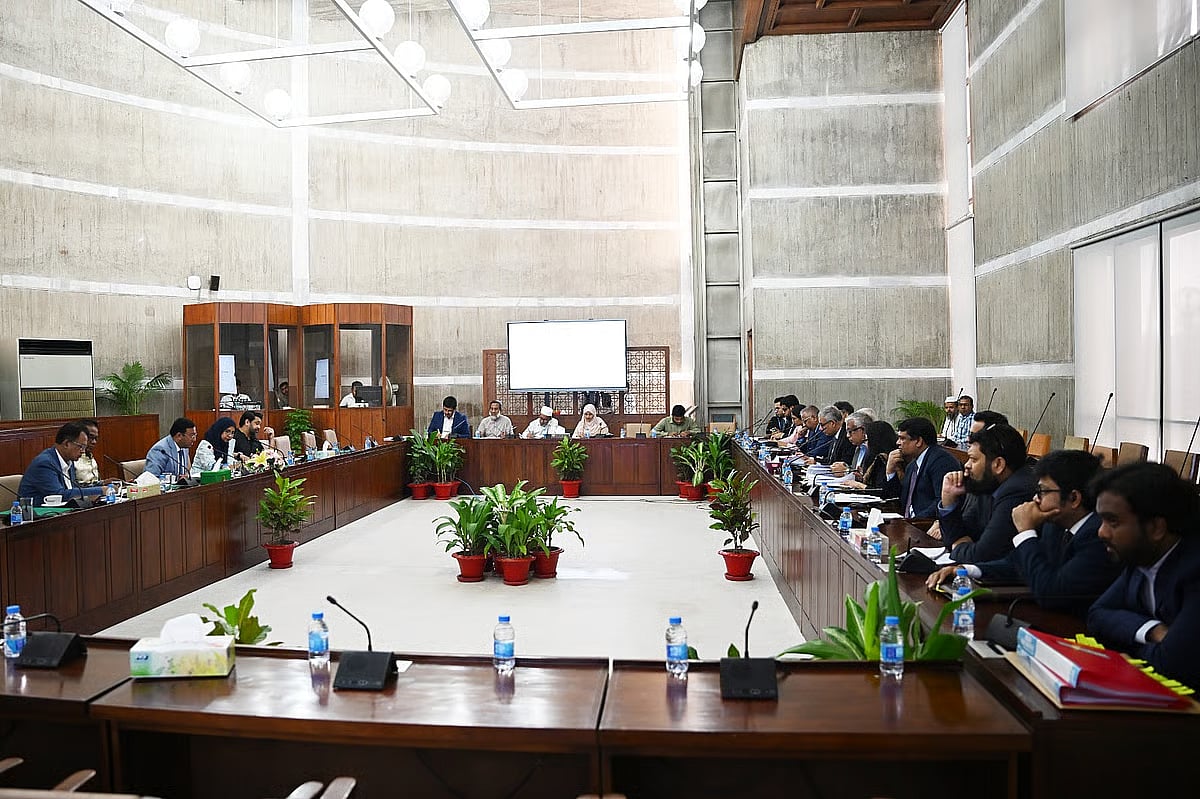
The issue was discussed at a meeting of the parliamentary committee at the Jatiya Sangsad Bhaban on Sunday afternoon.
The Ministry of Foreign Affairs informed the committee that Saudi Arabia had sent a list of approximately 2,500 prisoners 14 days before the executions. The names of the two Bangladeshi nationals were on the list, but their cases were not properly identified.
The meeting also discussed the abuse of female migrant workers in the Middle East, particularly Saudi Arabia.
The Ministry of Foreign Affairs informed the committee that 1–2 per cent of Bangladeshi female workers in Saudi Arabia face abuse.
The committee directed the ministry to take the necessary steps to bring such incidents down to zero. It noted that although the percentage might appear low, the actual number of abused workers was substantial.
After the meeting, Joharat Adib Chowdhury, chairperson of the parliamentary standing committee on the Ministry of Foreign Affairs, told Prothom Alo that the committee had asked why the consulate had not learned about the executions earlier, whether there had been any lapses or negligence, and why Saudi Arabia had not informed Bangladesh in advance despite the two countries' good relations.
“The incident indicates that there was a weakness somewhere in the overall process,” she said.
Referring to the exchange of information 14 days before the executions, Joharat Adib Chowdhury said, “They acknowledged that no one had actually identified that report in that way.”
The Ministry of Foreign Affairs told the parliamentary committee that, based on the category under which the prisoners were listed, the officials concerned had assumed that they could face prison sentences ranging from six months to 15 years. They had not realised that the cases could result in death sentences.
The ministry has sought answers to several questions from Saudi Arabia. The committee has asked to be informed of the responses once they arrive.
It has also asked the ministry to submit a report explaining whether the consulate was negligent, what action has been taken if any negligence is established, and what measures are being introduced to prevent similar incidents in the future.
Asked about the abuse of female migrant workers, Joharat Adib Chowdhury told Prothom Alo that many distressing incidents of abuse involving female workers occur in Saudi Arabia.
The ministry had presented data showing that approximately 169,000 Bangladeshi female workers are currently employed in the country. When they visit to collect their passports, officials ask them about their circumstances. Surveys are also conducted through third parties.
A total of 1,364 female domestic workers have been rescued and safely repatriated, according to the information presented to the committee.
The ministry reported that 1–2 per cent of Bangladeshi female workers in Saudi Arabia experience abuse. Chowdhury said, “When you hear 1–2 per cent, it may sound like a small figure. But 1,364 cases are not acceptable.”
She said the committee had directed the ministry to take measures to bring such incidents down to zero.
In a press release issued after the meeting, the Parliament Secretariat said the committee had recommended that the ministry take the necessary steps to protect female migrant workers employed in Saudi Arabia and other Middle Eastern countries.
The meeting was chaired by Joharat Adib Chowdhury and attended by committee members ABM Mosharraf Hossain, SK Azizul Bari, Saeed Al Noman, Humam Quader Chowdhury and Sanjida Islam.
Foreign Affairs State Minister Humaiun Kobir attended the meeting at the committee's special invitation.