US-Israel attack on Iran
Bangladeshi expatriates in Middle East spend Eid in fear
Fear dominates the minds of Bangladeshi expatriates in the Middle East during this Eid of joy. They have to watch missiles and drones flying overhead, living in constant fear of where the next strike might occur.
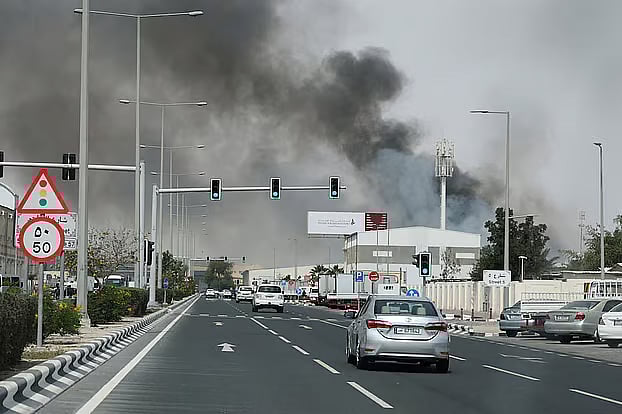
The conflict began after the United States and Israel attacked Iran on 28 February. Other Middle Eastern countries have also been affected by retaliatory strikes. Amidst this, Muslims in the Middle East will celebrate Eid-ul-Fitr, the largest religious festival for Muslims, on Friday.
More than 5 million Bangladeshis reside in the war-affected countries of the Middle East, working in various sectors for their livelihood. In the midst of the conflict, several Bangladeshis have been killed in Saudi Arabia, Bahrain, the UAE, and Iraq. Those who remain live with a constant fear of death. This Eid, away from family and friends, lacks the colours of celebration and is filled with anxiety.
Kabir (pseudonym), an expatriate in Qatar, mentioned that he is going to spend a unique Eid this time. He works as an accountant in a bank in the city of Al Shahaniya and has been in the Middle Eastern country for seven years.
Informing about the heightened security in the country due to the war, he said, "There's no festive mood this Eid. The police visit my workplace frequently, issuing us warnings. They have also provided detailed instructions on how to quickly relocate to safety with customers in case of an alert or alarm at the bank."
Qatari residents receive frequent text alerts and emergency instructions from the government on their mobile phones. If the situation worsens, people are advised not to leave their homes.
Describing his experiences, Kabir said, "A bomb attack occurred just 10 to 15 kilometers from where I work. There were times when attacks happened two to three times a day. For 10 consecutive days, we had to stay indoors due to the severity of the situation, and those 10 days were extremely painful."
Though restrictions in Kabir's town, Al Shahaniya, have been slightly relaxed, important areas like Ayan Khalid, Al Waab, and Lusail City remain off-limits to public movement due to fears of Iranian attacks.
Regarding Eid, Kabir said, "In previous years, we used to visit friends in other cities on Eid day. However, due to the threat of bombings, free movement is restricted in most cities this time. So, we have to stay where we are."
Even the nature of Eid prayers has changed due to security concerns. Previously, Kabir and others offered Eid prayers in large open fields, but this time, for safety reasons, everyone will have to pray inside mosques.
No festive atmosphere in Kuwait either
Aziz Ahmed (pseudonym), an expatriate in Kuwait, has faced a different experience this Eid. He has been working for a cleaning company in Kuwait's Al Jahra area for nine years. Although not always possible, he had booked a flight early to spend this Eid with his family, but the war disrupted his plans.
Aziz, originally from Narsingdi, had a flight scheduled for 16 March to return home. However, due to the onset of the Middle Eastern conflict and the temporary suspension of airport and flight operations, he couldn't return home. Despite having a ticket to celebrate Eid with his family, he had to spend an uneventful Eid overseas.
Discussing Kuwait's current situation, Aziz mentioned that the local authorities have imposed several strict measures for security reasons. He said, "The Kuwait administration has announced that there will be no open-air Eid congregations or prayers in large fields this year. Everyone has been instructed to perform Eid prayers in mosques."
In previous years, Aziz and 10-15 friends would take a car trip to other cities during the Eid holidays, but this has been halted due to security concerns.
Aziz mentioned that the Kuwaiti police and administration are extremely vigilant to ensure the safety of expatriates in the country. Recently, a special instruction meeting for expatriates was held by the police. There, it was informed in both Arabic and English what to do immediately if a war alert or siren goes off and how to take shelter safely. They also emphasised that expatriates should follow administrative instructions and warnings during regular commutes.
Aziz said that besides the Kuwaiti administration, he and his colleagues are also adhering to emergency instructions received from the Bangladesh Embassy. However, he expressed some relief that there is not a direct threat of warfare in the area where he currently resides.
Similar scenarios in other countries
In addition to Qatar and Kuwait, the festive atmosphere of Eid is being disrupted by the war situation in Saudi Arabia, Bahrain, the UAE, and Oman. Expatriates living in areas with American bases in these countries are in the most terrifying situations.
There is fear in the eastern regions of Saudi Arabia as well. However, the situation remains normal in the country's western cities, including Mecca, Medina, and Jeddah. Bangladeshi expatriates in Mecca and Jeddah told Prothom Alo that although there was some panic initially, it has now subsided. People in cities like Mecca, Medina, and Jeddah are going to work and shopping for Eid.
The expatriates mentioned, based on information from acquaintances, that there is an atmosphere of fear in the eastern regions of the country, especially in areas near the Gulf coast. Extra precautions are also in place in the Saudi capital, Riyadh.
A Bangladeshi expatriate in Bahrain's capital, Manama, reported that a few days ago, an Iranian attack resulted in casualties in Bahrain. Many people refrained from going outside unless necessary. Any loud noise raises the fear further. In such a situation, the joy of Eid for expatriates has significantly diminished.
Speaking over the phone from Manama, the Bangladeshi expatriate said, "Many are being arrested for publishing any war-related topics online in Bahrain. There is a constant fear of what might happen due to Iranian attacks. Additionally, there is the fear of job loss. Many of the expatriate Bangladeshis who returned home are living in fear of losing their jobs. In this situation, how can there be any joy?"
A Bangladeshi expatriate in Sohar, Oman, mentioned that he wanted to celebrate Eid in his home country this time. However, due to the war situation, he couldn't return home. Although the situation in his current city is relatively normal, there is still fear among people that an attack could happen at any time. This expatriate feels that this year's Eid is one of fear and anxiety.
The Bangladesh Embassies in various countries are advising expatriates to refrain from publishing any war-related information, news broadcasts, or other activities on social media.
For instance, the Bangladesh Embassy in Riyadh, Saudi Arabia, issued an emergency notice at the start of March urging expatriates to show respect for Saudi Arabia's local laws and refrain from posting, sharing, liking, or commenting on related photos or videos across social media platforms.