India most vulnerable to prolonged disruptions to Mideast oil, analysts say
China has about 6 months of oil stockpiled, India far less
Global prices could surge on prolonged conflict
Most Middle East oil exports go to Asia
India, a fast-growing oil consumer, is the country most vulnerable to crude supply shocks if the Middle East conflict leads to a prolonged disruption in shipments from the region, mainly because of its thin reserves, analysts said.
Both China and India, Asia's top energy consumers, source around half of their crude imports from the Middle East, but India has far less oil in storage than its neighbour and is more dependent on that region's crude now than in the last three-plus years.
"China has at least six months’ worth of crude supplies in storage. Indian inventories are much lower though, and so (it) is much more vulnerable in this situation," said Ajay Parmar, director of energy and refining at ICIS, a commodities research group.
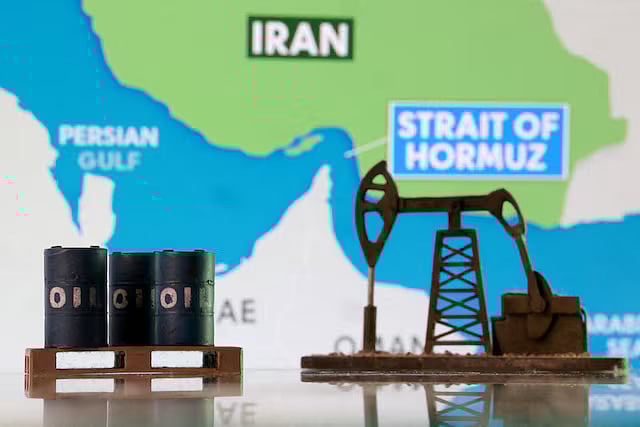
The risks to two of the leading Asian economies reflect the far-reaching consequences of the Israeli and US strikes on Iran, which have triggered a regional conflict and effectively closed the Strait of Hormuz, a key bottleneck through which a fifth of the world’s oil is shipped.
Global benchmark Brent crude rose about 7 per cent on Monday, and a prolonged war could send the cost of fuel supplies even higher.
As of January, the Middle East accounted for about 55 per cent of India's crude imports, at about 2.74 million barrels per day.
That's the highest since late 2022, as the country's refiners reduced their intake of Russian oil under pressure from Washington.
India can store enough crude and fuel to last about 74 days, Oil Minister Hardeep Singh Puri told lawmakers last month. Refining sources told Reuters that India's current inventories cover only about 20 to 25 days.
Unclear options
The potential crunch could force India to seek oil elsewhere. The country will take all necessary steps to ensure fuel is available at affordable rates, the federal oil ministry said in a post on X on Monday.
The White House and the Office of Foreign Assets Control did not immediately respond to requests for comment about whether the US would assure India it could resume buying Russian oil without the re-imposition of 25 per cent US tariffs on imports.
Secretary of State Marco Rubio said the Departments of Treasury and Energy would announce action on Tuesday to mitigate rising energy prices.
Asia buys close to 90 per cent of the Middle East's oil exports.
Japan and South Korea source about 95 per cent and 70 per cent of their oil from the Middle East, respectively, but both have much bigger inventory buffers than India and China.
Japan's oil reserves are equivalent to 254 days of consumption, while a South Korean government official said on Monday the country's stockpiles can cover about 208 days.
Broader global risks
Europe and the United States aren’t major buyers of Middle East crude, but would feel the pain from a prolonged interruption in oil flows through the Strait of Hormuz in the form of higher global prices, analysts said.
"If we see a prolonged war, with the Strait out of use for an extended period, it would mean all countries globally competing for every incremental barrel of oil possible," said Parmar.
Matt Smith, an analyst at Kpler, said Europe could face some challenges accessing jet fuel, as the Mideast Gulf "accounts for around 45 per cent of (Europe’s) waterborne jet fuel imports," he said.
The United States has cut its Middle East oil imports in recent years as it has become the world's largest oil and gas producer. Last year it bought less than 900,000 bpd from Gulf countries, US data says.
Washington is not currently discussing a release from US Strategic Petroleum Reserve, according to a US official, but past administrations have tapped the stockpile during times of war.