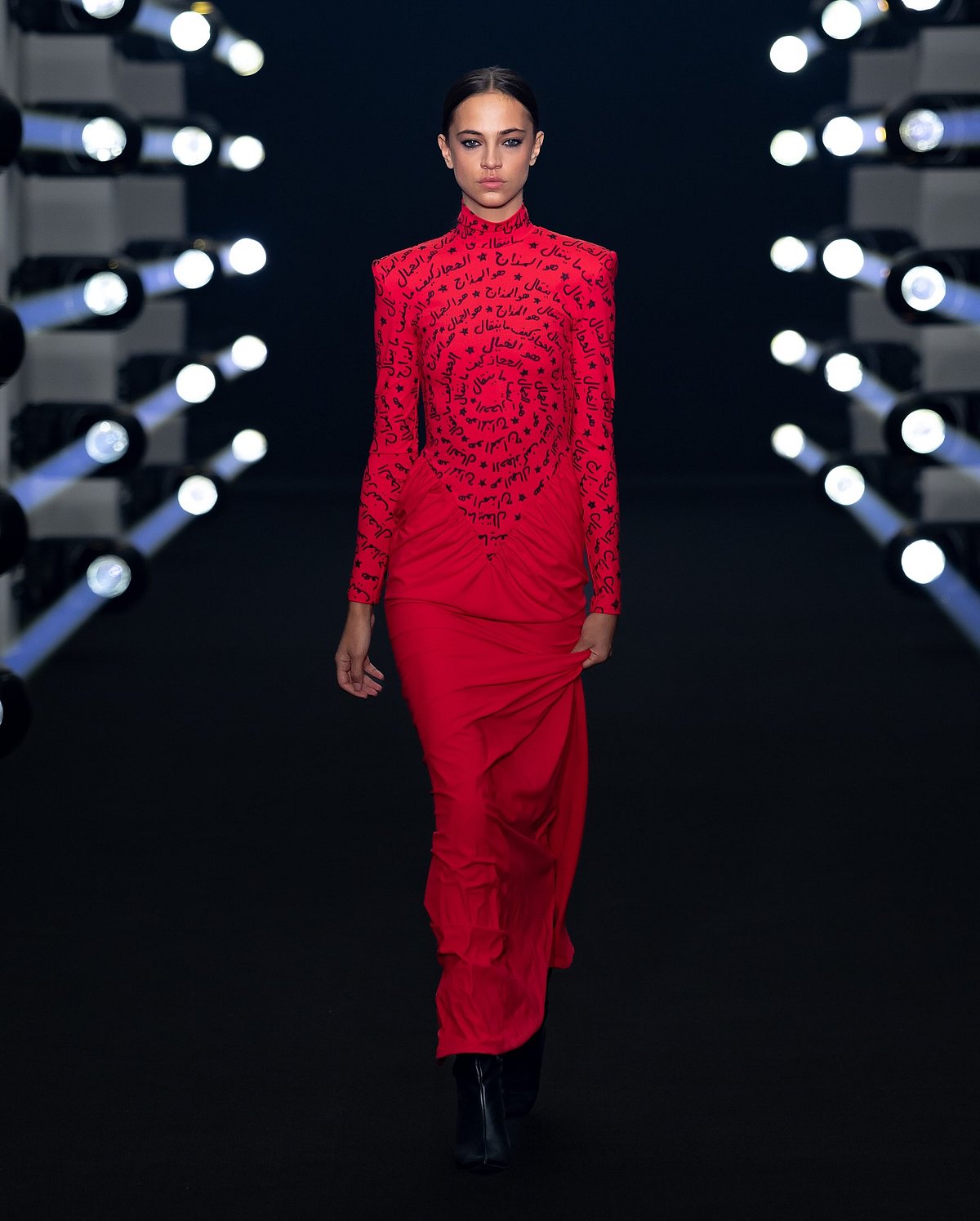
Once known as the land of oil, deserts, and grand architecture, Saudi Arabia is now rediscovering itself in a new light. Looking toward the future, Riyadh is telling a different story—one of creativity, innovation, and cultural renaissance. The recently concluded Riyadh Fashion Week 2025 was an important part of that narrative. This six-day festival was not merely a fashion show; it was a cultural revolution—where tradition, modernity, and confidence merged to create a new language for Saudi fashion.
Modernity Touching the Roots of Tradition
The third edition of Riyadh Fashion Week opened its curtains at The Palm Grove, with a tribute to the legendary British designer Vivienne Westwood. From the very beginning, it was clear—the essence of this week would lie in blending Western aesthetics with Arab heritage. The delicate beauty of Hashu, Nakda, and Zari embroidery by local artisans came alive through intricate hand-embroidered designs. Each outfit—merging precise British cuts with Arabian craftsmanship—was a masterpiece.
The three venues—The Bedrock, The Roof–Al Mamlaka, and JAX B5—represented three eras. Bedrock — the guardian of heritage, where the echoes of tradition are sculpted into form; The Roof – Al Mamlaka — the vibrant heart of the present, where elegance meets modern rhythm; and Jax B5 — the laboratory of the future, where bold experimentation gives rise to new visions.
Across these three realms, Saudi fashion discovered a universal language—one that speaks to the world while remaining profoundly rooted in its own cultural soul.
That is where Saudi fashion’s uniqueness lies: it has shown the world how to speak in a new design language without losing its soul. The grandeur of tradition and the finesse of international style have together revealed the depth and multidimensional nature of Saudi fashion.
A Poem of Femininity, Courage, and Beauty
Designers like Tima Abid and Atelier Hekayat reinterpreted tradition with refreshing modernity. Atelier Hekayat’s presentation—titled “A Ticket to the Theatre”—was like a theatrical poem, full not only of drama but also of artistic brilliance.
The brand, founded by sisters Alia and Abeer Oraif, showcased a collection wrapped in the warmth of heritage, highlighting women’s self-confidence and self-love—reflected through folds of fabric, light and shadow, and delicate embellishments.
Meanwhile, Abadia told stories of courage, tenderness, and legacy through her creations. Designer Shahd Al-Shehail, inspired by her grandfather’s sea voyages, designed a collection that felt like a journey of self-discovery—where tales of pearl diving intertwined with narratives of feminine strength. Each outfit that graced the runway reflected the spirit, resilience, and dreams of Saudi women. Today, the Saudi woman is no longer a shadow; she is the light.
The Creative Bloom of 30 Saudi Designers
As ambitious as Riyadh’s skyscrapers, the recently concluded fashion week featured 30 Saudi designers who displayed their artistry on fabric canvases.
Among them were Tima Abid, Adnan Akbar, Lomar, Fem9, Ashwaq Almarshad, Qormuz, Hindamme, Razan Alazzouni, Reem Alkanhal, Eleven11, The Roof–Al Mamlaka, and 1886—each showing how local materials, geometric patterns, and Arab heritage can be reinvented through modern design.
Even in streetwear, the confidence of Saudi youth was evident reflected the mindset of a new generation. Hindamme’s T-shirt proclaiming “Saudi Arabia is the Future” wasn’t just a slogan—it echoed a generation’s confidence.
Qormuz’s Bedouin-motif bags reflected a deep reverence for tradition, while The Roof–Al Mamlaka’s runway showcased impeccable tailoring, balanced palettes, and world-class finishing—proving that Saudi design now belongs not just to the Middle East, but to global fashion.
Global Icons on the Runway
The show opened with a presentation of the late British punk designer Vivienne Westwood’s collection, whose spiritual presence seemed to elevate the event. It closed with the dazzling in-person presence of another British legend—Stella McCartney. For the first time, the works of two global icons were showcased not only in Saudi Arabia but in the entire region.
Stella’s debut show in Riyadh was a blend of fantasy and realism: metallic slinky gowns, animal-print trenches, thigh-high boots, and 1930s-inspired slip dresses—all symbolizing the confident, free-spirited modern woman.
Her show carried a message—Saudi fashion has reached a point where the world’s greatest designers feel honored to present their creations here.
Saudi Arabia on the Global Stage
The biggest strength of this year’s event was the participation of international brands. Italian label Amen, South Korea’s EENK (Ih Nom Uh Nit), and Coppola e Toppo expressed strong interest in the Saudi market. Meanwhile, local brands like Lomar, Femi9, and Hindamme presented striking examples of nationalism fused with modern creativity.
Riyadh: The New Capital of Fashion
During these six days, Riyadh transformed into a living art gallery. Open-air venues, futuristic set designs, and a crowd of international guests made it clear—this was an extraordinary event in the history of the Arab world.
Forty-five brands showcased their collections, featuring designers from Europe, Italy, and Dubai alongside local talents. Fashion editors, stylists, and retailers agreed: Saudi designers are now ready to compete on the global stage.
The event glittered like a star-studded celebration—with appearances from Thai actor Win Metawin, Faye Pereira, and Georgina Rodríguez, partner of Cristiano Ronaldo. The flashes of cameras made it evident: Saudi Arabia is carving its place at the heart of global fashion.
Voices of Leadership: Tradition as the Beginning
Burak Cakmak, CEO of the Saudi Fashion Commission, said: “Our heritage has no limits—this is just the beginning of our journey. Our designers know how to connect tradition with modernity.”
He added, “Saudi designers understand their consumers deeply—that’s their greatest strength. This is a global industry, yet profoundly local.”
Under his leadership, Saudi Arabia’s fashion industry is already approaching a $42 billion turnover, contributing 2.5% to the nation’s GDP—evidence of both economic and cultural power.
The Voice of a New Generation
The audience at Fashion Week radiated enthusiasm. Nouf Alnamlah, Farfetch’s first Saudi stylist, said: “When I wear a Saudi designer’s outfit in Paris, everyone asks where it’s from—and my heart swells with pride.”
Designer Reem Alkanhal, inspired by Saudi women’s clothing traditions, said: “Today’s women love heritage but don’t want to be left behind in modernity. They love to experiment with color and style. It’s not just fashion—it’s a celebration of confidence.”
The Colors of the Future Woven in Tradition
Fashion has become Saudi Arabia’s new cultural language—and the success of Riyadh Fashion Week 2025 is proof. The event was more than runway glamour; it represented a rediscovery of heritage, women’s empowerment, and a confident stride toward global recognition.
As the lights shimmered beneath the Palm Grove, Western style fused beautifully with Arabian embroidery. Saudi fashion has now added a new hue to the global fashion canvas—a hue of tradition, determination, and progress.
The message of this festival was clear: Fashion is no longer imitation—it is Saudi’s celebration of its own creative identity.