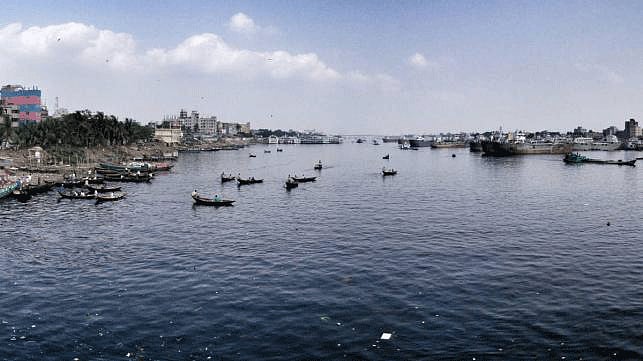
The Buriganga River was once the lifeline of Dhaka, supporting trade, transportation, livelihoods, and culture for centuries. It played a central role in the growth of the city and sustained thousands of families living along its banks. Today, however, the river presents a painful picture of environmental destruction.
What was once a vibrant and life-giving river has become heavily polluted, reflecting the consequences of unplanned urbanization, industrial expansion, poor waste management, and weak environmental governance. The Buriganga is no longer a source of life; it has turned into a source of disease, suffering, and economic loss.
Over the years, successive governments have repeatedly promised to free the Buriganga from pollution and restore it as a healthy river for the people of Dhaka. Various studies, master plans, and cleanup initiatives have been undertaken with support from national and international organizations. Despite these efforts, meaningful progress has remained limited. Weak implementation, lack of coordination among government agencies, corruption, and poor monitoring systems have prevented lasting solutions. As a result, millions of people continue to suffer.
The main causes of pollution are rapid industrialisation and uncontrolled urban growth along the riverbanks. Tanneries, textile dyeing factories, chemical industries, and other industrial units have long discharged untreated waste directly into the river. According to environmental experts, toxic substances such as chromium, lead, and other heavy metals enter the Buriganga every day. Untreated sewage, plastic waste and household garbage from millions of city residents flow into the river, turning it into a dark and toxic waterway.
The environmental consequences are severe. Aquatic biodiversity has declined drastically, and many fish species have disappeared from large parts of the river. In some areas, oxygen levels are so low that aquatic life cannot survive. The Buriganga has effectively become an ecological dead zone. The destruction of the river ecosystem is not only damaging biodiversity but also threatening the environmental balance of Dhaka and surrounding regions.
The human cost is equally alarming. Communities living along the riverbanks are exposed daily to polluted water and toxic air. Many poor families still depend on the river for washing, bathing, and household activities. As a result, the Buriganga has become a breeding ground for diseases. Waterborne illnesses such as diarrhea, cholera, and dysentery are widespread, along with skin diseases and respiratory problems caused by pollution and foul odours.
Children are among the worst victims. Continuous exposure to polluted water threatens their physical growth, weakens their immune systems, and increases their vulnerability to disease. Many children living near the river suffer from recurring infections, malnutrition, and poor health conditions that affect their education and future development. Women also carry a heavy burden because they are mainly responsible for household water management and caregiving. Their regular contact with polluted water during cooking, cleaning, and caregiving increases health risks and limits their ability to contribute economically to their families.
Through strict environmental laws, investment in advanced wastewater treatment systems, and long-term monitoring, the Thames has been transformed into a cleaner river where aquatic life has returned.
The economic impacts of the Buriganga’s degradation are deep and far-reaching. Thousands of fishermen have lost their traditional livelihoods due to the sharp decline in fish populations. River-based transportation, once an important part of Dhaka’s economy, has also suffered greatly. Boat operators, traders, and small businesses dependent on the river have experienced reduced income and growing uncertainty.
Environmental experts estimate that polluted rivers like the Buriganga cause enormous economic losses every year through increased healthcare costs, lower labor productivity, and the destruction of natural ecosystem services. Property values along the riverbanks have declined significantly, while the potential for tourism, recreation, and urban development has almost disappeared. A river that once contributed to economic growth has become a major environmental and financial burden.
Despite several interventions, including the relocation of tanneries and the establishment of treatment facilities, progress has been slow. Many industries still release untreated waste into the river, while waste management systems remain inadequate. Poor maintenance of infrastructure and weak enforcement of environmental laws continue to undermine restoration efforts.
Global experiences show that polluted rivers can be revived with strong political commitment, proper planning, and public participation. The River Thames in the United Kingdom was once declared biologically dead because of industrial pollution and untreated sewage. Through strict environmental laws, investment in advanced wastewater treatment systems, and long-term monitoring, the Thames has been transformed into a cleaner river where aquatic life has returned.
Similarly, the Cheonggyecheon Stream in South Korea was once buried beneath concrete and heavily polluted by urban waste. The government launched a large-scale restoration project that removed the elevated highway above the stream, restored water flow, and created green public spaces around it. Today, the restored stream has improved urban life, reduced pollution, and boosted tourism and local businesses.
Germany’s restoration of the Rhine River is another successful example. Once badly polluted by industrial waste, the Rhine has been revived through regional cooperation, strong environmental regulations, and modern wastewater treatment systems. Today, the river once again supports biodiversity, transportation, and economic activities.
These international examples raise an important question: Can the Buriganga also be revived? Environmental experts believe the answer is yes, but only through long-term commitment, strict law enforcement, and collective action.
Several important measures could help bring life back to the Buriganga. First, industries must be forced to install and properly operate effluent treatment plants so that untreated toxic waste no longer enters the river. Environmental laws must be strictly enforced without political interference. Second, Dhaka urgently needs modern sewage and waste management systems to prevent household waste and plastic pollution from flowing into the river.
Third, river encroachment must stop. Illegal structures built along the riverbanks should be removed, and green buffer zones should be established to protect the river environment. Fourth, continuous dredging and cleanup programs are necessary to improve water flow and remove accumulated waste and toxic sediments.
Public awareness and civic engagement are also essential. Citizens, civil society organizations, journalists, students, researchers, and environmental activists all have important roles to play. Public pressure can encourage industries and authorities to take environmental responsibilities seriously. Schools, universities, and media organizations can help educate people about the importance of protecting rivers and reducing pollution.
Strong political will is perhaps the most important requirement. River restoration cannot succeed through short-term projects or promises alone. It requires long-term national commitment, transparency, accountability, and cooperation among government agencies, industries, and communities.
The condition of the Buriganga is not only an environmental issue but also a matter of public health, human dignity, and social justice. Access to clean water and a healthy environment is a basic human right. When a river becomes a source of disease and suffering, it reflects a failure to protect these rights.
The story of the Buriganga is both a warning and a call to action. Decades of neglect and pollution have pushed the river toward ecological collapse, and millions of people are paying the price. Yet international examples prove that recovery is possible. Saving the Buriganga means restoring a river and also restoring the health, dignity and economic future of Dhaka. With effective action, strong governance, and public participation, the Buriganga can once again become a source of life rather than a symbol of environmental loss.
* The author is a freelance writer.