Opinion
The beginning could have been better
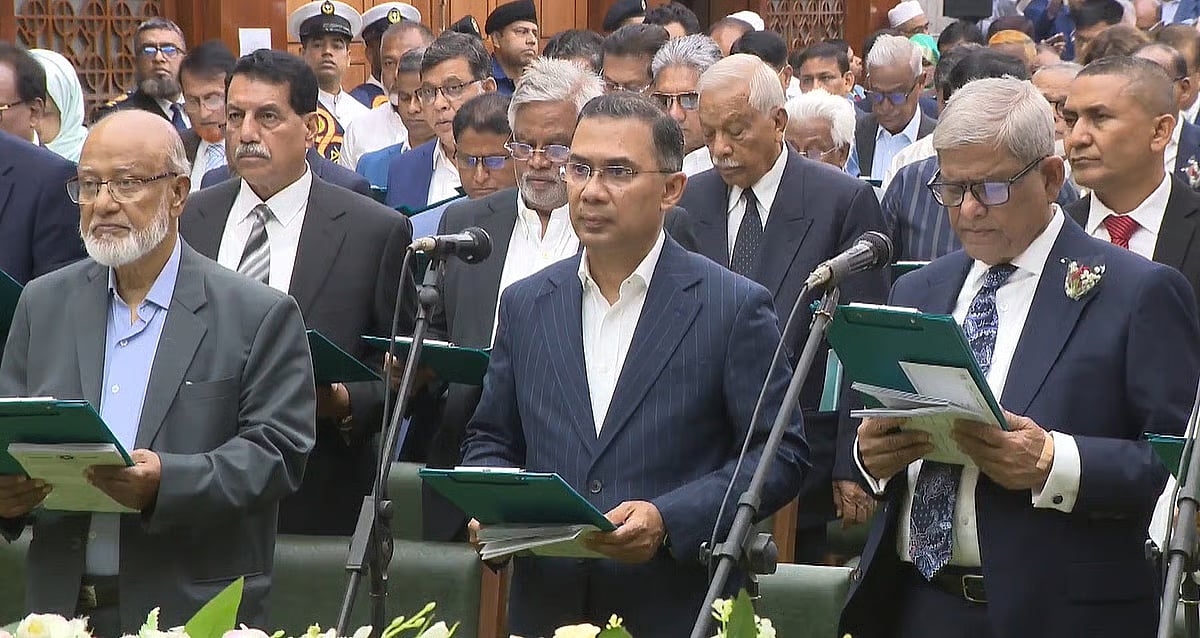
The July mass uprising did not only bring down an autocratic regime; it also gave birth to a new expectation. After a long wait, the country got a peaceful and competitive election. With an absolute majority, the Bangladesh Nationalist Party (BNP) has formed the government. Yesterday, Tuesday was the oath-taking of the newly elected members of parliament and the new cabinet. Altogether, the day was supposed to be a symbol of a new political beginning, a grand ceremonial celebration of the return of democracy.
But an unexpected tension arose right at the start.
The first complication arose over the oath-taking as members of the constitutional reform council. BNP had earlier indicated that there is no mention of such an oath in the third schedule of the constitution. At the start of the ceremony, they announced that they would not take oath as members of the constitutional reform council. Their argument was that there is no constitutional basis for it.
BNP’s position created political reactions. In the morning, Jamaat-e-Islami and National Citizen Party (NCP) said that if BNP did not take the reform council oath, they might also not take the oath as members of parliament and as reform council members. This created temporary uncertainty in the first part of the day.
In the end, the newly elected MPs of Jamaat-e-Islami and NCP took both oaths. However, none from the two parties attended the new cabinet’s oath ceremony in the afternoon, which many saw as a subtle signal of political distance.
Through the July National Charter and the referendum, a public mandate came in favour of implementing 48 constitutional reform proposals. The constitutional reform council was meant to carry out that mandate.
According to the order, newly elected MPs were to take oath as council members at the same ceremony, with a deadline of 180 working days to complete the reforms. Because the process faced questions at the very outset, its political significance has increased.
The election held on 12 February was not just about a change of government or forming a new administration; it was an election of hope for state reform.
Against the bloodstained backdrop of the mass uprising of 2024, the country’s youth had raised hopes for a new political culture of dialogue, compromise and cooperation. In his farewell speech, interim government chief adviser professor Muhammad Yunus said it marked the beginning of a new democratic journey for Bangladesh.
After the election, Jamaat-e-Islami said it wants to play the role of a responsible opposition party. BNP is speaking strongly about national unity, harmony and politics free of revenge.
But what was seen on the oath-taking day did not match those expectations.
Differences of opinion are not abnormal in democracy; rather, they are its lifeblood. But at the beginning, the importance of symbolic unity is also not small. If the first day of the new government could have delivered a more visible message of unity, it would have been a deeper tribute to the sacrifices of the mass uprising.
Now it remains to be seen whether this initial tension turns into a larger political conflict, or whether a path is found through dialogue in a new Bangladesh. All in all, it can be said that after so much sacrifice, the formal beginning of the new Bangladesh could have been more beautiful.
* Tipu Sultan is a journalist