Opinion
Bangladesh political financing and democratic crisis
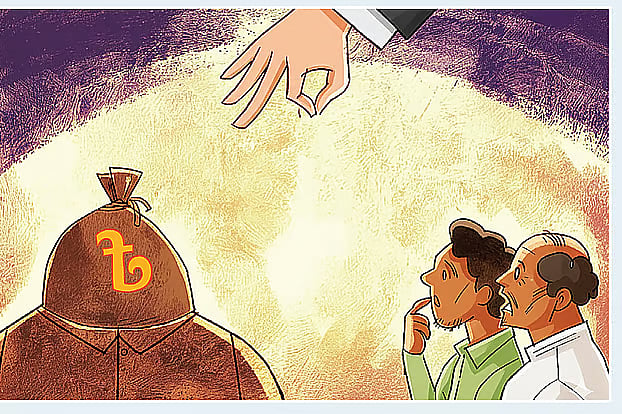
This expenditure-driven politics creates deep inequality and weakens the foundations of democracy. Its devastating effects allow the wealthy to capture politics, sideline grassroots leadership, and prioritise personal gain over the public interest. Nurul Huda Sakib and Md Iqramul Haque write on political financing and the democratic crisis in Bangladesh.
After the fall of long-standing Awami League rule following the mass uprising of July–August 2024, Bangladesh now stands at a critical crossroads. The interim government, tasked with stabilising the country and rebuilding state institutions, has pledged to end excessive centralisation of power and politicisation—key features of governance under the Awami League from 2009 to 2024.
Over the past year and a half, extensive discussions have taken place on reform proposals across various areas of state governance. Yet amid broad national debates on electoral transparency and accountability, one crucial issue has still not received adequate attention: the growing cost of politics, which is undermining the very purpose of democratic representation. When financial capacity becomes a prerequisite for political participation, ideals, merit, and public engagement are defeated by money power.
A study titled The Cost of Politics in Bangladesh (February 2025) by the London-based research organisation Westminster Foundation for Democracy (WFD) examines the adverse impact of financial dominance in Bangladeshi politics and shows that without addressing this cost crisis, meaningful reform will not be realised.
The study further finds that this is not unique to Bangladesh. Across South Asia, Southeast Asia, and Africa, rising trends in political financing have entrenched corruption and exclusion, thereby deepening the democratic crisis.
The dangerous alliance of business and politics
Bangladesh’s political landscape has long been based on patron-client networks, where loyalty, local influence, and financial capacity are the main determinants of political success. Since gaining independence in 1971, Bangladeshi politics has oscillated between democratic aspirations and authoritarian interventions.
At different times, military interventions, irregularities in the 2014, 2018, and 2024 elections, boycotts and lack of genuine competition, the ambiguous position on caretaker government systems, the dual dominance of the two major political parties—the Awami League and BNP—and the close intertwining of business interests with politics have further complicated this crisis.
Oversight can be made more effective by creating a task force coordinating the Election Commission, the Anti-Corruption Commission (ACC), and the Office of the Comptroller and Auditor General. Candidates should be given opportunities to publicly explain their funding sources, for example through live-broadcast nomination hearings.
WFD’s research shows that this situation has essentially turned politics into a field dominated by the wealthy. Businesspeople, bureaucrats, and retired military officers are given priority in the nomination process, while grassroots leadership is increasingly discouraged.
The study also highlights that the mix of business and politics has further restricted opportunities for ordinary citizens to enter politics. Bangladesh’s legislature has largely come under the control of major business interests; sectors such as ready-made garments, real estate, infrastructure, and others have created avenues for their political dominance.
According to the Shushashoner Jonno Nagorik (SHUJAN) report, in the most recent 12th national parliament, 67 per cent of members were businesspeople, compared to 62 per cent in the 11th parliament, and 18–24 per cent in the first parliament.
The growing reality of election spending
In Bangladesh, political competition begins long before election campaigns officially start. Aspiring candidates must spend years building relationships, demonstrating party loyalty, funding social activities, and strengthening their position through various networks.
During candidate selection interviews, parties often assess financial capacity. Those who can personally fund rallies, gatherings, or informal payments to influential individuals are given priority. In competitive constituencies, multiple interested candidates not only complicate the party’s nomination process but also increase informal spending and the competition to demonstrate loyalty.
After securing a nomination, the campaign becomes even more expensive. Large sums are required for posters and promotional materials, staff wages, transportation, public outreach, and digital campaigning on social media. In highly competitive constituencies, spending increases further to attract voters. On election day, additional expenses arise for transporting voters to polling stations, ensuring security, monitoring, and exerting influence at the polling centre.
After the election, members of parliament spend substantial amounts to maintain local development projects, party contributions, office operations, social events, institutional donations, and public relations—often sourcing funds informally or unethically. As a result, MPs increasingly function as local development agents rather than legislators or policymakers.
The dominance of informal sources in spending
The sources of election funding reveal the weaknesses of this system. Beyond small party grants and personal savings, business enterprises, interest groups, and informal sources play the largest role in financing campaigns.
Recently, it has been observed that large corporate entities have funded various candidates in hopes of gaining unethical business advantages. In some cases, even local NGOs have been seen providing logistical support to candidates with the expectation of future benefits. This increases business influence over policy-making.
In Bangladesh, constituencies in economically significant areas—such as ports, industrial zones, or mineral-rich regions—see unusually high political competition and campaign spending. With limited party support, candidates become increasingly reliant on private sponsors and personal wealth to fund their campaigns.
Moreover, candidates from the ruling party often use government positions, resources, or benefits to cover campaign expenses, which further discourages newcomers from entering the political arena.
The financial barrier to democratic inclusion
This financial pressure is a major obstacle to inclusive representation. Women, young people, and candidates from marginalised communities often cannot afford these campaign costs. Despite party constitutions and legal directives mandating a certain number of female members, women’s progress in direct elections remains very limited.
According to WFD’s report, the main reason is that women struggle to secure nominations due to lack of financial capacity and, in many cases, must rely on family support. Moreover, without familial political connections, it becomes even more difficult for women to enter and sustain themselves in politics. Young candidates face similar challenges, as their limited financial resources and the structure of political parties make it difficult for them to access mainstream politics.
Additionally, societal perceptions often suggest that leadership is only for the “older or experienced.” Yet, in Bangladesh after 2024, several young leaders have demonstrated new potential, and discussions with young leaders from various student organisations highlighted a clear aspiration for merit- and skill-based politics.
The erosion of democracy under financial influence
This expenditure-driven politics creates deep inequality and weakens the foundations of democracy. Its devastating effects allow the wealthy to dominate politics, marginalise grassroots leadership, and prioritise personal gain over the public interest. Elected representatives often leverage political influence in the distribution of government projects and benefits to recover their expenses. Development projects, social security allowances, and other benefits are distributed based on political loyalty, which further increases bribery and injustice.
Business groups influence policymaking, gradually turning the character of the parliament into an elite-dominated body. The infiltration of criminal elements into politics is also rising, especially in border areas, where smuggling and drug networks exert influence with the support of political representatives. Election-related violence, loss of life, and economic damage increase, turning elections into a source of fear among citizens. This erodes public trust in the political process and creates major obstacles to social justice.
WFD research in Uganda has found a correlation between high political spending and voter disengagement. Viewed in this light, declining voter turnout and citizen apathy in recent elections in Bangladesh can largely be attributed to the intertwining of business interests with politics and the rising costs of political campaigns.
Sustainable reforms for inclusive democracy
To break this cycle, the government must undertake comprehensive reform initiatives. Strengthening law enforcement is critical. Realistic limits on election spending must be established, party and government support for marginalised candidates provided, and transparent funding ensured through mandatory disclosure of income and expenditures within realistic timeframes.
Oversight can be made more effective by creating a task force coordinating the Election Commission, the Anti-Corruption Commission (ACC), and the Office of the Comptroller and Auditor General. Candidates should be given opportunities to publicly explain their funding sources, for example through live-broadcast nomination hearings.
All donations should be subject to real-time digital reporting. Income and expenditure statements must be verifiable by independent bodies, accompanied by strict penalties. Violations should trigger automatic disqualification and asset seizure.
Additionally, transparency and democratic practices must be fostered within political culture. Young leaders should receive training, and public dialogue should be encouraged. Internal party elections through secret ballots should be mandatory and properly monitored to strengthen party democracy. Quotas for merit- and skill-based nominations for women and youth are necessary.
A “cooling-off” period could be applied for businesspeople or bureaucrats before entering politics. Costly traditional campaigning should be replaced by online campaigns, with spending limits for digital advertising.
Above all, long-term initiatives should be undertaken to politically educate and engage citizens, in collaboration with educational institutions, mosques, community-based organisations (CBOs), and student groups.
The mass uprising of 2024 demonstrated that collective willpower can bring change. Now, that energy must be directed toward sustainable reforms. Failing to address this expenditure-driven crisis in politics will trap Bangladesh in the same cycle again, where democracy exists in name, but power rests in the hands of a small elite. Sustainable reforms are not optional but essential for building inclusive politics and a just Bangladesh.
*Nurul Huda Sakib is Chiarmand and Professor, Department of Government and Politics, Jahangirnagar University
*Md Iqramul Haque is lecturer, Department of Government and Politics, Asian University of Bangladesh
#Opinions are those of the authors.
#This article, originally published in Prothom Alo print and online editions, has been rewritten in English by Rabiul Islam