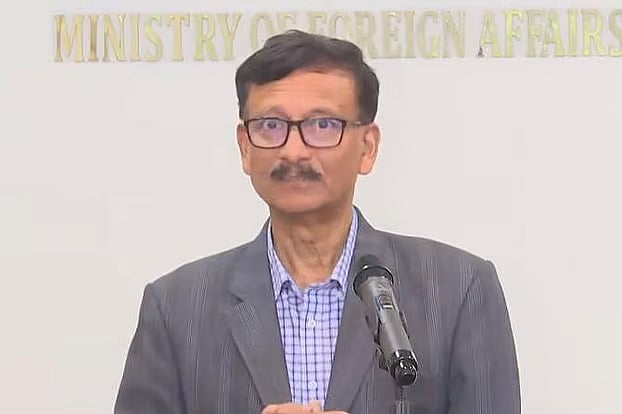
Issuing passports to Rohingya doesn’t make them Bangladeshi citizens: Foreign affairs adviser
Foreign affairs adviser Md Touhid Hossain has said that the decision to issue Bangladeshi passports to Rohingya nationals does not confer Bangladeshi citizenship upon them.
He explained that Saudi Arabia had been exerting pressure on Dhaka to renew the passports of Rohingya individuals, who had travelled to the Kingdom using Bangladeshi passports.
Speaking to journalists at his office at the Ministry of Foreign Affairs on Wednesday afternoon, the adviser said that around 69,000 Rohingya had been issued Bangladeshi passports due to broader national interests, despite efforts to avoid such a decision.
“Our own shortcomings allowed a large number of Rohingya to travel to Saudi Arabia many years ago using Bangladeshi passports,” Touhid Hossain said. “At that time, passports were handwritten, and there were numerous allegations of corruption surrounding the process.”
He said the situation had now reached a point where the Saudi authorities were pressing Bangladesh to renew the passports of those who had entered the country using Bangladeshi documents.
“When a decision is taken in relation to a particular country, many other interests are also involved. We tried to avoid taking this step, but due to our other national interests, we ultimately had to decide to issue Bangladeshi passports to those 69,000 Rohingya. However, issuing passports does not mean that they are Bangladeshi citizens,” he reiterated.
The adviser further noted that international practice allows countries to issue passports to non-citizens. “There are numerous examples around the world. You can issue passports even to citizens of other countries,” he said.
Emphasising Bangladesh’s core position, Touhid Hossain said the Rohingya originated from Myanmar.
“People may continue researching ethnicity, that is a separate matter. But the fact remains that the ancestors of the 1.3 million Rohingya currently here had been living there for centuries. Therefore, they must be taken back,” he said.
He added that the international community recognises the Rohingya as an ethnic group native to Myanmar’s Arakan region.
“We must address the issue from that perspective. It should not be allowed to remain stalled over minor technical issues. If an environment conducive to their repatriation can be created, we will need to do much more to achieve that,” the adviser said.