Diplomacy
PM’s China visit: investment and political ties take priority
Preparations for signing of at least 15 instruments, including accords and MoUs
Bangladesh is set to join China’s GDI.
BNP and CPC to sign an MoU
Teesta project is expected to feature in discussions
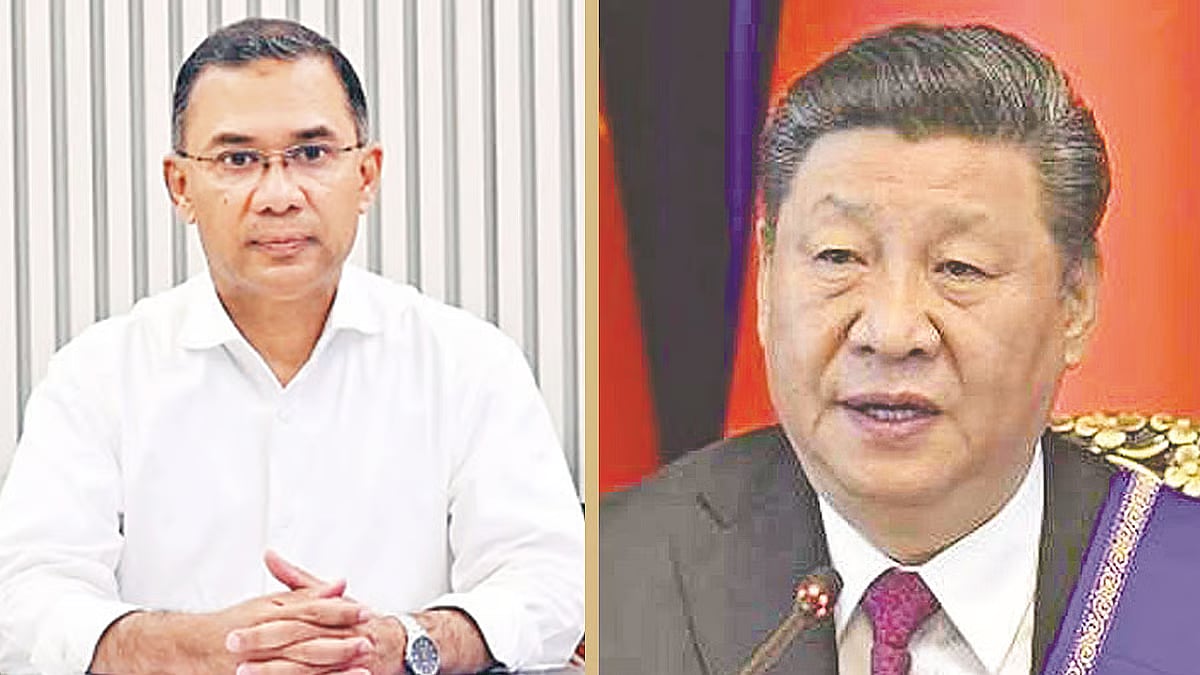
Prime Minister Tarique Rahman is due to hold talks with Chinese Premier Li Qiang today, Thursday, during his first visit to China.
In the meeting between the two top leaders, investment and closer political ties are expected to receive particular emphasis in the broader framework of bilateral cooperation.
Diplomatic sources in Dhaka and Beijing have given such indications regarding the prime minister’s China visit.
Officials in Dhaka are hopeful that the visit could open up a new horizon in Dhaka-Beijing relations.
Four months after assuming office as prime minister following his victory in the national election in February, Tarique Rahman is now in China after first visiting Malaysia on his maiden state tour abroad. His China visit has drawn international attention.
Diplomatic analysts believe the trip has acquired added significance against the backdrop of geopolitical competition involving China, India and the United States in the regional and international arena.
Officials at the Ministry of Foreign Affairs have said preparations have been made for the signing of between 15 and 17 instruments, including agreements and memorandums of understanding (MoUs), during the visit.
Diplomats in Dhaka say Prime Minister Tarique Rahman’s first visit to China is somewhat different in character from those of other top leaders in the past. Earlier visits generally placed emphasis on financial assistance, project financing, agreements and MoUs. This time, however, particular stress is being placed on investment cooperation and closer political engagement between the two countries.
Busy day in Beijing
Prime Minister Tarique Rahman is set to begin the day in Beijing by addressing an investment conference titled the Bangladesh Investment Forum, organised by the Bangladesh Investment Development Authority (BIDA).
He is expected to present Bangladesh’s investment climate and opportunities to Chinese businesses and invite greater investment in the country.
Later, top executives of leading Chinese business groups — Chery Group, Handa Group and ChinaTaX Corporation — are scheduled to meet the prime minister separately.
Liu Haixing, head of the International Department of the Communist Party of China (CPC); Chen Xiaodong, chairman of the China International Development Cooperation Agency (CIDCA); and Chen Huaiyu, chairman of the Export-Import Bank of China (China Exim Bank), are also due to pay courtesy calls on the prime minister.
Diplomatic sources said several commercial agreements may be signed at the private-sector level during the BIDA-organised investment conference.
Discussions with the chief executives of the three leading Chinese companies could also lead to progress in expanding business and investment cooperation in a range of sectors between the two countries.
Referring to the meetings between the prime minister and senior executives of CIDCA and the China Exim Bank, officials at the foreign ministry said discussions would cover specific projects and financial assistance in various sectors with the two Chinese financing institutions.
Meeting between 2 top leaders
At the Great Hall of the People in Beijing today, Prime Minister Tarique Rahman will hold a bilateral meeting with Chinese Premier Li Qiang. The two prime ministers are expected to discuss matters for around an hour along with members of their respective delegations.
Diplomatic sources said the meeting in Beijing would focus on a wide range of issues related to bilateral cooperation across different sectors. Both sides are expected to discuss all matters of mutual interest, as well as how the relationship can be advanced further in the future.
The discussions are likely to include the much-discussed Teesta mega project and Bangladesh’s association with China’s Global Development Initiative (GDI). In addition to regional and international issues, geopolitical and geostrategic matters are expected to receive particular attention at Tarique Rahman’s meeting with President Xi Jinping tomorrow, Friday.
More than 15 instruments, including agreements, MoUs and protocols, have been listed for signing during the prime minister’s visit. These include instruments on development cooperation between the two countries, a framework for the modernisation and renovation of Mongla Port, and cooperation in Chinese-language education.
The list of MoUs includes cooperation between the Bangladesh Nationalist Party (BNP) and the Communist Party of China (CPC), implementation of the GDI, environmentally friendly energy generation, geological surveys, the development of artificial intelligence, and technical education.
It also includes separate cooperation agreements between China Media Group and Bangladesh Television (BTV), Bangladesh Sangbad Sangstha (BSS) and Bangladesh Betar, as well as separate cooperation arrangements between China’s state-run Xinhua News Agency and BSS and Bangladesh’s Ministry of Information.
Following the meeting, agreements, memorandums of understanding and protocols will be signed in the presence of the two leaders. Tarique Rahman will then attend a banquet to be hosted by the Chinese premier in honour of the Bangladeshi prime minister.
Dalian programme
On Wednesday evening, Prime Minister Tarique Rahman arrived in Beijing from Dalian with his wife Zubaida Rahman and other members of his entourage. He travelled to the Chinese capital by bullet train from Dalian.
At Chaoyang Railway Station in Beijing, the Bangladeshi prime minister was received by China’s Customs Minister Sun Meijun. Tarique Rahman was also accorded a red-carpet reception at the station.
Earlier on Wednesday morning, the prime minister attended a working session of the World Economic Forum’s Annual Meeting of the New Champions in Dalian. On the sidelines of the event, Kazakh Prime Minister Olzhas Bektenov paid a courtesy call on him.
Prime Minister Tarique Rahman stressed the importance of further strengthening bilateral relations with Kazakhstan. With a view to improving ties, the two prime ministers agreed on the establishment of permanent diplomatic missions in Dhaka and Astana. They also underscored the need for regular meetings to enhance political, business and people-to-people contacts between the two countries.
Their discussion also covered the possibility of sending skilled manpower from Bangladesh to Kazakhstan, as well as trade and investment prospects in renewable energy, digital infrastructure, technology, agribusiness and food processing.
Friday’s programme in Beijing
Tomorrow, the prime minister will begin the final day of his Beijing visit by paying tribute at the Monument to the People’s Heroes in Tiananmen Square.
He will later hold a courtesy meeting at the Great Hall of the People with Zhao Leji, chairman of the Standing Committee of China’s National People’s Congress.
He will then meet Chinese President Xi Jinping. After that meeting, he is scheduled to visit the Museum of the Communist Party of China. Later in the afternoon, the prime minister and his entourage will leave Beijing for Dhaka.
Members of the prime minister’s entourage in China include Foreign Minister Khalilur Rahman, Information Minister Zahir Uddin Swapon, Water Resources Minister Shahid Uddin Chowdhury Anee, the prime minister’s adviser on finance and planning Rashed Al Mahmud Titumir, foreign affairs adviser Humayun Kabir, defence adviser Brigadier General (retd.) AKM Shamsul Islam, and the prime minister’s adviser and Prime Minister’s Office spokesperson Mahdi Amin.
New phase after a decade
Diplomatic analysts see Bangladesh’s move to join Chinese President Xi Jinping’s Global Development Initiative (GDI) as a new phase in bilateral relations after a decade. The last major shift came in October 2016, when Bangladesh joined Beijing’s Belt and Road Initiative (BRI) through the signing of a memorandum of understanding during President Xi Jinping’s visit to Dhaka.
According to diplomatic analysts, the signing during this visit of a MoU between the principal political parties of the two countries, as well as an MoU on Bangladesh’s association with the GDI, will be significant in elevating the relationship.
Asked about the matter, Munshi Faiz Ahmad, Bangladesh’s former ambassador to China, told Prothom Alo, “I hear Bangladesh is joining the GDI. This will add a new dimension to the strategic relationship between the two countries. Cooperation is expanding in many bilateral areas. It may be hoped that the prime minister’s visit will open the door to large-scale investment.”