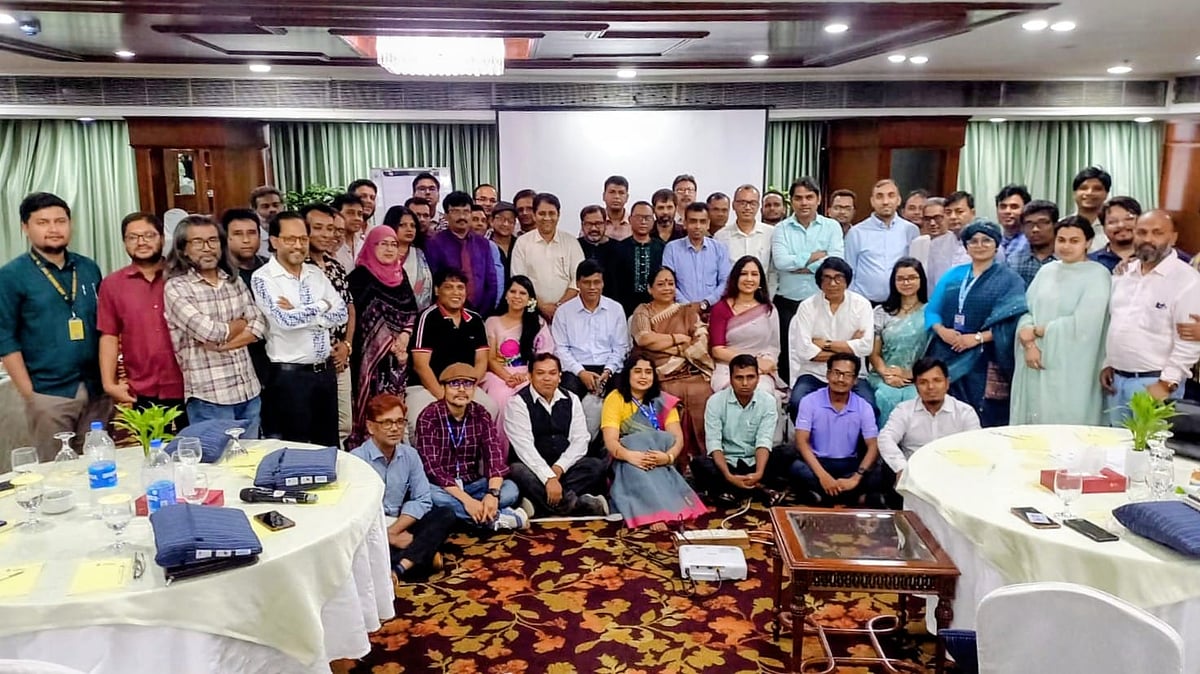
Prominent scriptwriters and entertainment media professionals gathered in Dhaka on Saturday for a day-long workshop aimed at promoting gender-sensitive narratives in Bangladesh’s entertainment industry.
The event, titled “Workshop on Gender Sensitive Script Writing,” focused on sensitising scriptwriters on developing inclusive and responsible storytelling.
The workshop was organised under the “Shomotay Tarunno: Youth for Equality” project, a four-year initiative jointly implemented by Plan International Bangladesh and JAAGO Foundation Trust, with support from the Embassy of the Kingdom of the Netherlands and in collaboration with Television Playwrights Association of Bangladesh.
Bringing together around 70 participants, including 60 scriptwriters, facilitators, and representatives from partner organisations, the workshop addressed gender biases and stereotypes commonly found in mainstream entertainment media, particularly in television and online dramas.
The initiative is expected to foster a network of media professionals committed to promoting positive gender norms and reducing stereotypes in Bangladeshi media.
Zakir Hossain Ujjal, General Secretary of the association, stated in his welcome remarks, "We need to move beyond portraying women in dramas as victims and instead, showing them with the dignity they deserve. Only then we can change our mind-set. This responsibility lies with both experienced and young playwrights.
“For over three decades, Plan International Bangladesh has been working to empower young women and children. Entertainment, especially drama and film, has unmatched reach, making it vital for scripts to be gender-sensitive to reduce violence and promote equality. Scriptwriters have a key role in driving this change.” said Nishath Sultana, Director of Influencing, Campaign and Communications at Plan International Bangladesh.
The sessions were facilitated by leading experts, including Professor Mohammad Ashaduzzaman, Director of the International Mother Language Institute, noted playwright and director Masum Reza, and actress and academic Wahida Mollick Joly.
Through interactive lectures, discussions, and group work, participants explored key issues such as media influence on social perceptions, power dynamics in character development, and the use of gender-sensitive language in scripts.
“We envision a Bangladesh where young people, especially girls, live free from violence and can challenge harmful gender norms. Scriptwriters shape millions of minds, and together we can break narratives that reinforce inequality.” said Md Hushain Shakir, Consortium and Advocacy Manager of Shomotay Tarunno Project, Plan International Bangladesh.
Playwright Masum Reza poses a vital question in the workshop, “In what role do you wish to see a woman? Is it the conventional, traditional role, or the logical role that truly belongs to her? We must shift the portrayal of women from stereotypical tropes toward reform and empowerment.
Participants also engaged in critical discussions on current trends in Bangladeshi television dramas, identifying gaps and opportunities for more inclusive representation.
“This is not just a workshop. It is a space for reflection on the language we use and the ideas where we promote inclusiveness,” said Soya Via Afrin Jessika, Office Secretary of the Television Playwrights Association of Bangladesh.
Plan International Bangladesh expressed hope that the initiative will contribute to more inclusive storytelling in mainstream media and inspire long-term shifts in social attitudes toward gender equality.