Analysis
“Physicians will go after the people”—this situation does not exist in Bangladesh
A statement by Health Minister Sardar Md Sakhawat Hossain has drawn the attention of many. Some believe his remarks reflect the real picture of the country’s health sector to some extent. Others think the comments have somewhat belittled physicians.
Three days after taking office, last Friday Health Minister Sardar Md Sakhawat Hossain spoke to journalists at his home in Hafizpur village of Monohardi upazila in Narsingdi. Regarding delivering healthcare to people’s doorsteps, he told newspersons, “So that people do not have to run after physicians, physicians will go after the people. With the mindset of making healthcare accessible and universal, we are moving forward to deliver medical services to people’s doorsteps.”
However, a situation where “physicians will go after the people” does not exist in the country.
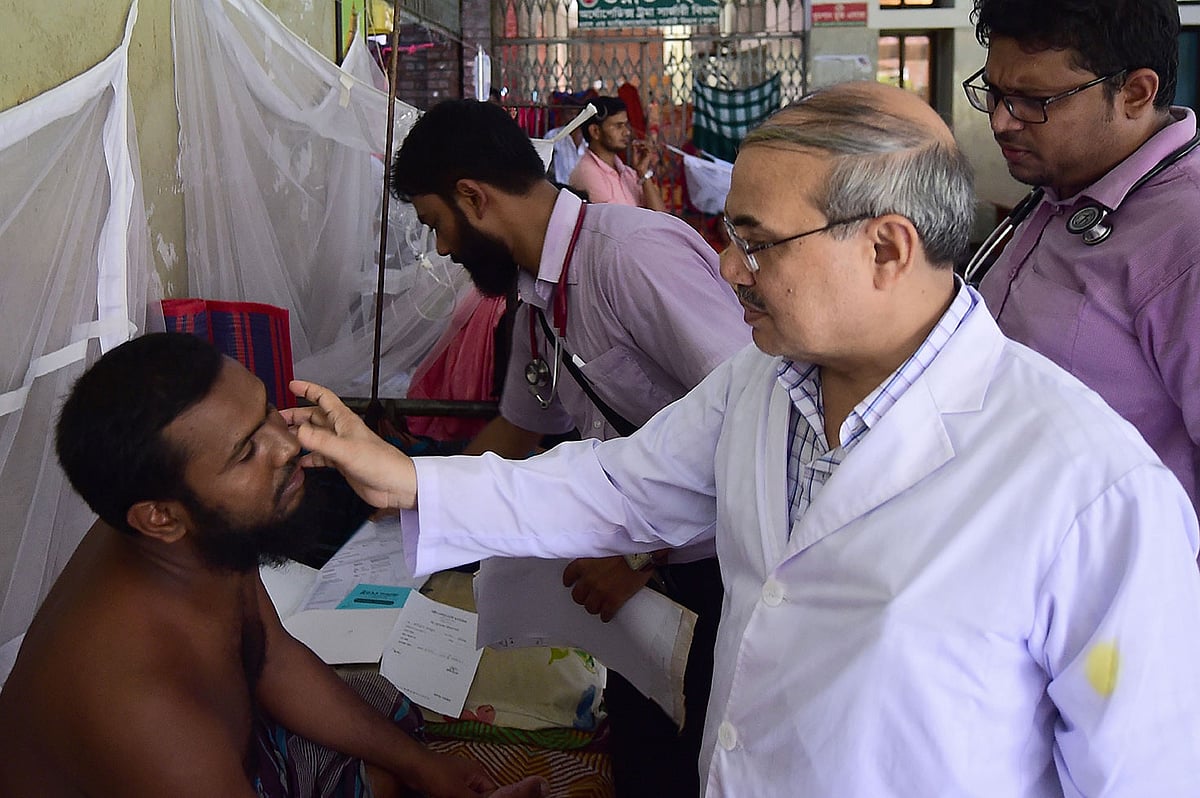
Physicians play the biggest role in receiving or providing medical services. Nurses and other types of health workers are also required for service delivery. But in reality, there are seven physicians for every 10,000 people in the country. The number of nurses is even lower.
In this regard, Bangladesh lags behind neighbouring countries. The country’s health sector has been in a prolonged manpower crisis for years. Experts believe that quality service is not possible with insufficient manpower. The health minister must address the shortage of physicians as well as all types of health workers.
Professor Rumana Haque of the Department of Economics at Dhaka University has been researching the health sector for many years. She told Prothom Alo, “The first task of the new government should be to update and strengthen the current human resource information system and create a central database.
On an urgent basis, vacancies of physicians and other health workers, fourth-grade employees, cleaners and security staff must be filled. It should be kept in mind that if rural service is included as a criterion for promotion, it may be possible to retain physicians in remote areas. At the same time, I believe that implementing the recommendations of the health sector reform commission report will resolve many problems.”
What is the situation
According to officials of the Bangladesh Medical and Dental Council (BMDC), the number of registered physicians (MBBS pass) in the country stands at 134,000 as of 2025. However, the BMDC does not have information on how many physicians have died, how many are abroad, or how many are not practicing.
On the other hand, Abu Hossain Md Moinul Ahsan, Director (Hospitals and Clinics) of the Directorate General of Health Services, told Prothom Alo that around 30,000 physicians are working in government hospitals and health centres.
Various documents, including the Health Sector Reform Commission report, estimate Bangladesh’s population at 180 million. Based on that, there are 7.2 physicians per 10,000 people in the country. In India there are 9.9 physicians per 10,000 people, in Nepal 10.9, in Sri Lanka 11.4, in Pakistan 12.8, and in the Maldives 23. Only Afghanistan (3.2) and Bhutan (5.5) are behind Bangladesh. Similarly, the number of nurses in the country is also lower than required.
In reality, providing healthcare is not the work of physicians alone. Nurses, midwives, technologists and many others play major roles. In most cases, physicians play the central role. For quality service, a mix of skills among physicians, nurses and other health workers is required. The World Health Organization says the desirable ratio of physicians, nurses and other health workers is 1:3:5. That means for every one physician, there should be three nurses and five other health workers.
The Health Sector Reform Commission report published in 2025 states that for a population of 180 million, the public sector needs 135,000 physicians. Accordingly, 350,000 nurses and 517,000 other health workers are required.
The report also states that the country has 17 per cent fewer physicians than needed. On the other hand, there is a shortage of 82 per cent of nurses and 56 per cent of other health workers. In government hospitals and health centres, 32 per cent of posts are vacant.
18 reasons for doctors’ absence
In Dakop upazila of Khulna district, adjacent to the Sundarbans in the south, there are 40 sanctioned posts for government physicians. On Sunday it was found that only 12 physicians are posted there. That means 28 posts are vacant, or 70 per cent of the positions are empty. There are many similar examples.
For various reasons, physicians do not remain at their workplaces, do not want to remain, or are unable to remain. A research article published in March 2024 in the health journal The Lancet found that physicians remain absent from their workplaces for 18 reasons. These include:
Infrastructure weaknesses: Consultation rooms are small; in many cases multiple physicians have to sit in one room; patient privacy cannot be maintained during consultations. Hospitals are crowded with patients’ relatives. There is an inadequate supply of equipment and other medical instruments. There are shortages in medicine supply. There is insufficient water and electricity. There is a shortage of all categories of supporting health workers for physicians. Due to inadequate medical waste management in hospitals, physicians have to work in unclean environments.
Pressure and violence from influential groups: Government physicians in hospitals cannot always perform their duties independently. Local political leaders or influential individuals obstruct physicians’ work and exert various unethical pressures. Because of such pressures, physicians feel insecure in the workplace. At times, patients’ relatives behave badly with physicians. Physicians sometimes face physical violence.
Housing and surrounding problems: At the upazila level, physicians face significant housing problems. There are limited educational opportunities for their children in the workplace areas. Communication systems in those areas are poor.
Policy-related issues: Government policies in many cases hinder physicians’ professional development. Physicians told researchers about four types of problems in this regard—inequality in job benefits among cadres, inability to utilise acquired knowledge and skills, discrimination in transfers, and lack of opportunities for higher education or specialised training.
One of the researchers and Associate Professor Md Khalekuzzaman of the Department of Public Health and Informatics at Bangladesh Medical University told Prothom Alo, “The problems of physicians are old, known and widely discussed. What is needed is a sincere effort to solve them.”
‘Automation’ as a solution
Physicians want to stay or practice in areas of their choice. Accepting this reality, the interim government initiated an automated system for transfers and postings. Under this system, physicians can mention several preferred alternative locations. Combined with experience and other skills, promotions would be made objectively.
The use of this system has begun. Through this method, around 3,500 physicians recruited through the 48th BCS have been posted. So far, no allegation of irregularity or financial corruption has arisen in these postings. According to sources at the Directorate General of Health Services, postings of 217 physicians from the 44th BCS will also be made using the same system.
Last Sunday, an official of the health ministry, speaking to Prothom Alo on condition of anonymity, said that if this automated system remains in place or is introduced at all levels, transparency will increase in recruitment and transfers and financial transactions will stop.
The Health Sector Reform Commission report contains several recommendations to resolve the manpower crisis. Experts believe these recommendations should be adopted during the tenure of the new government.
What will BNP do, minister’s explanation
In its election manifesto, BNP said that physicians are unevenly recruited. Physicians have to work under pressure in hospitals. There is a lack of motivation among them.
The manifesto further states, “To ensure healthcare for all citizens across the country, nearly 100,000 new health workers will be recruited, 80 per cent of whom will be women.”
Sources at the health ministry said a meeting on the health sector was held at the Prime Minister’s Office last Sunday. In addition to Prime Minister Tarique Rahman, Health Minister Sardar Md Sakhawat Hossain, State Minister for Health MA Muhith, Health Secretary Md Saidur Rahman and several other officials were present. According to the source, ensuring physicians’ presence in the workplace was discussed among other issues.
There has been some criticism of the statement that physicians will go after the people. In this regard, the health minister told this reporter at his office last Sunday, “There are complaints that patients go to hospitals or health centres and do not find any physician. We want to put an end to such complaints. We want to make appropriate arrangements to keep physicians in the workplace. Physicians’ presence will ensure patient care. There will no longer be complaints that patients did not receive treatment because of physicians’ absence.”