Interim govt has undermined its legitimacy in many ways: Debapriya Bhattacharya
Nagorik Platform Bangladesh Convener and Centre for Policy Dialogue (CPD) distinguished fellow Debapriya Bhattacharya has commented that the current interim government has undermined its legitimacy in many ways.
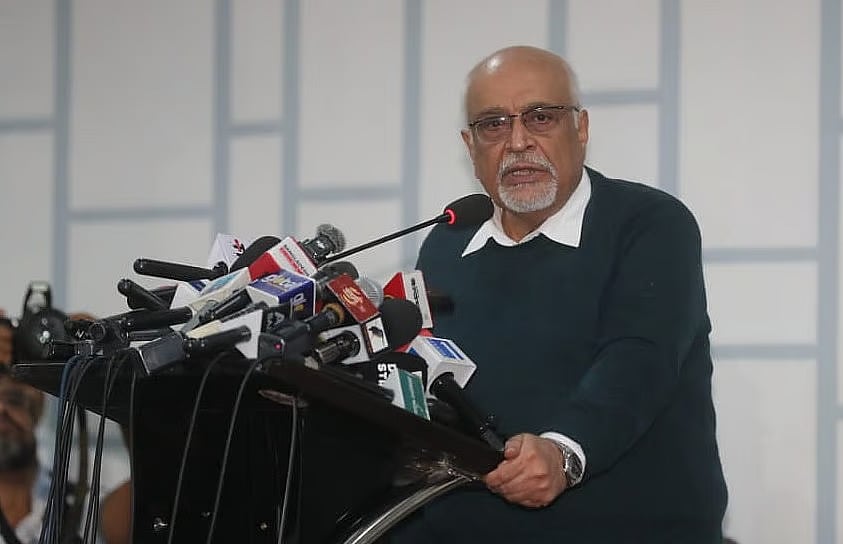
Debapriya Bhattacharya made the remarks on Monday while expressing solidarity at a protest meeting organised in response to the attack and arson at the offices of Prothom Alo and The Daily Star, and the harassment of Editors’ Council President and New Age editor Nurul Kabir.
On Thursday night, the country’s leading news outlet Prothom Alo fell victim to a deliberate and organised terrorist attack. The Prothom Alo office was attacked, vandalised, set on fire and looted, leaving the premises reduced to ashes. On the same night, the office of The Daily Star was also vandalised, set on fire and looted.
When Editors’ Council President Nurul Kabir went to The Daily Star office that night to express solidarity, he was harassed. Many have condemned and protested the incident, calling it a ‘black day for the media.’ Those concerned say the incident amounts to an attack on independent media.
In continuation of this, the Editors’ Council, the organisation of newspaper editors, and the media owners’ body Newspaper Owners’ Association (NOAB) jointly organised the protest meeting titled “Bangladesh under Mob Violence” at the Pan Pacific Sonargaon Hotel.
Leaders of various political parties, members of professional organisations, business groups, journalists’ organisations, representatives of civil society, lawyers and people from different walks of life attended the protest meeting to express solidarity. After the meeting, they formed a human chain on the road beside the Pan Pacific Sonargaon Hotel.
In his speech at the meeting, Debapriya Bhattacharya said the government should remember that it is not an elected government, though it may be a legitimate one. An unelected government has the capacity and authority to govern only as long as it retains moral legitimacy. Through this incident, the current government has undermined its legitimacy in many ways. If it cannot restore that legitimacy, there is doubt as to whether it will be able to uphold the process of transition and the ideals of the uprising in the days ahead.
Debapriya Bhattacharya said, “None of us ever imagined that such a meeting would be necessary. Over the past month and a half, I have visited various cities across Bangladesh. There, the people have emphasised one thing above all: the lack of security, and they have explained this lack of security in many ways. This is true for women, for religious minorities, ethnic minority communities, Dalits and dissenters. In the same way, it is also true for politicians who wish to contest elections. This was the situation even before Sharif Osman Hadi was martyred (spokesperson of Inqilab Moncho).”
Debapriya Bhattacharya said that the second point that emerged there was that people clearly expressed a lack of trust in the current government. They lack confidence that the present government, its administration and its law-enforcement agencies will be able to ensure security. When they said these things, these incidents had not yet occurred. Therefore, signals and warnings from the masses had been given at various times that such incidents could happen.