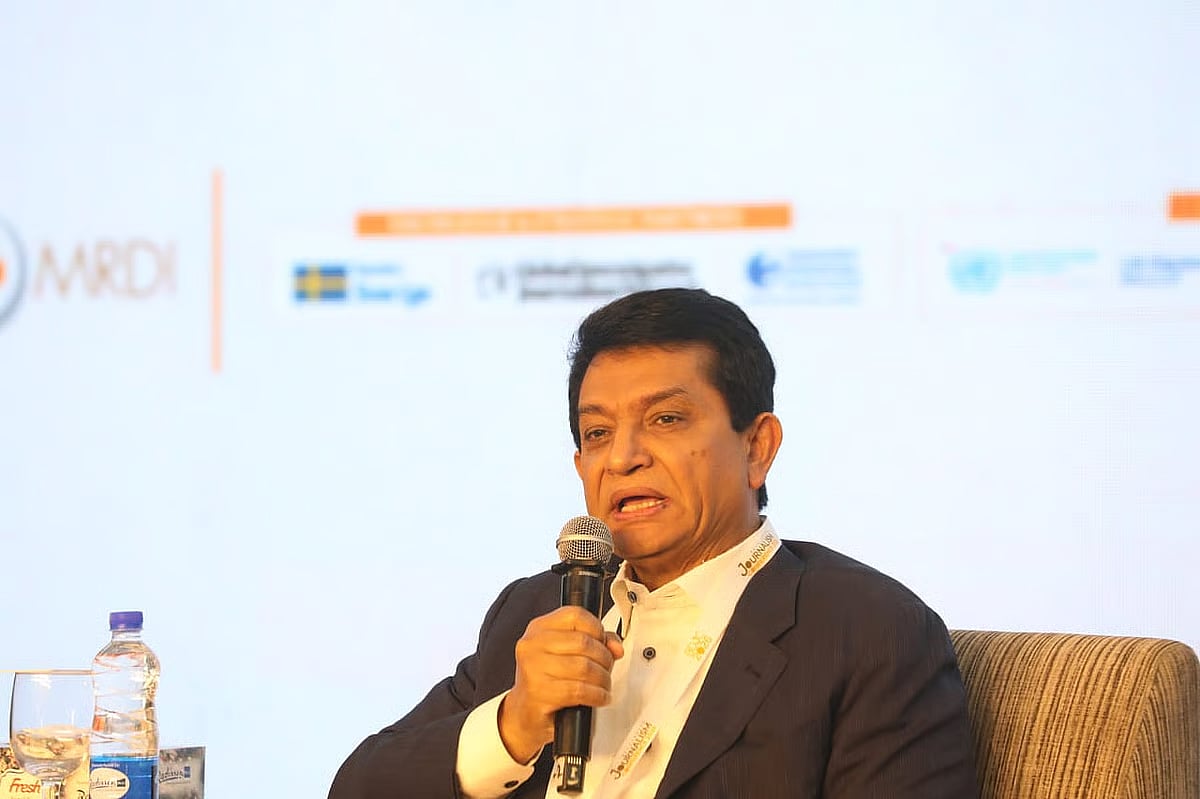
First phone call comes to me about anyone a story is going to be published on: AK Azad
Daily Samakal publisher and managing director of Ha-meem Group AK Azad has said that journalists at his organisation are unable to work freely because of him.
Explaining the reason, he said, “75,000 officers and employees work in my business organisation. I have to look after their interests first. After that come honest journalism, press freedom, democracy—these are secondary to me. The fundamental issue is ensuring their protection.”
He made the remarks this morning, Saturday, at the second session of the final day of the ‘Bangladesh Journalism Conference 2026’ at a hotel in the capital. The session was titled ‘Media Self-Regulation in Bangladesh: Professional Oversight, Accountability and Grievance Redressal’.
AK Azad was asked how the public can trust that his media outlet operates independently, given that he is both a businessman and a media owner. In response, he said, “I can say without hesitation that they (journalists) are not able to work independently. And the main obstacle to their independence is me.”
He added that investigative journalism requires long period of time and reliable information. Before publishing any report on corruption, journalists must seek the response of the concerned parties, and that is when pressure starts to mount. “The first phone call comes to me about anyone a story is going to be published on, asking that it not be published under any circumstances,” he said.
AK Azad alleged that when direct pressure does not work, influential quarters, intelligence agencies, or even senior government figures are sometimes brought in.
When asked how such a situation could be resolved, he said, “If you can give me protection so that I do not face business harassment, am not arrested, and my factories are not obstructed from operating—if I have that assurance, then I will not hold you by the throat, nor will I hold journalists’ hands.”
Other speakers in the session included consulting editor of The Daily Star Kamal Ahmed, international media law expert Joan Barata, and head of Prothom Alo English Ayesha Kabir. The session was moderated by former BBC journalist Shakeel Anwar.