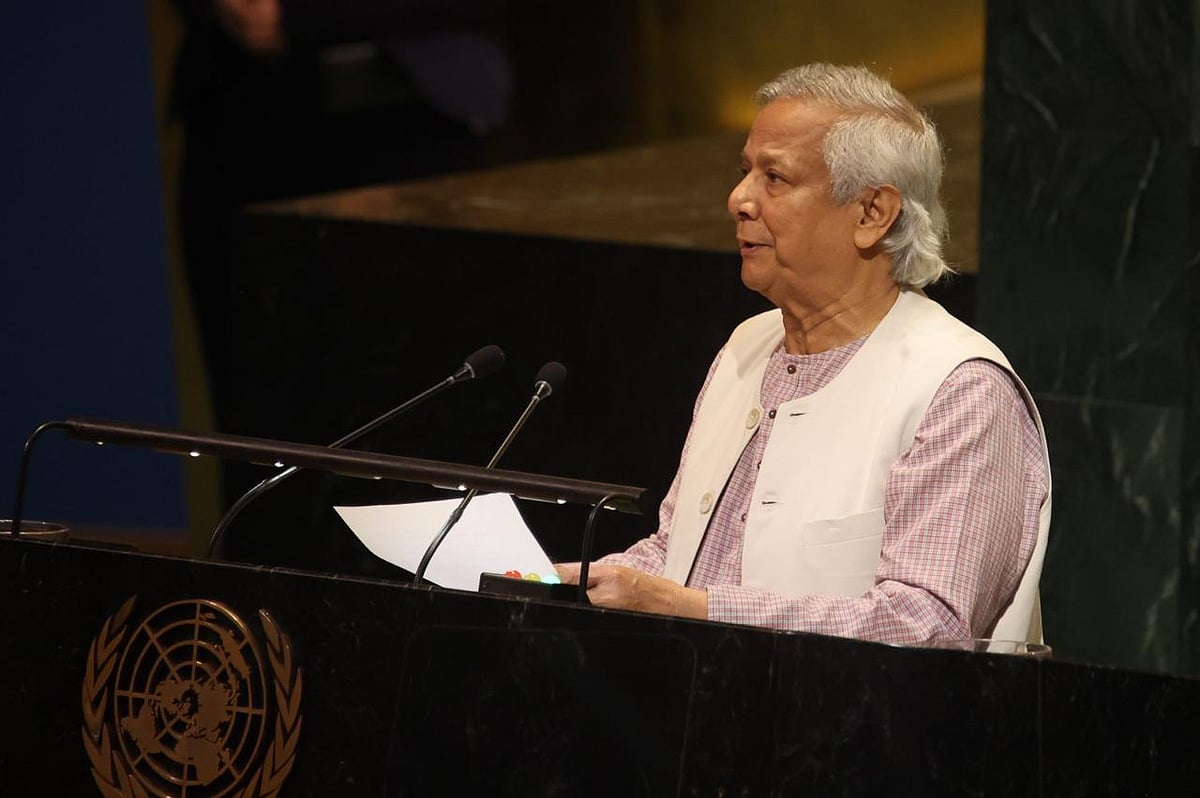
UN General Assembly
Yunus makes 7 proposals for resolution of Rohingya crisis
Chief Adviser Professor Muhammad Yunus has made a seven-point proposal towards a sustainable resolution of the Rohingya crisis.
He made the proposals at the opening session of the High-Level Conference on the Situation of the Rohingya Muslims and Other Minorities in Myanmar at the United Nations Headquarters in New York on Tuesday.
Eight years since the genocide began, the plight of the Rohingya continues and initiatives to end the crisis are lacking, Yunus said adding international funding faces alarming shortfalls.
He said, "The Rohingya crisis originated in Myanmar so its solution lies there. The international community must put effective pressure on Myanmar and the Arakan Army to immediately stop persecution of the Rohingya, and start working for their expeditious repatriation to Rakhine. It is the only solution of the crisis. It should not be held hostage to broader reforms in Myanmar."
"As funding declines, the only peaceful option is to begin their repatriation. This will entail far fewer resources than continuing their international protection. The Rohingya have consistently pronounced their desire to go back home. As an immediate step, those who recently crossed into Bangladesh escaping conflict must be allowed to repatriate."
"Bangladesh is a victim of the crisis. We are forced to bear huge financial, social and environmental costs. Criminal activities, including narco-flows into Bangladesh through Rakhine, threaten our social fabric," the Chief Adviser lamented.
Yunus said, "Given our developmental challenges including unemployment and poverty, we do not afford to allow employment of Rohingyas inside Bangladesh."
Towards a sustainable resolution of the crisis, I propose the following actions by the international community:
First, devise a practical roadmap for safe and dignified repatriation of the Rohingya with reasonable stabilization of Rakhine;
Second, exert effective pressure on Myanmar and the Arakan Army to end violence against the Rohingya and start their sustainable repatriation, beginning with those who recently arrived in Bangladesh, and those who are internally displaced;
Third, mobilize international support to stabilize Rakhine and place international civilian presence to monitor stabilization;
Fourth, support confidence building measures for sustainable integration of the Rohingya in Rakhine society and governance;
Fifth, mobilize donors’ contribution to fully fund the Joint Response Plan;
Sixth, pursue accountability and restorative justice; and Seventh, dismantle the narco-economy, and combat transboundary crimes.
The Professor Yunus said, "The world cannot keep the Rohingya waiting any longer from returning home. Today, let us pledge to act together to resolve the crisis once and for all. Bangladesh stands ready to extend its full cooperation to this end."