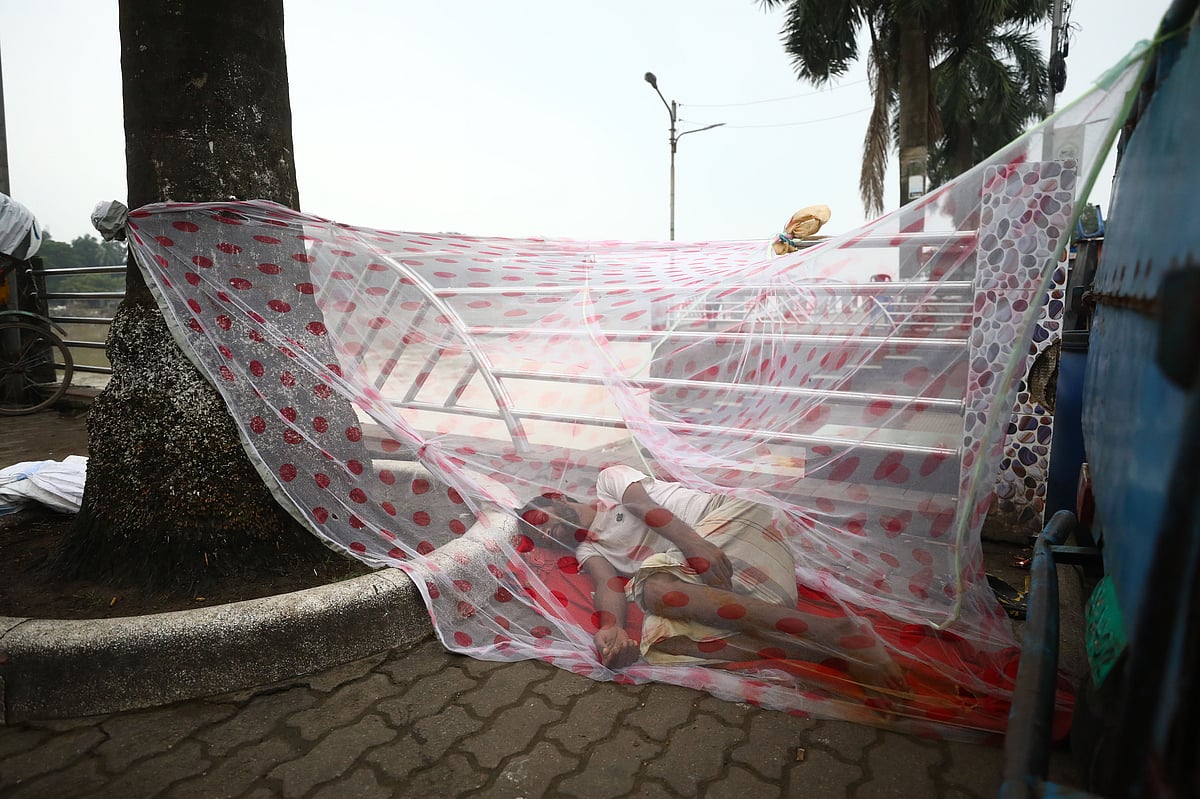
Mosquitos and diseases rise: How heat, rainfall shifts and other factors driving the surge
After suffering from a severe fever for a week, 10-year-old Sudipta Chakma ultimately succumbed to malaria. The girl died in July 2025 in the hill district of Rangamati. This untimely death marked the first malaria fatality in the district in nine years.
Not only Sudipta—another person also died of this mosquito-borne disease in the district last year. According to data from the district health office, malaria in the area was believed to be under control. However, the recent deaths have become a renewed source of fear and concern for the health department.
In 2025, the number of deaths from malaria in the country was the highest in the past nine years. This deadly disease is mainly seen in the hill districts of the country. Although the overall prevalence is believed to have declined somewhat compared to the previous year, it is not being eliminated at the expected rate. Rather, in some areas, the number of patients is suddenly increasing at a geometric rate.
Malaria is primarily transmitted through Anopheles mosquitoes. However, at present, not only Anopheles, but various other species of mosquitoes are spreading at an alarming rate in the country. Alongside this expansion, the prevalence of various mosquito-borne diseases is also increasing.
Researchers observe that mosquitoes are now spreading into many new areas more than before. In Bangladesh, four major mosquito-borne diseases—dengue, malaria, Zika, and chikungunya—have now become major public health threats. Among these, dengue and malaria have long been problems, but the prevalence of Zika and chikungunya has been increasing anew since 2024.
Experts fear that in the future, new species of mosquitoes and unknown mosquito-borne diseases may emerge in Bangladesh. Currently, Culex mosquitoes are the most prevalent in the country.
Research shows that Culex mosquitoes can also cause diseases such as filariasis and Japanese encephalitis. \Although the spread of these two diseases remains limited in Bangladesh so far, experts warn that the country is by no means free from risk. In particular, Japanese encephalitis carries a very high risk of death and poses a major public health challenge.
Diseases that were once considered purely urban have now spread to remote areas of the country. A major example is dengue, which has now become a year-round common illness nationwide. Similarly, the geographical spread of chikungunya is also increasing. Yet, while urban areas have at least minimal healthcare infrastructure to deal with such diseases, remote areas lack even that. As a result, rural populations are living in extremely vulnerable conditions.
There is a deep and close relationship between mosquito breeding and changes in temperature. These climatic changes have become very evident in Bangladesh in recent times. Although these natural changes are accelerated by human activities, there is limited immediate scope to address them.
However, in areas where human intervention is possible—such as mosquito control programmmes, efficient urban management, proper urban planning, and modernisation of the public health system—there are severe shortcomings in implementation.
Experts warn that mosquito-borne diseases will become one of the biggest challenges for Bangladesh in the coming days. To tackle this challenge, fundamental changes are needed in current urban management and health planning.
However, at the policymaking level, the issue is not receiving adequate importance or attention. Common people are the direct victims of this government inaction. Their suffering is increasing, and they are also spending large amounts of money out of pocket for treatment. The financial and social cost of this public anxiety is very high.
Taking advantage of this fear and uncertainty, the market for mosquito control products—such as coils, sprays, and other items—is booming. There are serious questions about the quality and safety of these products available in the market. Despite the lack of monitoring, people are compelled to purchase these items for personal protection and fear of disease.
Malaria: an old problem
In 2025, a total of 16 people died of malaria in the country—the highest annual death toll since 2016. Of them, nine were members of the Rohingya population from Myanmar. While deaths among the mainstream population were comparatively lower, the prevalence and mortality rate among the Rohingya community have raised fresh concerns among health workers.
Malaria was once a major public health problem in Bangladesh. However, over the past decade and a half, coordinated efforts by the government and development partners significantly reduced infection and death rates. In 2010, more than 55,000 people were infected, which dropped to 6,000 in 2012. However, this progress did not last; in 2023, 16,567 people were infected, and in 2025 the number stood at 10,156. The risk of the disease has not yet been completely eliminated in the border hill regions.
Under the government’s action plan for 2024–2030, a target has been set to reduce local malaria transmission to zero by 2030. Currently, 51 districts are claimed to be malaria-free. However, renowned malaria expert Professor MA Faiz believes there is no strong scientific or data-based evidence behind this claim. According to him, it is largely a claim made during applications for international funding.
Professor Faiz states that to declare an area malaria-free, there must be zero local transmission for three consecutive years, and this must be verified through regular microscopy and RDT (Rapid Diagnostic Test) examinations. However, many districts and sub-districts lack adequate facilities for such testing.
At present, a major obstacle in malaria detection is the genetic change (deletion) of the falciparum parasite. As a result, in many cases malaria is not being detected in RDT (Rapid Diagnostic Test) tests.
Regarding the case of Sudipta Chakma in Rangamati, who died of malaria last year, the district’s Civil Surgeon Nuyen Khisa said that her RDT results came back negative twice in succession. He added that when the third test finally came back positive, her condition had already become critical.
In Dhaka and Bandarban, several patients have been found whose RDT results were negative, but malaria was detected as positive through microscopy. At the marginal level, where microscopy facilities are unavailable, this genetic change is making diagnosis nearly impossible.
Border areas such as Bandarban, Rangamati, and Khagrachhari are currently the most vulnerable to malaria. In particular, due to the collapse of the healthcare system in Myanmar, the risk of infection spreading from there has increased further.
Professor Faiz believes that if drug-resistant malaria spreads in Myanmar, it will bring a major disaster for Bangladesh. The presence of 1.3 million Rohingya people and uncontrolled cross-border movement are allowing the malaria parasite to easily cross the border.
Dengue is now a year-round, nationwide disease
The new dengue outbreak that began in Bangladesh in 2000 has not only turned into a devastating epidemic over time but has also spread across every locality beyond the country’s geographical limits. Analysis of data over the past two decades shows that the number of dengue infections has increased every year.
However, 2023 was the most catastrophic year in the country’s history. The number of infections and deaths from dengue that year exceeded the total figures of the previous 23 years.
At one time, dengue was thought to be confined to the capital Dhaka or major cities. But the current reality has shattered that notion. This Aedes-borne disease has now spread to remote areas of the country. According to last year’s data, about 68 per cent of dengue patients were residents outside Dhaka.
According to public health expert Mushtaq Hossain, although the number of infections in subsequent years appears somewhat lower than in 2023, dengue has now become a permanent disease in every locality of the country.
He warned that dengue is no longer confined to a specific season; its transformation into a year-round disease poses an extreme health risk for Bangladesh. While Dhaka and other major cities have developed some capacity to deal with dengue, healthcare infrastructure in smaller towns and rural areas remains extremely fragile.
Bangladesh has highest mortality rate in the world
An even more alarming aspect than dengue infections in Bangladesh is its high mortality rate. A joint study published in the international public health journal Epidemiology and Infection found that Bangladesh has one of the highest dengue mortality rates in the world.
The study, titled “Unraveling the Dengue Surge in South Asia During 2000–2023: Pattern, Trend, Genomics, and Key Determinants,” was led by Nazmul Haider. Renowned universities and health organisations from the United Kingdom, the United States, Bangladesh, India, Sri Lanka, and Pakistan were involved. From Bangladesh, the Institute of Epidemiology, Disease Control and Research (IEDCR) actively participated.
The main objective of the study was to analyse dengue infections, mortality patterns, trends, and genetic evolution in eight South Asian countries from 2000 to 2023. Researchers collected data from the databases of the World Health Organization (WHO) and the health ministries of the respective countries and provided a grim forecast for the future through period-based analysis.
The study found that Bangladesh has the highest dengue mortality rate among South Asian countries. In 2023, more than 25 per cent of global dengue deaths (1,705 people) occurred in Bangladesh alone. The research also found that DENV-2 and DENV-3 serotypes are predominant in Bangladesh. In particular, the DENV-2 virus that caused an epidemic in India in 2022 became the main driver of the severe outbreak in Bangladesh in 2023.
Zika is present, chikungunya also a concern
The Zika virus, also transmitted by Aedes mosquitoes, was first detected in Bangladesh in 2014. The government’s Institute of Epidemiology Disease Control And Research (IEDCR) confirmed the presence of the virus by testing preserved blood samples. The first identified patient was a resident of Chattogram.
Although the matter first came to public attention through a scientific paper in 2017, after a long gap researchers are again warning about the possible return of Zika. According to icddr,b, between 10 and 12 Zika cases were detected in 2023 and 2024, though the actual number may be higher.
International research suggests that viral evolution in South Asia and cross-border human movement could trigger a new wave of Zika. It is extremely dangerous for pregnant women, as it can cause “microcephaly” (abnormally small brain development) in unborn babies. The current mosquito situation in Bangladesh has created a highly favourable environment for the outbreak of new diseases like Zika.
At the same time, the severe outbreak of chikungunya in Bangladesh in 2017 still remains a source of fear among people. Although not directly fatal, this disease—spread by Aedes aegypti and Aedes albopictus mosquitoes—causes intense bone pain that can effectively incapacitate patients. In recent years, chikungunya has been affecting a large part of Dhaka city, often overshadowed by dengue.
According to researchers, unplanned urbanisation, rooftop gardens, water stored in drums, and stagnant water in discarded tires are playing a major role in the breeding of chikungunya-carrying mosquitoes. Physicians warn that because dengue and chikungunya have nearly identical symptoms, many people often receive incorrect treatment.
According to 2025 data, alongside dengue, a significant outbreak of chikungunya began in Chattogram. From June to November, 3,683 chikungunya patients were identified in the city.
A joint study by Esperia Health Research and Development Foundation and Chattogram City Corporation found that these two mosquito-borne diseases are now having severe negative impacts on people’s health and livelihoods. Not only Chattogram, but Dhaka also saw a major chikungunya outbreak in 2025.
The government’s IEDCR reported that since late 2024, the number of infections from Zika and chikungunya has been rising alarmingly. Prominent medicine specialist Professor Titu Miah said that, based on personal experience, the prevalence of chikungunya appears higher than before, although public discussion on the issue remains relatively limited.
Rising temperatures and climate change creating an ideal environment for mosquitoes
Over the past two decades, rainfall patterns in Bangladesh have changed dramatically. Reduced rainfall during the monsoon and excessive rainfall after the monsoon are significantly aiding mosquito breeding. In addition, rising average temperatures have increased mosquito reproduction rates.
A scientific review published in the international journal Environmental Health Perspectives states that rising temperatures, rainfall patterns, and fluctuations in humidity directly affect the mosquito life cycle and their ability to transmit viruses.
In a study, BRAC University researcher Mohammad Zahedur Rahman showed that over the past 30 years, the annual average maximum temperature in Bangladesh has increased at a rate of 0.0183 degrees Celsius per year. Winters, in particular, are becoming warmer than before, extending the mosquito breeding season.
The study notes that temperatures between 26°C and 30°C are ideal for mosquito reproduction. Bangladesh’s current average temperature (25°C to 31°C) is creating a highly favourable environment for both mosquitoes and parasites. As a result, there is a strong possibility that the risk of dengue and other mosquito-borne diseases will persist for longer periods in the future.
A study titled “Disparities in Risks of Malaria Associated with Climatic Variability among Women, Children and Elderly in the Chittagong Hill Tracts of Bangladesh” found that weather changes are influencing malaria risk in the hill regions in multiple ways. Rising temperatures accelerate mosquito reproduction and pathogen development.
The study shows that during periods of excessive rainfall, the risk of infection increases among children and the elderly, while during periods of rising temperatures, malaria prevalence is higher among women.
Rising costs and health risks for people
Mosquito-borne diseases such as dengue, malaria, Zika, and chikungunya not only affect physical health but also push middle- and low-income families into financial hardship. The level of fear and anxiety associated with each infection is matched by a parallel rise in treatment costs.
Although some services are available at minimal cost in government hospitals, the majority of treatment expenses must be borne by patients’ families. Public health experts say that the number of mosquito-borne disease cases reported in official statistics is actually three to four times lower than the real number of infections.
A real example of the severity of treatment costs is that of a physician Saleheen (pseudonym) living in Badda, Dhaka. In 2025, he himself was infected with dengue. Despite being a physician and working at a reputed hospital in the capital, he had a bitter experience with the healthcare system.
Saleheen said, “My physical condition was not very critical, but for safety and observation I had to take a cabin. In just a few days of treatment, I spent around Tk 150,000. Even as a physician, I saw how ordinary patients are ‘overcharged.’ I myself became a victim of that system.”
A 2023 study led by Professor Syed Abdul Hamid of the Institute of Health Economics at the University of Dhaka found that the average per capita expenditure for each dengue-affected family was over Tk 19,000. This cost includes treatment, medicines, transportation, and related expenses. That year alone, people in the country spent more than Tk 5 billion out of pocket on dengue.
The study found that many families spent more than their monthly income on treatment. To cover these costs, many families fell into debt, and some were even forced to sell their last assets or belongings. Professor Hamid said that the expenses are not limited to medicines; significant amounts are also spent on nutritious food, fruits, and other supportive care. The economic loss is irreparable.
Booming market for mosquito control products
Capitalising on the fear and spread of mosquito-borne diseases, a large and rapidly growing market for mosquito control products has developed in the country. This is not only the case in Bangladesh; demand for mosquito repellent products is increasing globally.
According to Delhi-based market research firm 6Wresearch, the mosquito repellent products market in Bangladesh is expected to grow at an average annual rate of about 7.5 per cent between 2025 and 2031.
The firm’s report states that in 2025, the market size for these products was approximately 7.49 billion dollars. It is estimated that by 2034, the market will reach 12.54 billion dollars. The main reasons behind this growth in Bangladesh are the high prevalence of diseases such as dengue and malaria and increasing public health awareness.
Currently, a consumer goods market worth billions of taka has developed in Bangladesh. A brief snapshot is given below:
Mosquito coils: approximately Tk 14. 80 billion annually
Aerosol sprays: approximately Tk 2 billion annually
Vaporisers (electric liquid): Tk 11 billion to 14 billion annually
Mosquito-killing bats: approximately 500 million annually
Altogether, the market size of this sector has now exceeded Tk 17 billion to Tk 18 billion. Although coils still dominate, people are increasingly shifting toward natural or organic-based repellents, creams, and electronic devices due to health concerns. In particular, growing awareness about the side effects of chemicals is expected to further accelerate demand for safer products in the future.
West Nile virus a new concern
Mosquitoes are no longer just a source of irritation; the emergence of new mosquito species is pushing public health into new areas of concern. Currently, the most prevalent mosquito in the country is Culex. Its bites not only disturb sleep but also transmit complex diseases such as filariasis and Japanese encephalitis. Patients with these diseases have already been identified in Bangladesh.
icddr,b scientist Mohammad Shafiul Alam said, “The spread of mosquito-borne diseases has increased, and the risk of new deadly viruses is also intensifying. Particularly in areas of Bangladesh where pig farming exists, the risk of Japanese encephalitis is much higher.”
According to him, climate change and rising temperatures are increasing mosquito breeding, and there is a strong possibility that the West Nile virus could enter Bangladesh through migratory birds. This virus has already been detected in India and Nepal.
According to the World Health Organization, mosquitoes primarily acquire this virus from infected birds and then transmit it to humans. The West Nile virus typically remains dormant in crow species. Infection can severely damage the human nervous system and may lead to death without proper treatment.