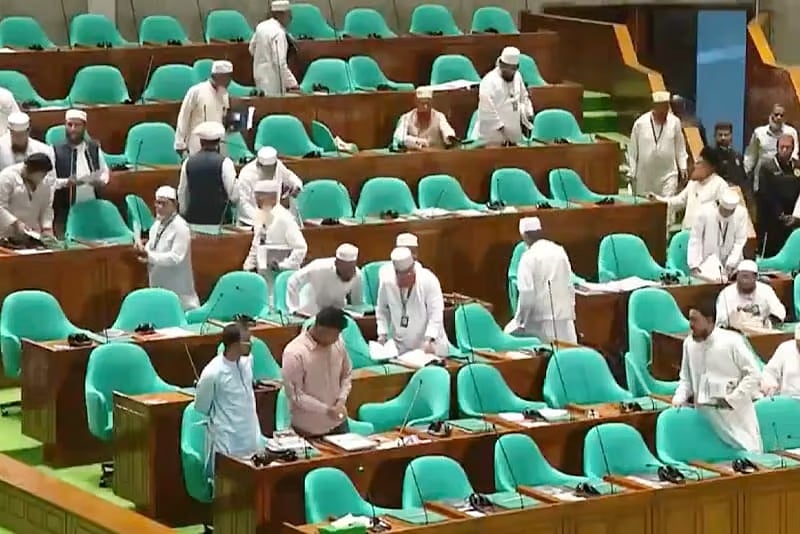
Opposition walks out of parliament alleging breach of political understanding
The Opposition has walked out of the parliament in protest, alleging that the ruling party breached a political understanding and trust.
Opposition members staged the walkout under the leadership of Opposition Leader Shafiqur Rahman at around 7:30 pm on Friday.
Earlier, the opposition leader accused the ruling party of breaching trust over the approval of ordinances issued during the tenure of the interim government.
At one stage of the debate between the ruling and opposition parties, Shafiqur Rahman said, “Today, we are walking out of parliament with regret. We will meet again in the future.”
The debate began this afternoon over the approval of the July Mass Uprising Memorial Museum Ordinance. A special parliamentary committee had recommended approving the ordinance as it was. However, the parliament passed the bill today, Friday, with three amendments that increase government control.
After the bill was passed, Opposition Chief Whip Nahid Islam alleged that by introducing amendments, the ruling party had broken the political understanding.
He stated that the bill was passed in an amended form through deception in broad daylight.
From the ruling party, it was stated that the amendments were introduced by a private member, not by the government. It was also said that the bill could be amended again later if necessary.
At one stage of the debate between the ruling and opposition parties over the issue, opposition MPs walked out of parliament.
The parliament approved the July Mass Uprising Memorial Museum Ordinance, issued during the interim government, in an amended form.
The amendments include making the Minister or State Minister for Culture the chairperson of the museum’s board, and granting the government the authority to cancel the nomination of any member at any time in the public interest.
The parliamentary special committee had recommended approving the ordinance as it was.
The bill had been brought to parliament keeping the ordinance unchanged. However, ruling party MP Anisur Rahman proposed three amendments to the bill, all of which were adopted.
After Anisur Rahman proposed the amendments, opposition members objected. However, Speaker Hafiz Uddin Ahmad said that at this stage of the legislative process, such objections could not be raised, and that opposition members should have submitted their amendment proposals earlier.
Later, all three amendment proposals brought by the ruling party member were accepted, and the bill was passed in parliament by voice vote.
The ordinance had stated that the chairperson of the board would be a distinguished expert in education, history, literature, or culture, appointed under conditions set by the government.
This was amended to provide that the Minister or State Minister for Culture would serve as the chairperson of the board.
The ordinance had also stated that any member of the board could resign at any time by submitting a signed letter to the government.
This was amended to state that any member or the chairperson of the board may resign at any time by letter to the government, or the government may cancel the nomination of any member at any time in the public interest.
The ordinance further stated that the chairperson would serve for three years from the date of appointment and would be eligible for reappointment for not more than one additional term.
A ruling party member proposed an amendment to remove this provision, and it was also adopted.