Fuel oil
Excess demand for fuel cannot be contained
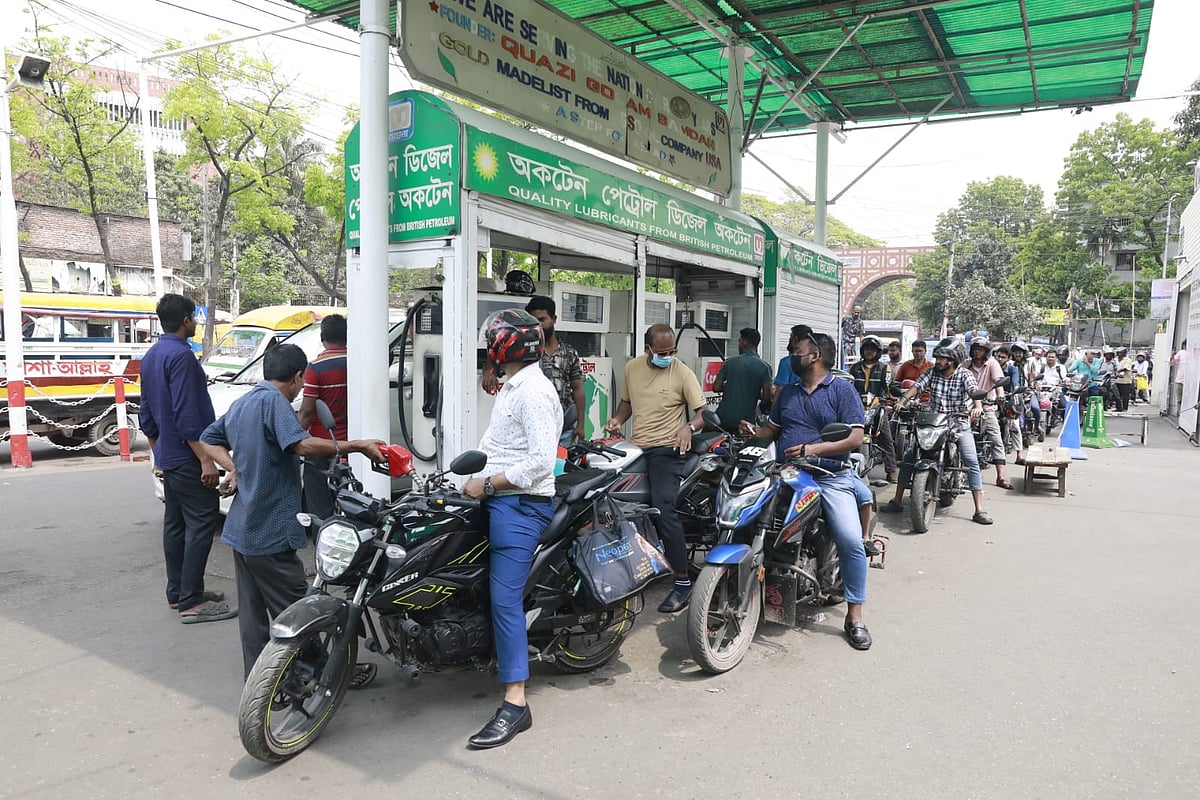
It is not being possible to meet the excessive demand for fuel oil. For the past two weeks, long queues of vehicles have been visible at filling stations across Dhaka, and they are not getting any shorter.
Although fuel supply from depots has increased beyond normal allocations after rationing was withdrawn, fuel is still not readily available at filling stations as before. Whatever fuel stations receive is quickly taken by customers.
The import and sale of fuel oil are handled by the state-owned Bangladesh Petroleum Corporation (BPC). On behalf of the corporation, three state-run oil companies—Padma, Meghna and Jamuna—supply fuel to dealers and filling stations. These companies have depots in different parts of the country, from which around 2,500 filling stations collect fuel.
BPC issued an office order last Sunday setting daily limits on fuel sales from 15 to 25 March. According to the order, between 16 and 18 March, diesel supply may be increased by 10 per cent and petrol and octane by 15 per cent compared to the same period last year.
The daily allocation will be 14,055 tonnes of diesel, 1,720 tonnes of petrol and 1,372 tonnes of octane. From 19 to 22 March, fuel will be supplied based on minimum requirements. Depots will remain closed on the day of Eid-ul-Fitr and the following day.
From 23 to 25 March, fuel will be supplied in line with last year’s demand, with daily allocations of 12,777 tonnes of diesel, 1,496 tonnes of petrol and 1,193 tonnes of octane.
After the outbreak of war in the Middle East, fuel sales surged due to panic buying. Between 1 and 4 March, daily diesel sales averaged nearly 25,000 tonnes.
According to BPC sources, about 65 per cent of the fuel supplied is diesel, which is mainly used in agriculture, industry and public transport. The average daily demand for diesel is around 12,000 tonnes.
However, after the outbreak of war in the Middle East, fuel sales surged due to panic buying. Between 1 and 4 March, daily diesel sales averaged nearly 25,000 tonnes.
The government then reduced supply by 25 per cent to 9,000 tonnes. That rationing was withdrawn on Sunday, when diesel sales reached 16,164 tonnes, rising further to 17,598 tonnes the following day.
Octane and petrol, used in private vehicles and motorcycles, have also seen a sharp rise in demand. Octane sales stood at 1,698 tonnes on Sunday and rose to 2,349 tonnes the next day. Petrol sales increased from 1,712 tonnes to 2,316 tonnes over the same period.
Concerns have now emerged over maintaining fuel reserves amid this surge in demand. To expedite imports, the government has decided to procure fuel through the direct purchase method (DPM).
However, the global fuel market remains unstable. Prices of refined fuel are rising daily, along with even sharper increases in shipping and insurance costs, making it difficult to secure suppliers quickly.
Filling stations not receiving adequate supply
Officials of oil companies and filling station owners say the current situation is far from normal. Several days of rationing have created additional demand. Even after receiving increased supply on Sunday, it was not enough to meet demand.
They warn that controlling supply again would further increase public suffering. Outside Dhaka, distributors have not received diesel at many filling stations. As a result, farmers are also purchasing fuel directly from filling stations to meet irrigation needs.
Syed Sajjadul Karim, convener of the Petrol Pump Owners’ Association, said filling stations are receiving fuel, but not always in line with demand. In some cases, after supplying more fuel to one station, others are left without supply due to daily limits. With abnormal demand in the market, fuel is being sold out almost instantly.
The crisis intensified after the United States and Israel launched attacks on Iran on 28 February. As the conflict spread, global fuel supply declined, creating concerns domestically. To curb panic buying, the government imposed limits on fuel supply from 6 March, which were withdrawn on Sunday morning.
M Tamim, former special assistant on energy to a caretaker government chief adviser, told Prothom Alo that public confidence in fuel reserves has not improved even after rationing was lifted. Many people are still buying fuel out of fear.
He suggested that rationing should be reintroduced.
Tamim added that many countries are extending holidays to conserve energy, and Bangladesh should also begin preparations now. Alongside increasing fuel imports, consumption must also be reduced.
Rationing in some places, demand-based sales in others
The seven-day government holiday for Eid-ul-Fitr began yesterday. Visits to 10 filling stations in Dhaka—including Asad Gate, Bijoy Sarani, Paribagh, Motijheel, Rajarbagh and Moghbazar—showed long queues of vehicles even on the first day of the holiday. In some stations, fuel is being sold under rationing, while in others, sales have stopped after stocks ran out.
At a filling station in Rajarbagh, motorcycles are being sold octane worth no more than Tk 200, while private cars are limited to Tk 500. An employee, Md Iman, said, “This restriction has been imposed by the depot. There is nothing we can do.”
At Karim & Sons Pump in Motijheel, customers are receiving fuel as per demand after waiting 20 to 25 minutes. A similar situation was observed at Pubali Filling Station in the same area. However, at Navana Pump near Dainik Bangla intersection, fuel supply had run out by 1:00 pm, forcing many motorcyclists and car drivers to return without fuel.
When asked about the suspension of sales, a pump worker, Khokon Sheikh, said there had been heavy pressure of vehicles since morning, causing fuel stocks to run out by midday.