Fuel situation
Oil supply increases, suffering eases little
After increasing the price of fuel oil by Tk 15 to Tk 20 per litre, the government has increased supply in the market. Compared to the same period last year, octane supply has increased by 20 per cent, and diesel and petrol supply by 10 per cent each.
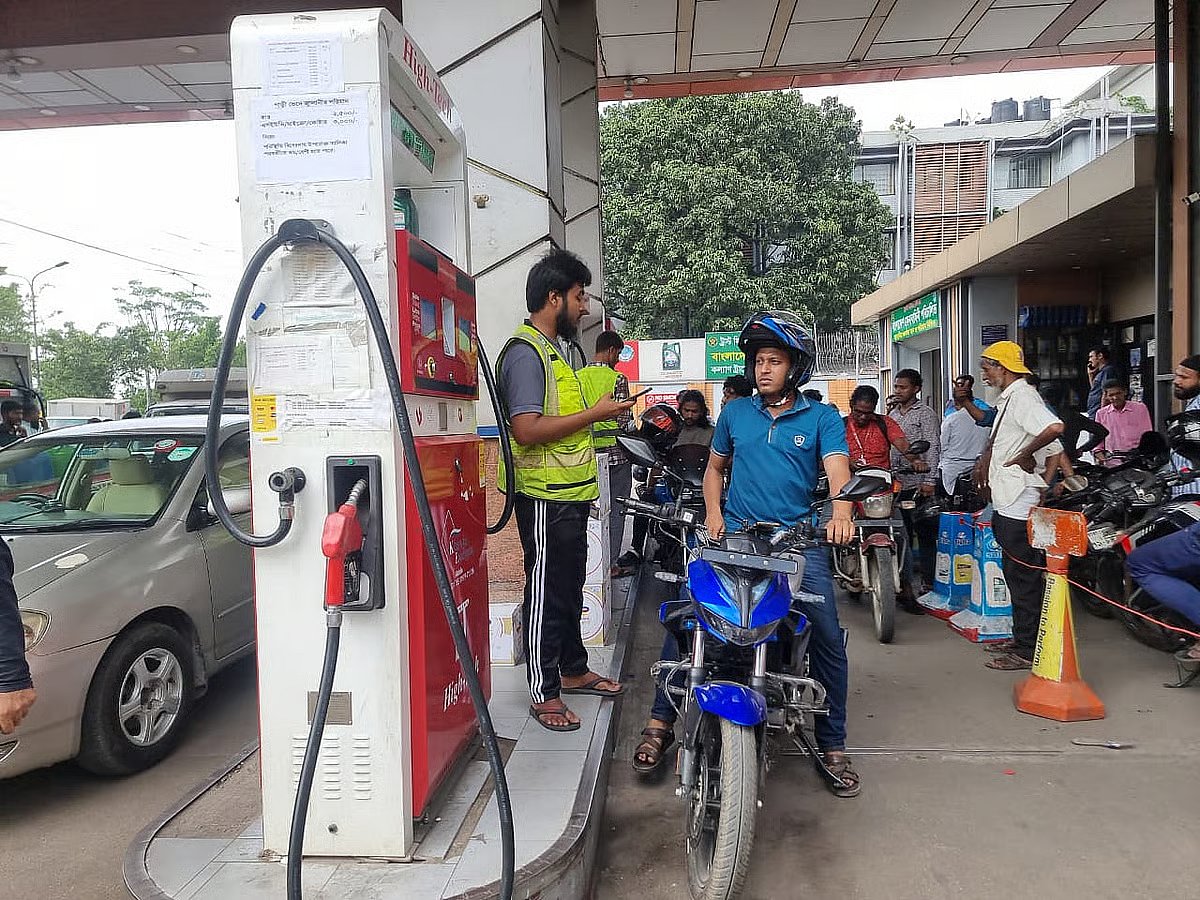
However, due to supplying more oil than the allocation, the long queues at filling stations have somewhat shortened. If the additional supply continues, suffering may decrease further.
The government agency responsible for fuel supply, Bangladesh Petroleum Corporation (BPC), issued instructions to start increased allocation from 20 April. According to the agency’s data, 1,422 tonnes of octane are allocated daily. However, 1,520 tonnes were supplied on 20 April, 1,589 tonnes on 21 April, and 1,626 tonnes on 22 April.
Officials involved in fuel marketing say that the crowd at filling stations is mainly for petrol and octane. After the war began in the Middle East, additional octane supply was provided in March compared to last year. However, it decreased in April. Diesel and petrol supply also declined. As a result, public suffering increased. The increased oil prices came into effect from 20 April.
To meet the demand for octane in the country, 50 per cent is imported, while the remaining 50 per cent comes from domestic sources. Currently, the stock of octane stands at 25,247 tonnes. Oil is being unloaded from a ship carrying another 25,000 tonnes of octane.
Octane is also regularly coming from domestic sources. Therefore, there is no risk of a shortage of octane. Another ship carrying octane may arrive in early next month. BPC is not facing any problem in maintaining supply in the market. Therefore, the Energy Division is not objecting even if supply exceeds allocation.
Many people use petrol along with octane in motorcycles and cars. In the country, demand for petrol is slightly higher than that for octane. The entire annual demand is met from domestically produced petrol. This petrol is produced from condensate obtained as a by-product of gas fields and from imported condensate. Currently, petrol stock stands at 20,558 tonnes.
BPC data show that in April last year, an average of 1,374 tonnes of petrol was supplied daily. This time, the allocation has been increased to 1,511 tonnes. On 20 April, 1,461 tonnes were supplied to the market, 1,540 tonnes on 21 April, and 1,563 tonnes on 22 April.
Among the fuel oils used in the country, diesel is the main one, accounting for 63 per cent of total fuel consumption. After the war began in the Middle East, some tension was created as ships could not arrive on time.
Last month alone, the stock of diesel decreased by 150,000 tonnes as six diesel ships failed to arrive. At the same time, due to fear related to the war, there was a tendency to purchase extra fuel. To control this additional buying, diesel supply was reduced.
Alongside this, the government took initiatives to import diesel from alternative sources. Suppliers have already increased diesel supply. Currently, diesel stock stands at 145,822 tonnes. Several more ships carrying diesel are scheduled to arrive this month. Diesel is still being unloaded from a ship in Chattogram.
BPC data show that in April last year, an average of 11,862 tonnes of diesel was supplied daily. This time, allocation has been increased to 13,048 tonnes. On 20 April, 13,548 tonnes were supplied; on 21 April, 14,020 tonnes; and on 21 April, 14,373 tonnes. This means diesel supply has increased over the past three days.
After the United States and Israel attacked Iran on 28 February, fuel supply in the global market was disrupted. Prices also began to rise. Although imports were made at higher prices, the government did not increase fuel prices in March. Usually, fuel prices are adjusted at the beginning of each month—that is, increased or decreased in line with the global market.
However, before the end of the month, on the night of 19 April, the government increased diesel prices by Tk 15 per litre to Tk 115. Octane prices were increased by Tk 20 to Tk 140, petrol by Tk 19 to Tk 135, and kerosene by Tk 18 to Tk 130 per litre.
People concerned said that as a ceasefire is in effect, fear regarding fuel supply shortages has decreased. To reduce public suffering over fuel, the government has taken multiple initiatives simultaneously. Due to the price increase, the tendency of illegal hoarders to stockpile fuel has decreased.
The introduction of fuel passes at major filling stations in Dhaka has stopped the repeated refuelling of the same motorcycle. Along with drives against illegal hoarding and increased supply in the market, public suffering has started to decrease.