SoLAR Phase II launched: Solar-powered irrigation reduce costs by 30pc
Bangladesh’s irrigation system relies primarily on imported diesel. Whereas solar-powered irrigation pumps not only reduce diesel consumption but also cut farmers’ irrigation costs by up to 30 per cent, and the government has also committed to installing 45,000 solar irrigation pumps and reducing greenhouse gas emissions by 2030.
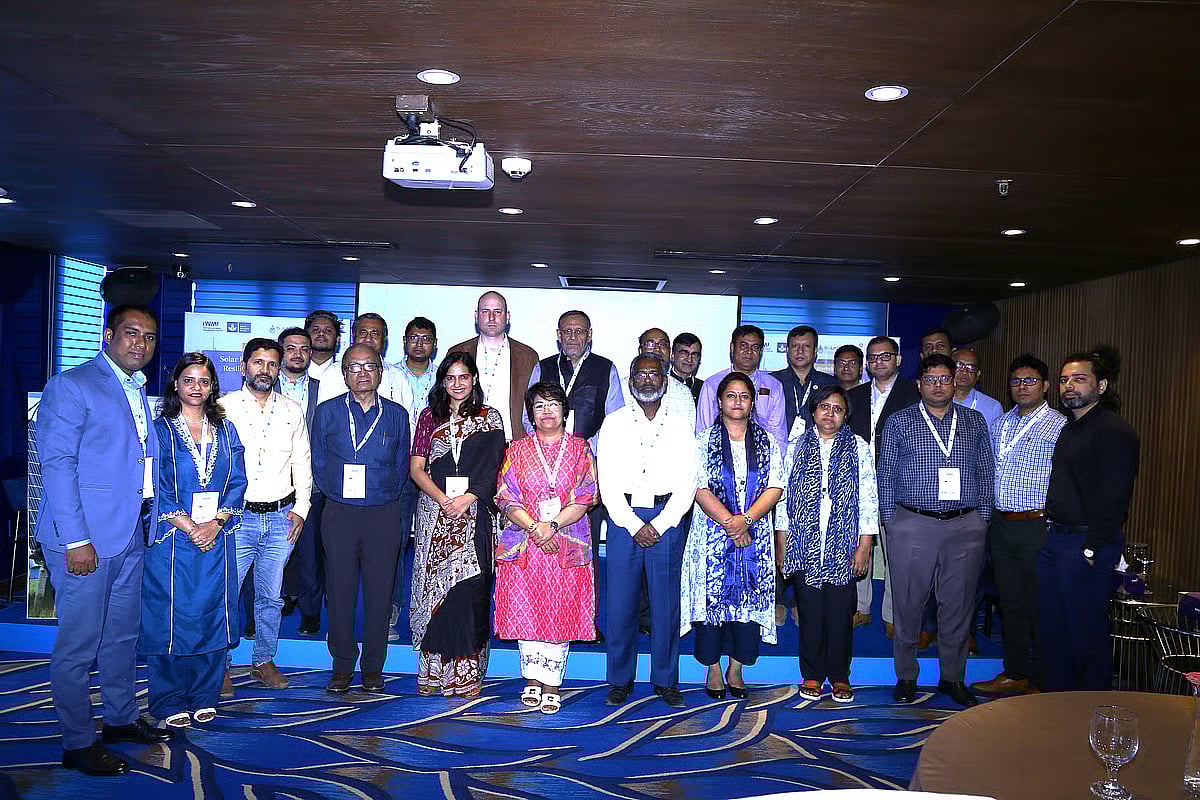
Speakers made these remarks at the Inception Workshop of the Solar Energy for Agricultural Resilience (SoLAR) Phase II organised by the International Water Management Institute (IWMI), with support from the Swiss Agency for Development and Cooperation (SDC), at a Dhaka hotel on Monday.
The SoLAR Phase II program builds upon the successful first phase implemented in South Asia and now expands to East Africa (Ethiopia and Kenya) through South–South collaboration. The initiative aims to strengthen the enabling environment and unlock investments for socially inclusive, climate-resilient solar agri-tech solutions, said a press release.
The event brought together representatives from key national institutions, including the Bangladesh Agricultural Research Council (BARC), Bangladesh Agricultural Research Institute (BARI), Barind Multipurpose Development Authority (BMDA), Bangladesh Rice Research Institute (BRRI), Bangladesh Agricultural Development Corporation (BADC), Bangladesh Rural Electrification Board (BREB), and the Sustainable and Renewable Energy Development Authority (SREDA).
In addition, development partners, research organizations, and private sector stakeholders participated in discussions on pathways to scale solar-powered irrigation and strengthen the energy–water–food security nexus in Bangladesh.
During first phase of the SoLAR program, IWMI’s research in Bangladesh provided critical insights into the transition from diesel to solar-powered irrigation. Since irrigation in Bangladesh depends heavily on imported diesel, the Government of Bangladesh has been investing in solar irrigation pumps (SIPs) to enhance energy security and reduce greenhouse gas (GHG) emissions.
IWMI’s studies, conducted in collaboration with the Infrastructure Development Company Limited (IDCOL), found that SIPs not only cut diesel use but also reduce farmers’ irrigation costs by 20–30 per cent, provide time-saving and labour-efficient irrigation services, and ensure access to supplementary irrigation during delayed monsoons.
The IDCOL-promoted fee-for-service model, a pioneering public–private partnership approach, has proven effective in delivering affordable irrigation to smallholders while attracting private sector investments. IWMI’s comparative research in Bangladesh and India also showed that, contrary to common concerns, solar irrigation does not necessarily lead to groundwater over-extraction.
In Bangladesh, operator-managed SIPs helped maintain sustainable water use even at lower costs, while in India, grid-connected SIPs with feed-in tariffs incentivized water conservation. These findings demonstrate that with well-designed models and appropriate incentives, solar irrigation can support low-carbon, climate-resilient, and water-efficient agriculture, offering valuable lessons for scaling clean energy transitions in South Asia.
Speaking at the event, Darshini Ravindranath, Project Lead, SoLAR and Senior Researcher at IWMI highlighted the project’s vision, “SoLAR Phase II is not just about replacing diesel pumps with solar ones; it’s about reimagining how we use energy for agriculture in ways that benefit farmers, reduce emissions, and build resilience to climate risks. The program also places strong emphasis on social inclusion—empowering women, youth, and marginalized communities to access and benefit from solar agri-tech solutions.”
“Our learnings from Phase I in the Gaibandha chars and Thakurgaon districts show how women using portable micro–solar irrigation pumps have gained both time and opportunity—freeing up hours once spent on domestic tasks and enabling participation in income-generating activities such as fisheries. These stories reflect how solar solutions can drive both climate resilience and social empowerment,” she added.
Alok Sikka, Country Representative, IWMI India and Bangladesh, emphasized the importance of partnerships in driving this transition.
He said, “Bangladesh’s leadership in promoting solar irrigation offers a unique opportunity to align energy, water, and climate goals. Through SoLAR Phase II, IWMI and its partners aim to co-develop practical solutions—such as innovative financing models and solar suitability mapping—to ensure that the transition is both sustainable and inclusive. Our research across South Asia shows that, with the right incentives and governance frameworks, solar irrigation can actually promote sustainable water solutions-transforming it into a tool for climate resilience.”
The event’s Chief Guest, Nazmun Nahar Karim, Executive Chairman, Bangladesh Agricultural Research Council (BARC) said, “Agriculture is the backbone of Bangladesh’s economy, and irrigation has been central to achieving self-sufficiency. As climate change intensifies, making irrigation carbon-neutral is crucial for sustaining productivity. Bangladesh’s transition toward solar irrigation—offers clean, affordable, and efficient alternatives. The government’s updated policies and NDC 3.0 targets reflect our strong commitment to reducing emissions and installing 45,000 solar pumps by 2030. Building on SoLAR Phase I, the next phase will scale sustainable business models, integrate AWD techniques, and strengthen policy and institutional mechanisms to ensure climate-resilient agriculture.”
Participants discussed key strategies to accelerate solar financing, scale innovative models such as agrivoltaics, and integrate capacity-building and policy support under the SoLAR Phase II framework.
The workshop also marked the beginning of stakeholder consultations to identify priority actions for the next five years.