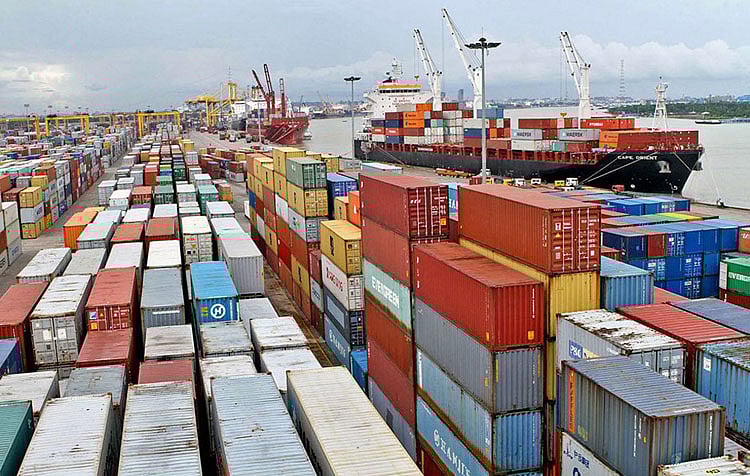
The Ministry of Finance approved Chittagong Port’s proposed new tariff on 24 July. After vetting by the Ministry of Law, the proposal is supposed to be published as a gazette before coming into effect.
However, users have already objected to the plan to increase fees by an average of 41 per cent at once. In this situation, the tariff hike is being reconsidered at the last moment before gazette publication.
According to the Ministry of Shipping, a meeting has been called this afternoon (Monday) with port authorities and users to review the proposed new tariffs. The meeting will be chaired by the ministry’s adviser Sakhawat Hossain, confirmed Port Secretary Md Omar Faruk.
An analysis of the proposed rates, already approved by the Finance Ministry, shows that once implemented, port revenue will increase by an average of 41 per cent. This revenue will rise annually in tandem with the appreciation of the dollar, as all port charges are fixed in dollars.
Under the new tariff plan, the largest increase will be for container handling fees, as containers account for the bulk of port service usage. Once the new rates take effect, an additional Tk 4,395 will have to be paid per 20-foot container.
In contrast, general cargo, which requires minimal port services, will see a smaller increase. On average, across all goods including containers, the cost will increase by Tk 0.14 per kilogram.
Users object to the hike, arguing that a sudden 41 per cent increase will raise consumer costs and reduce export competitiveness. Moreover, with most terminals except two being handed over to foreign operators in the future, they argue that foreign firms will be the main beneficiaries of higher charges.
The government, however, maintains that this is the first tariff revision since 1986 and that even after the increase, rates will remain lower than those in neighboring countries.
Speaking to Prothom Alo, SM Abu Tayeb, president of the International Business Forum Chattogram and BGMEA director, said exporters are already under pressure due to the US imposing a 20 per cent reciprocal tariff. If port charges now rise by 41 per cent, exporters’ capacity and growth opportunities will shrink further.
He noted that exporters must pay port charges twice—once when importing raw materials in containers and again when exporting finished goods—making the double burden unreasonable.
How much the increase will cost per container
The port authority currently collects an average fee of Tk 11,849 per 20-foot container. Under the new tariff, this will rise by Tk 4,395, bringing the total average charge to Tk 16,243 per container—a 37 per cent increase.
This calculation is based on the audited accounts of fiscal year 2023–24, with the proposed exchange rate set at Tk 122 per dollar. As the dollar appreciates, port fees will rise further since charges are dollar-denominated.
In addition to container handling, there are separate charges for using container ships, and costs vary between imports and exports. For example, the fee for import containers will rise by Tk 5,720, while export containers will see an increase of Tk 3,045.
One major area of increase is container loading and unloading from ships. Previously, the fee was USD 43.40 per container; the new proposal raises this to USD 68—an increase of USD 24.60, or about Tk 3,000. Other charges include river dues, container storage, yard handling, and gantry crane usage.
Currently, users pay Tk 1.28 per kg for containerised cargo. If the new tariffs take effect, the additional cost will be Tk 0.47 per kg.
Almost all of Bangladesh’s exports by sea are shipped in containers. Containers are also used to import industrial raw materials and valuable machinery.
About 99 per cent of Bangladesh’s containerised import–export trade passes through Chittagong Port. Users therefore warn that the fee hike will have a big impact on container trade.
Besides containers, general cargo is also handled at the port. Port statistics show that if the proposed increases are implemented, the average fee across all types of cargo will rise by Tk 0.14 per kg. Currently, users pay Tk 0.35 per kg, meaning an average increase of 41 per cent.
Unlike container vessels, general cargo ships use relatively few port facilities. For example, most bulk carriers anchor offshore and transfer goods to smaller vessels. In FY 2024–25, 59 per cent of all cargo was unloaded offshore.