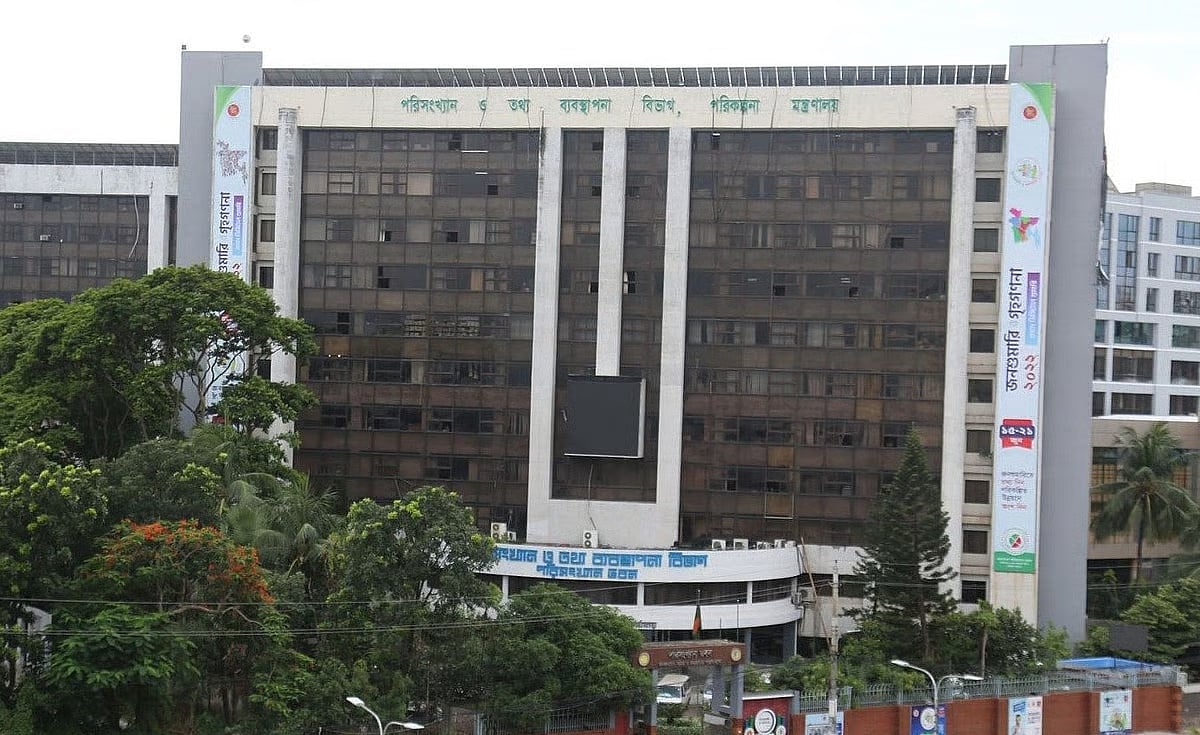
BBS data review
Private investment falls to 10-year low as share of GDP
Private sector investment as a share of gross domestic product (GDP) has fallen to its lowest level in the past decade. It now stands at just 22.03 per cent of GDP, the lowest in 10 years. The contribution of private investment to GDP has been declining for four consecutive years.
The Bangladesh Bureau of Statistics (BBS) recently published the final estimates of GDP and investment for fiscal year 2024–25. The data reveal this disappointing trend in private investment relative to GDP. The last time private investment fell to such a level was in fiscal year 2014–15.
For several years, private investment compared to GDP had remained stagnant. It declined further in the past fiscal year, which coincided with a period of mass uprising. During July and August 2024, blockades and curfews amid the mass movement brought economic activities nearly to a standstill. The overall environment was not conducive to investment, and the impact was felt throughout the fiscal year.
According to BBS data, GDP growth in 2024–25 was only 3.49 per cent, close to the rate recorded in the first year of the coronavirus pandemic (fiscal year 2019–20). That year, growth stood at 3.45 per cent, the lowest in the past two decades.
‘Result of a four-pronged shock’
Asked why private investment as a share of GDP had dropped to a 10-year low, Centre for Policy Dialogue (CPD) Distinguished Fellow Mustafizur Rahman described it as the “result of a four-pronged shock”.
First, he said, uncertainty over how long the interim government would remain in power created anxiety. Questions over whether a proper democratic transition would take place contributed to uncertainty among both local and foreign investors, discouraging new investments.
Second, the prolonged contractionary monetary policy kept policy interest rates high. While this helped ease inflation to some extent, it came at the cost of reduced investment and other economic activities.
Third, there were no significant institutional initiatives to lower the cost of doing business or curb extortion and related challenges.
Fourth, global trade uncertainty, including reciprocal tariffs under US president Donald Trump, further dampened the investment climate. Taken together, these factors made the overall environment unfavourable for investment.
GDP size and investment figures
In the last fiscal year, GDP at current prices stood at Tk 55 trillion. Total investment, public and private combined — amounted to Tk 15 trillion. Of this, private investment accounted for Tk 12 trillion, equivalent to 22.03 per cent of GDP. These figures are calculated at current prices.
Previously, private investment had last stood at 22.03 per cent of GDP in fiscal year 2013–14.
For several years, private investment hovered between 23 and 24 per cent of GDP. Economists and experts have consistently advised boosting private sector investment to accelerate economic growth.
According to BBS data, private investment as a share of GDP has declined steadily over the past four years — from 24.5 per cent in fiscal year 2021–22 to 22 per cent now. Overall investment has also dropped from 32 per cent of GDP to 28.5 per cent over the same period.
Economists note that even during the tenure of the previous Awami League government, investment growth did not see significant progress. The recently outgoing interim government organised a high-profile investment summit in Dhaka in an effort to attract investment. However, little tangible improvement was seen in the one-and-a-half years of its tenure.
Persistent gas and electricity shortages, high taxation and political uncertainty are cited by stakeholders as major reasons for the decline in both domestic and foreign private investment. In addition, lending rates have risen to between 13 and 14 per cent, which economists believe has further discouraged investment.