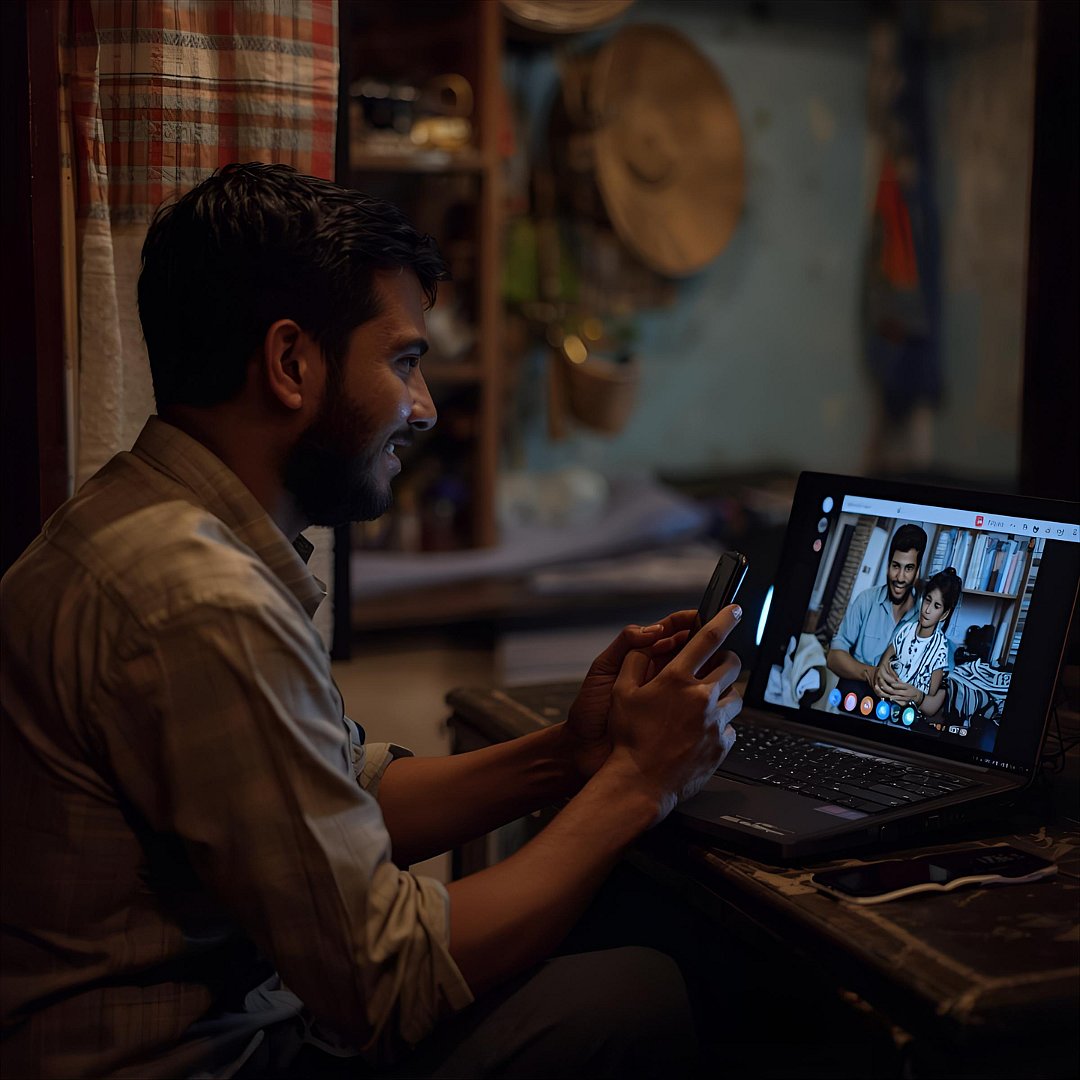
In Bangladesh, the story of a remittance expat evolves more or less in the same pattern. The earning member of the family works hard abroad to provide for his/her family, and here in Bangladesh, the family waits to receive the money in time so that they can meet their needs accordingly.
The daily calls and messages of expatriates with their families back in the country are more than routine communication. Their crucial planning sessions determine the household budgets, emergency responses, and long-term dreams.
Arif, a remittance earner, left his home when he was only 17. He was preparing for his higher secondary exams when, all of a sudden, the pillar of his family, his father, passed away. Having no other options, he decided to go to a Middle Eastern country to support his financially fragile family. Now, after 12 long years of hard work, he has his own shop in a prominent market in Dubai. Although his family back in Bangladesh lives without a male counterpart, they do not face any problem in financial management and correctly spending money. Arif takes charge of all financial matters, being miles away from his home.
Every month, after sending money to his mother, he makes a long video call to discuss how the money should be distributed and which sector it should be spent on. And it is not just about being available financially; the emotional toll is equally taxing. Expats like Arif often shoulder the guilt of not being physically present during crises. “When my sister had a road accident, I arranged everything from here,” Arif recalls. “But, truly speaking, the pain of not being there with them stays with me silently.”
For Habib, calls from his daughter who works as a barista in Italy, have become lifelines not only for mental peace but also for guiding his financial decisions. He says, “Once I wanted to keep my pension in a cooperative, but my daughter Halima protested, saying that she had read about fraud cases and convinced me to open an account in a reputed bank, and all this argument and process of convincing me was through overseas calls that took weeks.”
Halima googled the interest rates, the service quality provided by the bank, and her father collected brochures. Finally, she was relieved after knowing that the hard-earned money of his father was secured.
An immigrant in Malta, Zahir shared his experience of balancing his dual life – one he lives physically and the other virtually. His parents are not used to the digital banking system, and he has always been worried about scams. His mother, back at home, waits patiently with a notebook, ready to discuss everything from groceries to the latest update from a local contractor building a boundary wall around their ancestral home.
As expats help navigate crucial financial decisions, medical expenses, investments, or plans to build a dream family home, they carry a delicate responsibility: balancing jobs while steering complex decisions for families from abroad.
Communication tools like imo play the protagonist in the lives of these long-distance families, helping them bridge the gap with their loved ones and financial advisors as well. Its reliable video calls and messages are enabling clearer conversations that make distance feel less daunting. For many Bangladeshi households, these conversations have become the medium that turns remittances into more than just survival money.