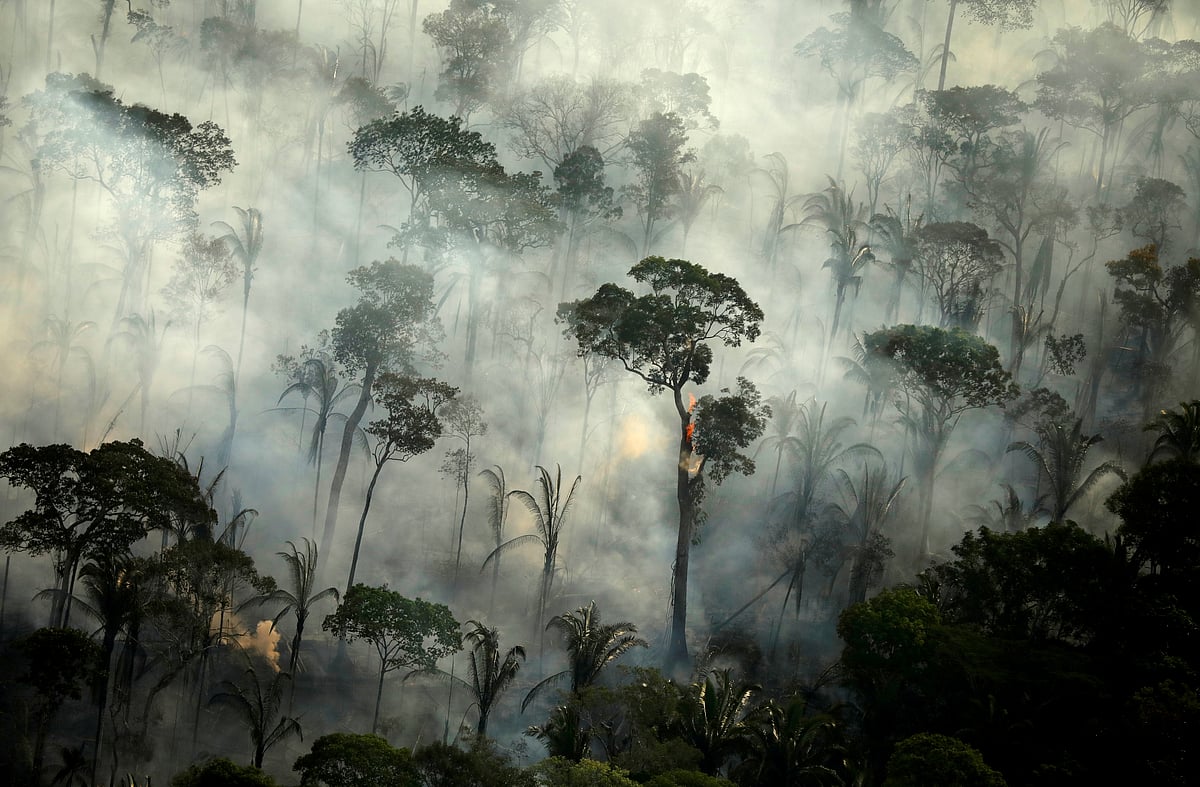
Amazon rainforest ‘under attack’ from organised crime: report
Organised crime in South America is a growing threat to the Amazon rainforest, according to a report published Tuesday, as the encroachment of criminal groups into protected areas fuels violence and sets back environmental preservation in the world’s largest tropical rainforest.
The report by the International Crisis Group think tank said the search for new drug trafficking routes and illegal mining areas is compelling organised crime rings to expand their reach in the Amazon basin, leading to devastating effects on the environment.
The Amazon “is under attack from organised crime,” the report concluded.
“Organized crime has become one of the main obstacles to efforts to stop environmental damage in the Amazon,” said Bram Ebus, a Crisis Group expert.
“What used to be primarily a conservation challenge has become a political and security crisis,” he added.
The report said gangs operate in at least 67 per cent of Amazon municipalities in Bolivia, Brazil, Ecuador, Peru and Venezuela, citing data from the Amazon Underworld periodical.
The International Crisis Group urged governments to work with Indigenous communities to combat the spread of organised crime.
It also appealed to international suppliers of raw materials to ensure their supply chains are not tainted with products from criminal origins.
Surveillance in the vast, remote rainforest has never been simple.
The Amazon rainforest stretches across nine South American nations, with the majority located in Brazil. It has a central role in the fight to combat climate change.
The report mentions that organised crime groups take advantage of government weak spots to expand their territory throughout the jungle, particularly Brazilian crime groups like Comando Vermelho (Red Command) and First Capital Command (PCC).
The spread occasionally crosses borders with nearby countries like Colombia, Venezuela and Ecuador, competing or even collaborating with armed groups from the neighbouring states.
The think tank added that such crime groups were “exercising a brutal violence” in communities under their control.