The majority of the history of the 21st century has yet to be written, but what we can already foresee is that this will be a century of great change, whether it be from forces of nature, politics, or technology. How can educators predict what will become the necessary skill-set for our children in the age of artificial intelligence? How can we anticipate which kind of worldview will allow our students to thrive and adapt to the changing times? How can we avoid the pitfall of merely teaching to a test, rather than actually receiving an education whilst maintaining high academic standards?
It is questions such as these, coupled with more traditional methods of education, which chiefly inform the IB philosophy of teaching; it is the methodology in executing the solutions which sets the IB apart from other educational standards.At its core, the IB encourages inquiry based learning, the kind of natural human curiosity and questioning that fosters independent motivation to find an answer and to seek possible solutions.
We don’t know what opportunities the future holds, but with change comes the opportunity for reevaluating what is important, both within an education standard and beyond. In the 21st century classroom, the need to strengthen the core values and purpose of education is as vital as it has ever been
In the end, the IB is a mix of internal and external assessments that are conducted at schools around the world. The national curriculum of Ecuador has completely integrated with the IB, so too is the IB curriculum on offer at the exclusive all-girls Godolphin & Latymer School in West London, United Kingdom. It’s just as much the inclusivity of the curriculum as it is its maintenance of high standards and broad international acceptance that provides the IB with authentic and genuine appeal.
Yet still, the IB is not a set curriculum, but rather a set of standards and examinations that are criteria based. Schools and teachers and students are encouraged to approach subject content according to their own context, and under diverse circumstances. In approaching success with each subjects’ criteria, students participate in the interpretation of what it means to be kept to a standard of excellence.
Approaches to learning guide students on specific areas of focus in their development, and these are meant to be self-assessment references. The greatest value for students in this is that they themselves become content curators, actively participating in deciphering and evaluating information sources and relevance. This is a critical 21st century skill. As we become progressively flooded with information, deciphering relevance increasingly separates students who revel in information, from those who are simply inundated by information overload.
With all new approaches to learning there also needs to be a foundation in traditional educational values, and the IB produces students who are both self-motivated and self-disciplined. One of the most daunting tasks of an IB student is self-management skills. Planned revision is not a formality, but a necessity in the IB.
These are but a few of the key elements which surround IB teaching practices, and many of the above ideas are not wholly unique; rather, they are a brief assortment of methods that students will soon encounter outside of the classroom in the increasingly high-stakes business world, and in their goals of becoming entrepreneurs, scientists, and academics.
We don’t know what opportunities the future holds, but with change comes the opportunity for reevaluating what is important, both within an education standard and beyond. In the 21st century classroom, the need to strengthen the core values and purpose of education is as vital as it has ever been.
The old models of teachers and schools filling students’ heads with textbook information have proven less than useful at creating lifelong learners who are willing to apply their skills and knowledge to yet undiscovered fields of inquiry that will create new knowledge and 21st century breakthroughs. For this reason, it is a great time to be an educator. It’s a great moment to invest in an education that prepares students not just for the next exam, but for life beyond the exam setting. Young learners will write the history of the 21st century in real time.
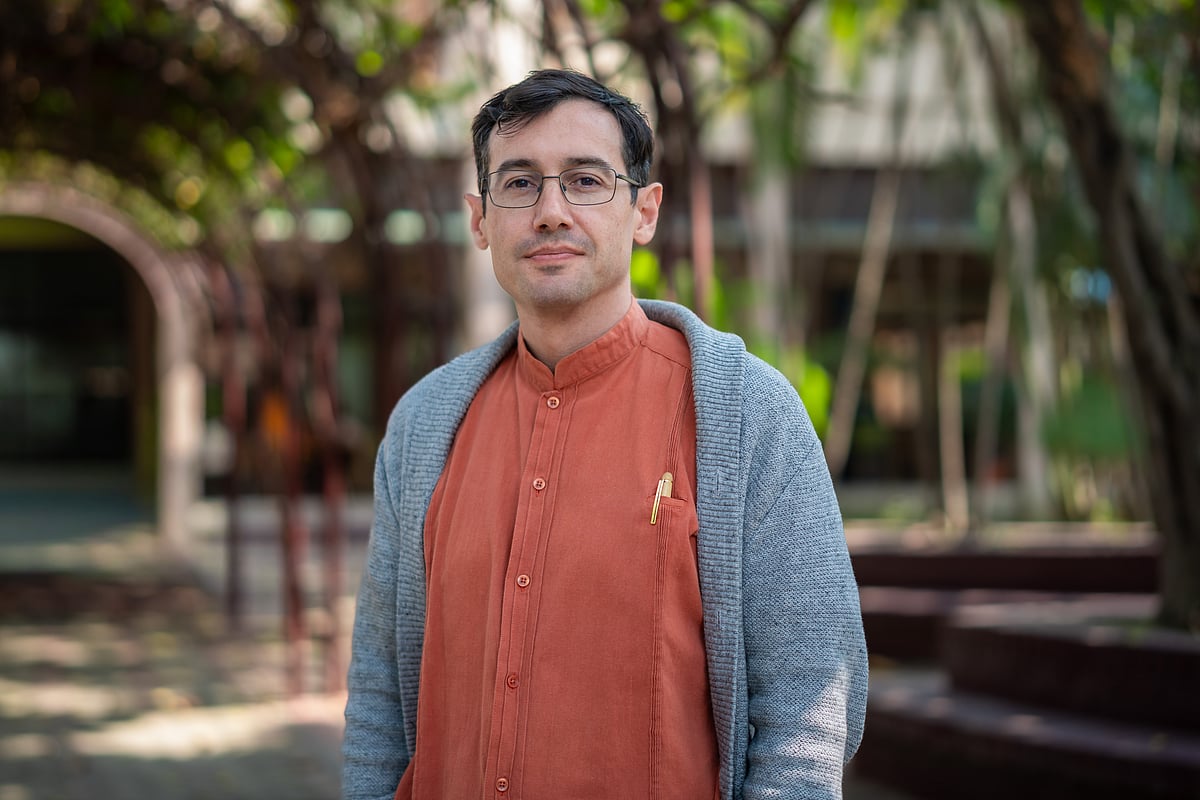
* Brandon Kruse is DP Coordinator & Head of English, International School Dhaka