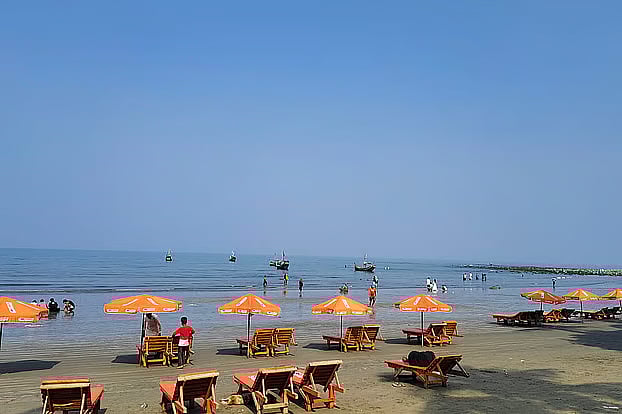
A month and a half have passed since Saint Martin was opened to tourists this season. Let's discuss who benefited and who lost from this.
Saint Martin is Bangladesh’s only coral-rich island, known for its natural beauty. It is a favourite destination for tourists. While there was once uncontrolled tourism, since 2024, the government has regulated and limited tourism here. The government has imposed restrictions primarily to preserve the environment and biodiversity of Saint Martin Island and to prevent pollution, identifying it as an environmentally critical area.
The number of tourists is limited to two thousand per day, and overnight stays are only permitted for two months (December and January). Although visits are allowed in November, no tourists traveled to Saint Martin during that month due to the ban on overnight stays. Because it's not sensible to undertake such an expensive trip just for a day visit.
Due to strict government restrictions and conservation policies, there's a need to discuss the island’s environment, biodiversity, and the real situation of the local people. This article aims to highlight the reality by speaking with Saint Martin’s local residents.
Despite imposing strict restrictions, environmental pollution on the island has not been controlled. Unregulated construction of cottages and the cutting down of keya trees continue. Effective waste management has not been established. Instead, the area around the beach and roads has turned into a dump of plastic and polythene. There aren’t enough dustbins on the beach, no cleanliness activities, and no campaigns to raise awareness among tourists.
Tourists' suffering and inhumane conditions
Ships operate from Nunia Chhara Ghat in Cox’s Bazar. Their schedules depend on the tides of the Bankkhali River. It is commonly observed that ships arrive at St. Martin’s around 12:00 p.m. but depart at 5:00 or 6:00 p.m. Tourists are required to check out at noon to make room for new arrivals from Cox’s Bazar. As a result, returning tourists must wait for long hours at the jetty, yet the government has made no special arrangements for them. There are no passenger sheds or resting areas, no public toilets or changing rooms, and no facilities for feeding children.
In the intense cold, young children, the elderly, and women have to spend hours waiting for the ship, sitting or walking on the street or beach! This inhumane condition sometimes creates extreme chaos.
Why do non-tourists need a travel pass?
Due to distance and limited seating, ship fares have increased. But tickets are not readily available. A middleman or ticket syndicate has formed.
This time, the worst system implemented is the mandatory travel pass for tour operators, journalists, investors, and Cox’s Bazar locals. This is unreasonable because the arrangement is meant for tourists.
Tour guides or hosts or tour operators do not travel as tourists, so providing them with a special registration and pass would have been sufficient. Moreover, those investing in the island need to enter regularly for various reasons. But the requirement for them to procure a travel pass to board the ship and considering journalists and other individuals who travel for reporting or research as tourists is not justified.
Many people from Cox’s Bazar have relatives on Saint Martin or maintain business or personal relationships with various individuals. If they wish to visit Saint Martin as needed, they fall under the travel pass requirement, thus categorised as tourists. This amounts to denying locals their rights, leading to resentment among them. Despite not being tourists, people from Cox’s Bazar are forced to travel to Saint Martin as tourists due to administrative stubbornness.
How Island residents survive
The economic condition of the local people is deteriorating from miserable to extremely dire. One of the primary income sources for the 12,500 residents is tourism. However, as it has become limited and regulated, the islanders have lost their source of income and become jobless. Local homes that were rented out during the tourist season to make a living now have no income. With tourists limited to two thousand, there isn’t much pressure; hence local homes don''t get rented.
Resorts around the beach can accommodate over four thousand people. Due to limitations, beachside resorts offer special offers or discounts, so tourists prefer staying there. Moreover, major resorts and well-established ones are managed by many businessmen from Dhaka. Due to their good reputation and publicity, beachside resorts get booked in advance.
Consequently, disorganised, lower-quality resorts and unpublicised establishments owned by locals do not get any tourists.
I have observed that half of the rentable local homes haven’t had any rooms rented out this season. They couldn’t rent them out. As a result, the financial pressure on local people has reached indescribably unprecedented levels.
Operating a household in the current rising market is impossible by working for 2 months and remaining income-less for 10.
Apart from placing unbearable financial pressure on local people, this regulation and controlled tourism haven’t been beneficial. Locals have been forced to sell properties or jewelry to survive. Due to the lack of advanced technology and spaces, Saint Martin’s island lags in fisheries and agriculture. With small boats, it's impossible to venture into the deep sea for fishing. And the limited size of the island restricts farming opportunities. Additionally, due to salinity, farming is not feasible.
No examination centre, no college
The economic stalemate is also negatively impacting the island’s education system. Many families are finding it difficult to bear their children’s educational expenses. School education on the island is already weak due to a lack of teachers or skilled teachers. Now, due to financial hardship, the opportunity for children to study outside the island is also gone.
Moreover, there’s no public examination centre on the island. Students have to rent rooms and purchase food in Teknaf for exams, incurring significant expenses throughout the examination period. But with the current economic conditions, many families couldn’t afford their children’s examination costs. There is no college on the island; students have to study outside. With limited income, sending children to study outside is impossible for many.
Dilapidated Healthcare System
Most residents of Saint Martin Island live below the poverty line, suffering from various ailments constantly. However, there is no proper medical facility on the island. Though there is a nominal 20-bed hospital, it has never been fully functional. There is a shortage of doctors throughout the year. Consequently, many people used to go to Teknaf or Cox’s Bazar for treatment. But with the decrease in income this time, it seems impossible for anyone to seek advanced treatment outside the island.
Talking to local people reveals their cries and demands. The people of Saint Martin want the tourism limitation (daily two thousand) abolished or alternative employment. They want assurance of basic rights, particularly education and healthcare. Island residents want eco-friendly tourism and expect civic amenities. They desire electricity, sea ambulances, sea trucks, food warehouses, sufficient schools, teachers, colleges, and cyclone shelters. It’s necessary to ensure employment by transforming unemployed youth into skilled manpower through training.
#Tayub Ullah is an activist and resident of Saint Martin
*The opinion expressed is the author’s own.
#This article, originally published in Prothom Alo online edition, has been rewritten in English by Rabiul Islam