Altaf Parvez's Column
Time for structural reform of state revenue and expenditure
After the mass uprising in 2024, some work has been done on political reforms. Now, discussions about economic reforms are also necessary. Political reforms alone will not bring peace to the country without economic justice. Altaf Parvez has written a two-part series on structural reforms in the economy. The final part of the article has been published today.
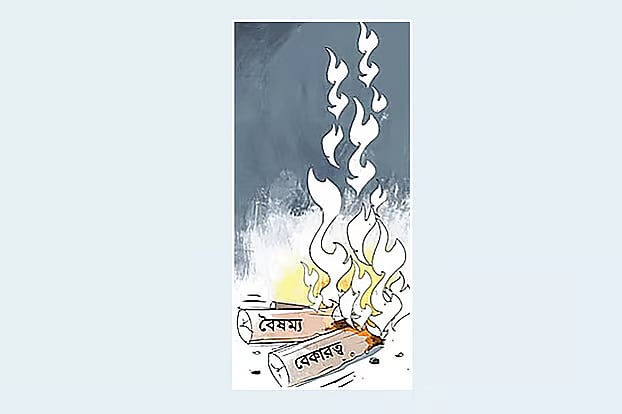
It was mentioned in the first part of this two-part article that if wealth and income inequality are not reduced swiftly, Bangladesh could face further risks of a ‘Red July.’ However, there is an opportunity to generate additional revenue for development investments benefiting the underprivileged population.
In a report from 2024, it is shown that there are 12,089,000 registered with TIN; however, only about 3.6 million filed returns that year. Not all those who file returns pay taxes. Among those who genuinely pay taxes, the majority are government employees.
Many economic commentators claim that the number of actual return filers who pay some taxes in Bangladesh is around 1.8 million or near that figure. Among these taxpayers, about half are government and private sector employees. If they are excluded, the number of people paying income tax in Bangladesh stands at only 800,000-1,000,000. Yet, if 5 per cent of the country's population is eligible to pay tax, about 8-9 million people should be paying taxes.
In February 2024, the Bangladesh Economic Association claimed that ''87 per cent of the wealthy and upper-middle classes in the country do not pay income tax.'' Many in the informal economy can stay outside the tax net without a license or registration. However, there is a large economic domain in that sector.
Furthermore, the expanded revenue collection system now needs class-based justification. Symbolically speaking, consumers of air-conditioned restaurants and non-air-conditioned restaurants come from different social classes, thus different VAT rates are preferable. Bangladesh needs to seek methods to impose lower taxes on those with lesser income and higher taxes on those with more income. Such a model is both logical and capable of providing additional funds for inequality-reducing developmental work. A uniform VAT rate for everyone is not a solution.
If revenue demands are fixed at the same rate without considering income levels, a larger portion of a lower-income individual’s earnings will go to taxes, compared to a wealthier individual. Taxation should consider income levels. It is necessary to offer tax breaks at various levels and increase rates for higher incomes.
How to expand the tax net
The system of wealth tax and special taxation on luxury items can also be included in a ''progressive tax system.'' Currently, if net assets exceed 40 million BDT, an additional surcharge applies to income tax.
If most projects remain focused on major cities like Dhaka and Chattogram, where will the resources for state investment come from for the marginal districts? The bias of influential individuals towards development centered around Dhaka and Chittagong is so strong that progressive expenditure policy receives little attention.
Direct imposition of taxes can be considered here. Again, the income around which the surcharge is applied is not calculated at the market rate of the tax year. There is a surcharge on flats over 8,000 square feet. The valuation is based on the purchase price from many years ago. There are provisions for surcharges if someone owns more than one car. However, many register their second car in the name of another family member.
Another strategy could be imposing taxes on inherited wealth, much like reforming surcharge provisions. While income earned through labour is taxed, having no tax on wealth inherited from deceased ancestors is an inequality. It discourages the role of skill and effort in wealth accumulation. The tax rate could vary by the degree of relation; the more distant the relative, the higher the tax rate should be. Many countries in the world have such taxes.
Under current income tax rules, if one's income exceeds Tk 3.575 million, any additional income is taxed at 30 per cent. In such cases, if one person earns Tk 4 million annually and another earns Tk 400 million, both are taxed equally at 30 per cent. The first person will be left with Tk 2.8 million, while the second will have Tk 280 million. If the same rules and rates persist, this income and wealth inequality gap will remain and grow. However, if the income tax for the first person is set at 30 per cent and 40 or 50 per cent for the second, at least some income equality will begin to emerge.
Tax reform and the resources it generates reduce inequality in society in two ways. Firstly, the tax collection process creates a kind of equity-oriented situation. Secondly, investing this extra tax reduces inequality, thereby creating new capital and a new consumer base in society. A new group of consumers increases product demand and consumption in society. This brings additional momentum to the economy and opens up spaces for additional tax collection.
If inequality persists and grows, what situation arises can be seen in Sri Lanka in 2022, Bangladesh in 2024, and Nepal in 2025. These uprisings strongly urge the reduction of wealth inequality in society. Is it right to ignore this urge?
Increasing tax collection does not reduce inequality
In terms of economic reform, it is also crucial to remember that if the tax system is reformed and increases revenue, inequality in society does not automatically decrease. Coercive tax reform is not possible. In Bangladesh and similarly inequality-stricken and inadequately serviced countries, people are discouraged from paying taxes because, even as taxes increase, the middle class, lower class, and impoverished do not receive any expected benefits or assistance from it.
Additionally, if citizens have to pay extensive tolls and bribes in commodity movement and service-oriented work as they do now, from where or why would they pay additional taxes or surcharges? Or how should the entrepreneur of a production-oriented factory, regularly deprived of gas, manage tax payments?
This means that along with progressive tax reform, good governance and progressive expenditure policies are needed. Merely increasing income or national wealth does not bring balance to the economy. Even if the tax rate on wealthy individuals rises, wealth doesn't automatically get redistributed. For instance, by amending the financial ordinance, the government has imposed a Tk 25,000 environmental surcharge on those with multiple cars for their second vehicle.
While this is a good initiative for revenue collection, questions may arise about how and where this revenue will be spent. Will the funds from the environmental surcharge be used for environmentally protective purposes? For instance, will those practicing sustainable agriculture receive incentives from this fund? ''Progressive tax reform'' is thus linked with questions of progressive investment.
Although the government in Bangladesh has gradually broadened the tax net, there is no clear statement on progressive expenditure policy. National policymakers need to ensure a credible system for properly using the additional revenue from progressive taxation. If revenue collected through a progressive tax system is spent on building more flyovers for the people of Gulshan-Banani-Baridhara in Dhaka or on similar affluent-oriented projects, the current social inequality in the country will not decrease.
Bangladesh must rethink priorities in additional revenue expenditure. At the core of this potential expenditure policy will be structural initiatives that facilitate resource transfer and redistribution among the impoverished and disadvantaged nationwide. The direction of new spending policies must shift away from those social classes already benefiting from development initiatives. Consideration must be given to whether to spend Tk 80 billion solely on increasing salaries for government employees or to share a portion with agricultural workers.
The metro rail project in Dhaka cost Tk 334.72 billion. Everyone in the country has a stake in this expenditure. This project will undoubtedly accelerate business activities in the country and create wealth, but its primary beneficiaries are Dhaka's residents. If most projects remain focused on major cities like Dhaka and Chattogram, where will the resources for state investment come from for the marginal districts?
The bias of influential individuals towards development centered around Dhaka and Chittagong is so strong that progressive expenditure policy receives little attention.
Thus, in addition to the metro rail, massive and costly projects like expressways and tunnels under rivers are primarily occurring in urban areas. Many such projects are not scrutinised adequately for potential profit and loss due to the influence of vested interests. Changing this trend, state investment must now prioritise marginal districts. This will somewhat reduce the severe current development deprivation between rural and urban areas, which is incredibly severe.
The new rural-centric spending policy could focus on increasing investment in education, training, and health in marginal areas, establishing mechanisms for land reform and redistribution, expanding welfare programmes, improving rural infrastructure, promoting organic farming, etc. One major target of such actions could be the char (island) areas, the Dalit community, and labourers in the informal sector.
The goal of advanced spending policies will be health, education, and training of the marginalised
Through a health service programme focused on impoverished areas, the Aam Aadmi Party in Delhi created a remarkable example of a progressive spending policy in South Asia. While in power, they established a type of clinic called ''Mohalla Clinics'' in poor areas for primary health services. These clinics offered treatment for diarrhea, fever, and other common ailments, along with first aid for daily accidents, drastically reducing healthcare costs for the urban poor and indirectly improving their financial situation.
Primary health checkups at Mohalla Clinics were free, so people frequently visited them. This early detection meant health issues were addressed timely, allowing people to stay healthy with minimal treatment. At one point, the AAP government operated 490 Mohalla Clinics across Delhi. This state government selected specific clinics to provide nearly 200 types of diagnostic tests for the poor, a part of their first-level healthcare reform.
In the second stage, they opened a kind of polyclinic for the consultation of poor people with specialist doctors. For a similar population group, another of their reforms was arranging surgeries for patients recommended by state hospitals in private hospitals at government expense. They included 41 private hospitals in this programme. They invested significantly in this sector.
Just as in the health sector, the Aam Aadmi Party took many initiatives to enhance the quality of education in Delhi's public schools. This greatly ensured quality education for students from poor families.
Needless to say, any initiative in resource transfer or redistribution is akin to an economic class struggle. To implement such programmes, mass mobilisation of people in support is required. Both progressive tax reform and progressive social investment need the assembly of a new type of political force in society.
Such tax reform will face obstacles, and for the new wave of investment of collected resources, significant popular pressure is needed. There is little hope that millionaire politicians will strive to rally the public in favour of such political-economic agendas. No strong commitment has been seen from within their parties. Hence, to progress current urgent economic reform efforts, there is a need for the assembly of political power in the new Bangladesh.
*Altaf Parvez is a researcher
#The views expressed are the author's own.
*This article, originally published in Prothom Alo print and online editions, has been rewritten in English by Rabiul Islam.