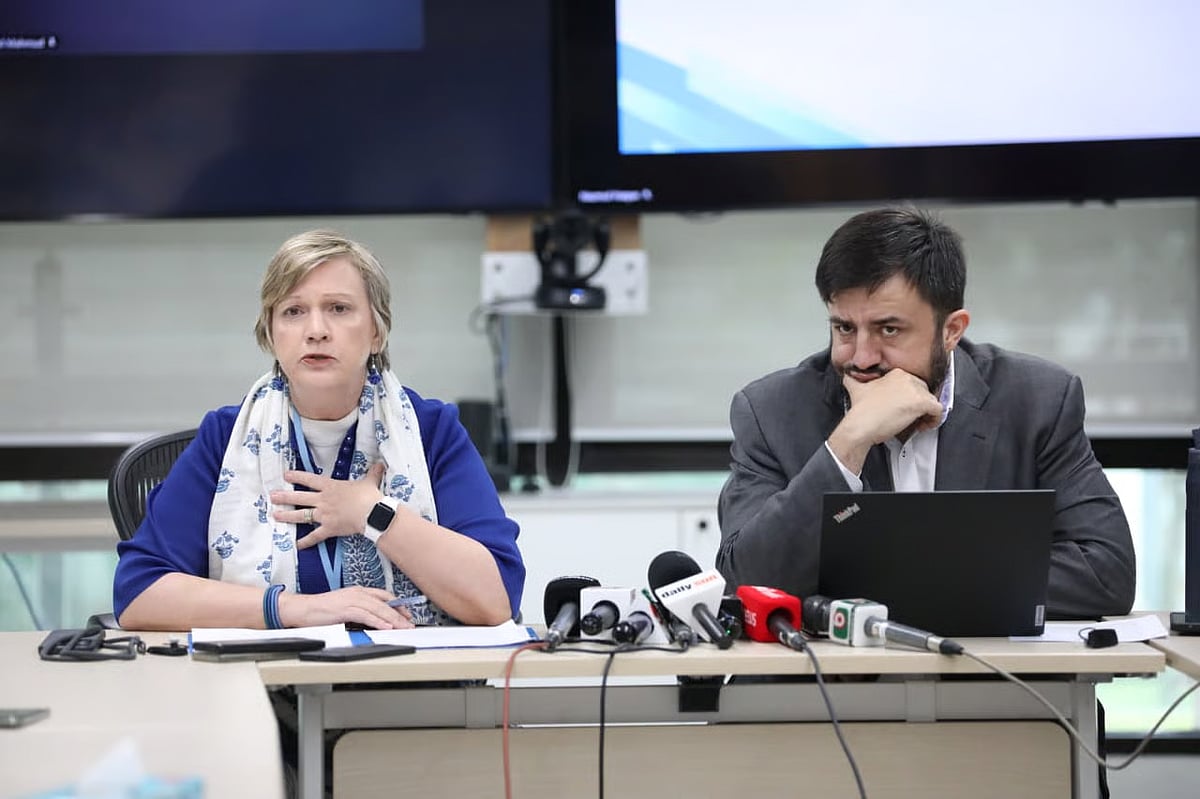
UNICEF representative
Measles: 5 letters sent to interim govt warning about vaccine shortages
UNICEF had warned the Ministry of Health in at least five letters during the interim government period about a possible vaccine shortage and also conveyed the same message to government officials in 10 meetings.
UNICEF believes that changes in the vaccine procurement process by the interim government led to delays in vaccine arrivals in the country.
UNICEF Representative Rana Flowers said this at a press conference held at the UNICEF office on Wednesday afternoon.
She said, “The good news is that more than 18 million children have received measles vaccines. Measles is under control.”
During the press conference, which lasted more than two hours, Rana Flowers spoke about the causes of the vaccine shortage, what UNICEF has done to address it, and how to prevent such a crisis in the future.
She repeatedly said that child deaths from measles are tragic.
Rana Flowers welcomed the government’s initiative to investigate the vaccine shortage and deaths from measles. In response to a journalist’s question on whether UNICEF would assist in the investigation, the UNICEF representative said, “UNICEF always stands for the truth.”
Addressing journalists, Rana Flowers said that the government can procure vaccines through an open tender process if it wishes. However, it must be remembered that maintaining vaccine stock is essential. She added that procurement through open tender takes about a year, while vaccines can be obtained more quickly through UNICEF.
More than 60,000 people in the country have been infected with measles this year, most of them children. So far, 475 people have died from this serious viral disease. Such a high number of measles deaths has never been recorded in Bangladesh before. In the past two and a half decades, measles cases in the country had never exceeded 50,000.
The highest number of cases was recorded in 2005, with 25,934 patients. Since then, cases declined. In 2025, only 132 cases were detected. In the previous five years (2020 to 2024), the number of cases was 2,410, 203, 311, 281, and 247 respectively, with no deaths during that period.
The outbreak of measles in the country began in January this year. Analysts believe that negligence in vaccination during the interim government period is responsible for this severe outbreak.
Earlier, UNICEF’s acting Bangladesh representative Stanley Gwavuya told Prothom Alo in an interview that UNICEF had warned the interim government about measles.