Government official Hasan Murtaza uses a hybrid Nissan X-Trail. He regularly buys octane from two filling stations in Savar and Aminbazar. Previously, his car would give a mileage of 8–9 kilometers per liter. Over the past two months, that has dropped to 5–6 kilometers. He gets his car serviced regularly and no faults have been found — yet the mileage keeps falling.
Mileage refers to the distance a car or motorcycle can travel using one liter of fuel. Experts say mileage may vary depending on the type of vehicle. However, a sudden drop in mileage for the same vehicle usually indicates either a mechanical fault or poor fuel quality. Adulterated and low-grade fuel has become more common in the market, causing vehicles to run shorter distances on the same amount of fuel.
Fakhre Alam, who works for a private company in Noakhali, has driven his motorcycle about 25,000 kilometers. Rust has developed in the bike’s fuel tank, creating holes, and the carburetor has been damaged. According to mechanics, this happened because of adulterated fuel.
Md Sumon, a motorcycle mechanic in Maijdee, Noakhali, told Prothom Alo that fuel tank and carburetor problems have become the main issues for bikes these days. Many new bikes are developing tank leaks after only a short period of use — something unheard of before. Suman suspects that chemicals are being mixed with fuel sold in the market, causing this damage.
Adulteration and theft at depots
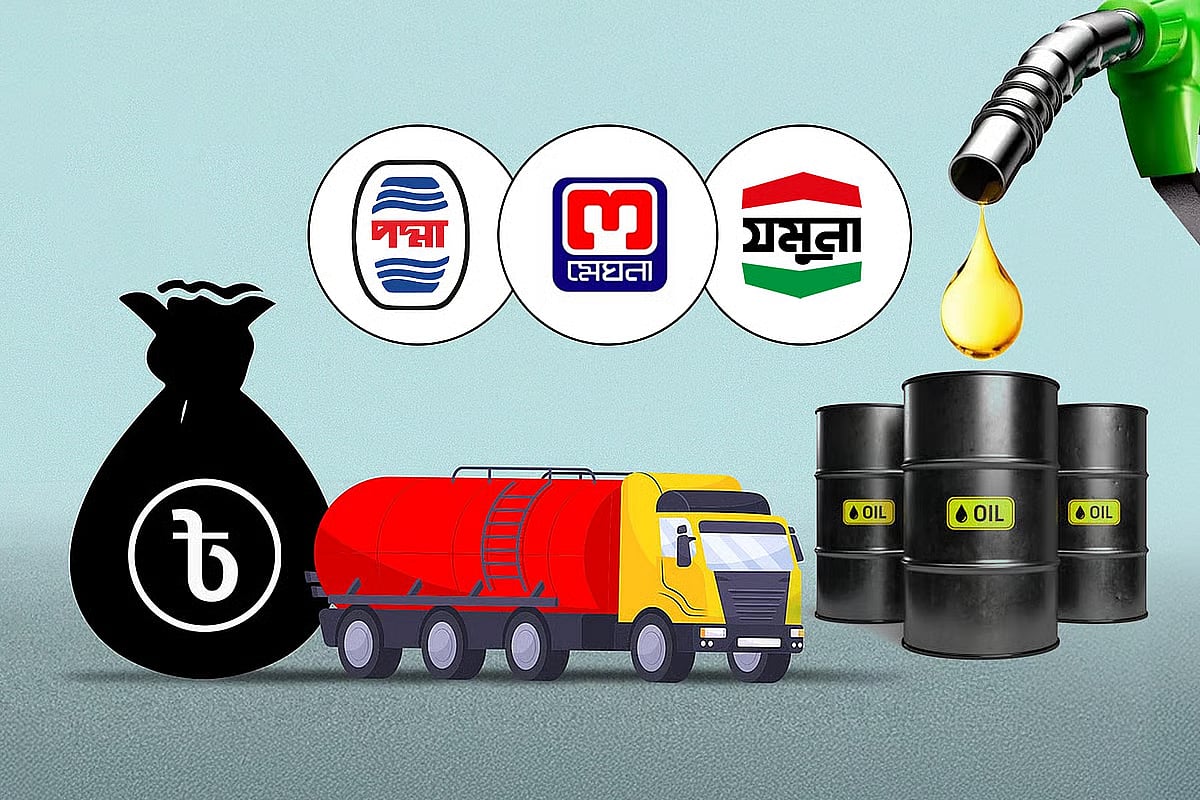
The Bangladesh Petroleum Corporation (BPC) is the country’s sole state agency for fuel supply. In addition to imports, it collects oil from public and private refineries and gas-field plants. The oil is then distributed through three state-owned companies under BPC — Padma, Meghna, and Jamuna. Together, these companies operate 47 depots across the country.
However, allegations have surfaced that some depots are mixing adulterants with fuel and stealing a portion of it. There are also claims that the fuel theft rings collect low-quality oil from private refineries.
Sajed Rahman from Jashore said he used to travel 150 kilometers within the city on 4.2 liters of octane bought for Tk 500. Now, he can travel only 120-130 kilometers on the same amount of fuel.
Mohammad Nazmul Haque, president of a faction of the Bangladesh Petrol Pump Owners’ Association, said members have repeatedly complained about adulterated fuel. These complaints have been reported to BPC. There was a plan to introduce quality testing at depots ten years ago, but it was never implemented.
Customers raising complaints
Sources at fuel companies say fuel theft has long existed in the sector — often disguised as “evaporation loss” due to temperature or “operational loss.” But recently, thieves have started mixing adulterants with petrol and octane. This trend has intensified over the past year. Cheaper adulterated fuel is brought into depots and mixed with regular fuel.
Customers have lodged complaints about adulterated fuel. While authorities occasionally fine filling stations after conducting raids, the depot-level adulteration business continues unchecked. Some tanker and pump owners are reportedly involved in collecting adulterated fuel from depots.
The Bangladesh Standards and Testing Institution (BSTI) occasionally inspects petrol stations, fining them for short-measuring fuel. However, BSTI does not test fuel quality. According to pump owners, BSTI lacks the necessary modern equipment to test fuel quality.
BSTI director Md Saiful Islam said if low-quality fuel is detected in samples collected from petrol stations, show-cause notices are issued. The stations then claim they collected the fuel from depots. But depots are not tested because none of the three fuel companies have obtained BSTI licenses — even though such licenses are mandatory.
Fuel tanks developing rust
On 12 October, the Bangladesh Petroleum Dealers, Distributors, Agents and Petrol Pump Owners’ Association sent a letter to BPC complaining about poor-quality fuel collected from depots. The letter stated that the three fuel companies’ product quality varies, and the low quality of petrol and octane is causing rust and corrosion in vehicle fuel tanks — as well as in the storage tanks at pumps. The changes in color and density are also making it difficult to dispense fuel accurately.
Association president Syed Sajjadul Karim said that BSTI fines pumps but never inspects depots, even though thin, poor-quality fuel is being supplied from there. The quality issue has persisted for a year now.
Earlier, on 1 September, the Bangladesh Fuel Distributors Association also wrote to Padma Oil Company complaining of low-quality fuel. It said petrol and octane from Padma’s Daulatpur depot in Khulna had a strong, pungent odor, and motorcycles were not getting proper mileage.
BPC chairman Aminul Ahsan said that fuels are supplied meeting BSTI standards. Adulteration may occur somewhere along the distribution chain. Regular raids are being conducted at petrol pumps and monitoring at depots have been tightened. No one will be spared.
Energy adviser to the Consumers Association of Bangladesh (CAB), M Shamsul Alam, said the supply of low-grade adulterated fuel amounts to “mocking the public and consumers” by the government.