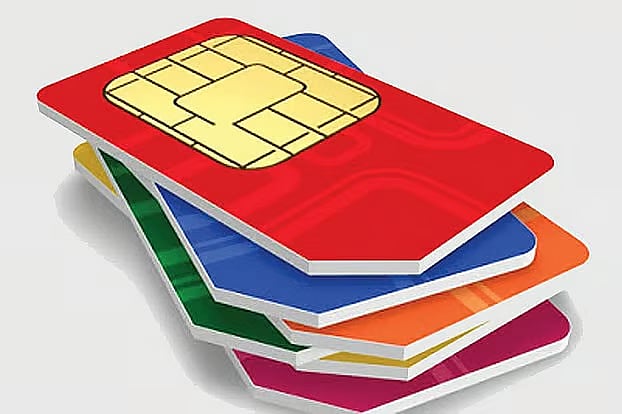
The mobile SIM card had been working for many years. Suddenly, there was no network. Visiting a customer care centre, Sharmila Moon, a student at a public university in the capital, learned that the SIM registered in her father’s name had been disconnected.
The customer service centre informed her that the reason was that more than ten SIMs were registered in her father’s name. Consequently, this SIM had been deactivated. As her father had passed away, ownership could not be transferred, and there was no immediate solution. As a result, the SIM became unusable.
Development worker Sumana Akter faced a different issue. Being physically disabled, her fingerprint did not register clearly on the biometric system. A few years ago, while attempting to register a SIM in her own name, she encountered difficulties, being sent from one department to another. Eventually, she obtained a no-objection certificate from the Election Commission (EC) and completed the SIM registration.
The three complications are—transfer of SIM to a nominee when the main customer is abroad; SIM issuance when the elderly or a sick person’s fingerprint does not match; and transfer of SIM to a legitimate heir after the customer’s death.
Like Sharmila and Sumana, many customers face similar complications with biometric SIM registration. Considering such situations, the Bangladesh Telecommunication Regulatory Commission (BTRC) has decided that SIMs will be issued through a ‘special procedure’ in three types of biometric complications. This decision was made at the commission’s most recent meeting on 31 March.
The three complications are—transfer of SIM to a nominee when the main customer is abroad; SIM issuance when the elderly or a sick person’s fingerprint does not match; and transfer of SIM to a legitimate heir after the customer’s death.
A BTRC Systems and Services Division official, speaking to Prothom Alo on condition of anonymity, said that from now on, affected customers can obtain SIMs in these cases by presenting the required documents.
Previously, when customers reported such problems, we would resolve them. Now, the process has been formalised in guidelines. This decision has been taken to reduce customers’ hassles.Major General (Retd) Md Emdad Ul Bari, chairman, BTRC
According to BTRC sources, previously there were no specific guidelines to address such issues, and each application had to be resolved individually considering humanitarian and urgent needs.
In the past year, the BTRC approved 88 such requests from four mobile operators. Of these, 51 were SIM replacements, eight were new registrations, and 29 were ownership transfers, stated BTRC sources. It was observed that operators’ capacity to resolve such complications independently was limited, and in many cases direct approval from BTRC was necessary.
Previously, when customers faced such problems, they applied to the mobile operator, which forwarded the request to the commission. In many cases, customers could also apply directly to the commission.
In the past year, the BTRC approved 88 such requests from four mobile operators. Of these, 51 were SIM replacements, eight were new registrations, and 29 were ownership transfers, stated BTRC sources.
Required documents
BTRC says that if the main customer is abroad, the following are required to reissue the SIM: copies of passport and visa, employment permit, national identity card, and the ID of the person receiving the SIM on behalf of the customer.
After document verification, approval for reissue will be granted after contacting the main customer on a video call.
In cases of fingerprint issues, a national identity card and certification from the medical board will be required.
If the customer has passed away, their national identity card, death certificate, inheritance certificate, and ID of the legitimate heir must be presented to apply for SIM transfer.
BTRC chairman Major General (Retd) Md Emdad Ul Bari told Prothom Alo, “Previously, when customers reported such problems, we would resolve them. Now, the process has been formalised in guidelines. This decision has been taken to reduce customers’ hassles.”