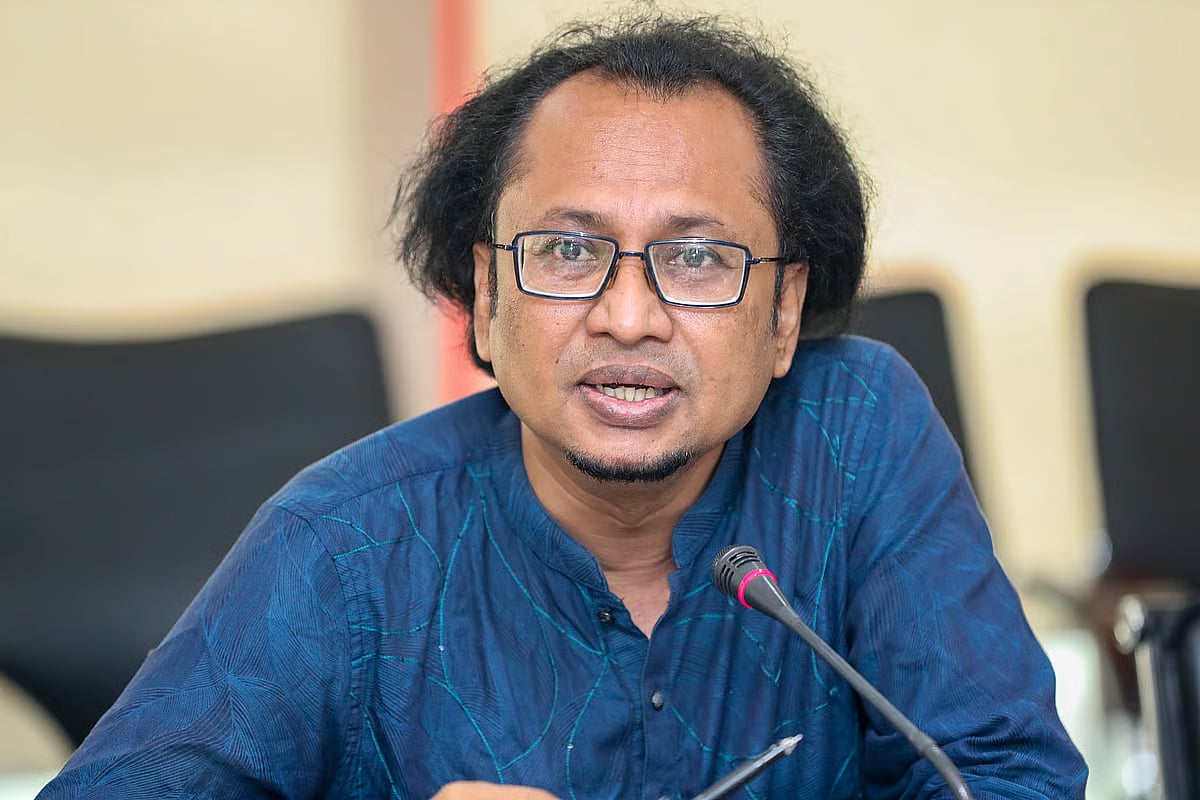
Militants exist in country, govt will work to reduce it to zero: PM’s Info Adviser
Prime Minister’s Information Adviser Zahed Ur Rahman has said militant elements do exist in Bangladesh and that the government will work to reduce militant activity to zero.
He made the remarks at the Secretariat while speaking about progress in various government activities, in response to a journalist’s question on Tuesday.
A journalist referred to earlier warnings about possible militant attacks on key installations, renewed concerns raised two days ago, and the subsequent tightening of security around airports announced on Monday.
The journalist also noted that key figures in the interim government had at various times said there was no militancy in the country in the real sense, and asked whether the government genuinely believed there was no militant activity in Bangladesh and how much information it possessed on the matter.
In response, Zahed Ur Rahman said, “First of all, we cannot disclose how much information the government has. This is sensitive information and it will remain confidential. But what the government has already said is a fact—there are militants in Bangladesh.”
He said both the narrative promoted during the Awami League government and some of the statements made during the interim government represented “extremes”.
Explaining this, he said the Awami League government had portrayed the militancy problem at an exaggerated level and used it as part of a political narrative to justify remaining in power—suggesting militants would take over the country and therefore questions about elections were secondary. “From that standpoint, militancy was overstated during that period,” he said.
He added that some attempts during the interim government to claim there was no militancy in Bangladesh represented the opposite extreme and were equally mistaken. “That too is another extreme. That is also wrong,” he said.
Zahed Ur Rahman said, “Bangladesh had militancy at one stage, and it still exists. We want to combat it. This latest alert suggests some degree of risk has emerged. Over the one and a half years of the interim government, we have observed a tendency among people of this persuasion to become more organised, more public, and more open in their activities. This is partly the impact of that. We want to make clear that this government will combat these tendencies.”
He added that the public should not be alarmed, saying the risk was not of such a nature as to warrant fear. “But as the old saying goes, if we do not acknowledge a crisis or a disease, it cannot be treated. We will try to bring this down to absolutely zero,” he said.