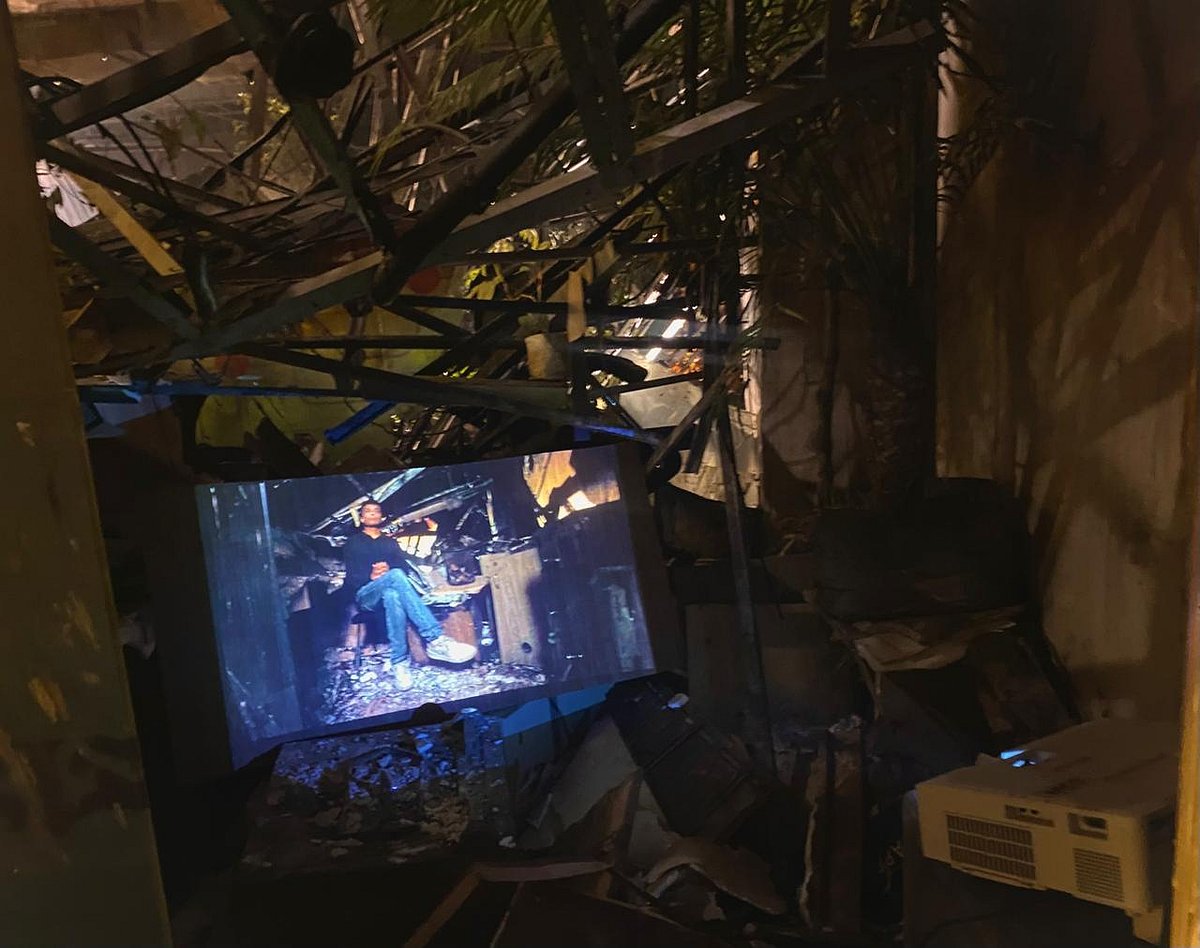
Exhibition 'Alo'
Confronting darkness through the light of art
It takes immense courage to keep looking at painful realities instead of turning away toward comfort. Art does not seek quick conclusions or soothing resolutions. It allows vulnerability and uncertainty to exist.
What artists do require is extraordinary courage. The suffocating realities we often cannot stand with bare eyes appear through their works of art. Artists observe with piercing attention and allow themselves to absorb the sorrow, violence, and contradictions of their time. They allow themselves to be bruised by reality and then translate that discomfort into art which others can encounter.
As I walked through the exhibition inside the burned building of Prothom Alo, curated by artist Mahbubur Rahman, these reflections began to surface.
The day progressive institutions in Bangladesh were vandalised and set on fire felt like one of the longest and darkest nights in the history of independent Bangladesh. Even before that, many cultural icons, sculptures, museums, and shrines had been desecrated, attacked, burned, and vandalised by the same extremist groups.
After the blaze, the storm of destruction, when we feel helpless, when it feels like we are drowning in darkness, when everything seems to be ending, art becomes a form through which we begin to acknowledge and process what has happened. It slowly guides us back toward light.
Standing inside the building, still marked by fire and destruction, the stifling air, thick with the smell of burning and ashes, the reality of that moment felt difficult to process. The exhibition did not attempt to hide the devastation. Instead, it invited viewers to stand before it, to acknowledge the ruins, and the memories attached to the burned and destroyed objects. By confronting the aftermath of destruction, it allows viewers to acknowledge the trauma rather than suppress it.
One of my favourite lines comes from Serbian conceptual and performance artist Marina Abramović: “Art comes from life, not from the studio.” Standing inside that burned building, those words felt especially true. Art emerges from lived experience—from the wounds, the histories, and the realities we inhabit. Artists simply transform life into forms that allow the rest of us to see, feel, and confront it.
* Fahmida Alam is an artist, student, MFA 1st part, Department of Drawing and Painting, Dhaka University