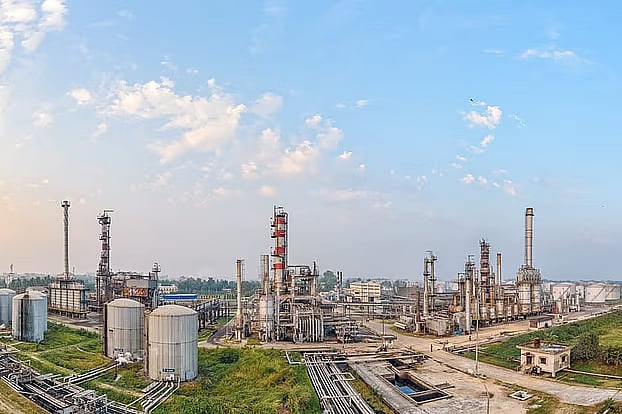
Oil refining resumes at Eastern Refinery, production to increase gradually
After remaining shut for nearly a month, the country’s only state-owned oil refinery, Eastern Refinery PLC, is set to resume crude oil refining operations. The process is restarting after a vessel carrying 100,000 tonnes of crude oil from Saudi Arabia arrived at Chattogram port. Officials concerned said production would gradually increase from Friday morning.
According to refinery sources, crude oil shipments failed to arrive on schedule from early March due to the war situation in the Middle East and uncertainty surrounding the Strait of Hormuz.
Shipments that were supposed to come from Saudi Arabia’s Ras Tanura port and the United Arab Emirates’ Jebel Dhanna port were delayed. As a result, refinery reserves declined rapidly. Eventually, the main refining operation was completely shut down after 12 April.
During this period, limited production continued on a very small scale. Around 50 to 100 tonnes of petrol and bitumen were being produced daily, creating supply pressure in the market compared with demand.
The arrival of the new shipment has started to ease the situation. A vessel carrying 100,000 tonnes of crude oil from Saudi Arabia has reached the port. After unloading, the refinery is restarting the crude oil distillation unit from today, which is the first stage of the refining process. Authorities plan to gradually bring other units back into full-scale operation.
Managing director of the refinery Md Sharif Hasnat told Prothom Alo, “Refining operations are beginning from this morning. Production will be increased gradually. We hope production of all types of products can resume by the end of the day.”
Officials said the refinery can process a maximum of around 4,500 tonnes of crude oil per day. At full capacity, it can produce approximately 1,800 to 2,000 tonnes of diesel daily. In addition, it can produce 200 tonnes of petrol, around 1,500 tonnes of furnace oil, nearly 200 tonnes of bitumen, and 400 to 600 tonnes of naphtha. The ratio may vary depending on the type of crude oil and market demand.
Located in Patenga, Chattogram, the refinery mainly processes Saudi Arabia’s Arabian Light Crude Oil and the UAE’s Marban Crude Oil. It produces 13 types of petroleum products, including diesel, petrol, furnace oil and bitumen.
Refinery sources said the plant had nearly 150,000 tonnes of crude oil in stock before the war-related disruptions began. As fresh shipments failed to arrive, reserves gradually declined and were almost exhausted by the middle of last month. However, officials claimed the impact remained limited because the refinery supplies only around 20 per cent of the country’s fuel demand.
Officials at Bangladesh Petroleum Corporation said the country’s fuel supply is now heavily dependent on directly imported refined petroleum products.
In the last fiscal year, around 76 per cent of total imported fuel consisted of refined oil. As a result, any fluctuation in international prices or disruption in supply quickly increases both costs and risks. In effect, Bangladesh’s fuel sector has become largely dependent on imported refined petroleum.
Call for Diversifying Sources
People associated with the energy sector said the recent situation once again highlighted Bangladesh’s heavy dependence on only a few sources for crude oil imports. Any conflict in the Middle East or instability in the Strait of Hormuz quickly puts the supply system at risk.
As a result, the need for alternative sources, larger storage facilities and speedy implementation of the second refinery project has once again come to the forefront. At present, the company can store only 225,000 tonnes of crude oil.
After the Iran war began, Eastern Refinery authorities started searching for alternative sources. Initially, after examining the characteristics of crude oil from different countries, the refinery identified oils from four countries as suitable for refining in Bangladesh. These countries are Nigeria, Malaysia, Norway and Algeria. Tests showed that Nigeria’s Bonny Crude, Malaysian Blend, Norway’s Alvheim Blend and Algerian Crude are compatible with the existing refining process.
A report on the matter has already been sent to Bangladesh Petroleum Corporation (BPC). Although a process to import 100,000 tonnes of oil from Malaysia was initiated, the shipment has not yet arrived.
Energy adviser to the Consumers Association of Bangladesh (CAB) M Shamsul Alam told Prothom Alo that Bangladesh remains excessively dependent on only two sources for crude oil imports.
As a result, even minor instability in the Middle East disrupts supply, pushing production to critically low levels. Ultimately, consumers bear the burden. He said Bangladesh urgently needs to identify alternative sources, move toward long-term and diversified supply agreements, and increase strategic storage capacity. Otherwise, similar crises may emerge again in the future.