Energy Sector
Gas supply crunch persists, households pushed to costly alternatives
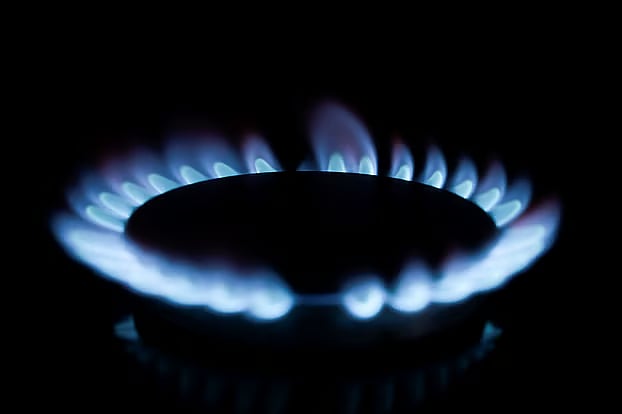
A supply crisis of liquefied petroleum gas (LPG) has been continuing in the market for more than three weeks. Prices have doubled, yet LPG is still not available according to demand. Compounding the problem is a shortage of piped natural gas.
Many households, unable to get adequate gas supply through their pipelines, are rushing to buy LPG cylinders. However, they are not getting cylinders at the government-fixed price.
Stakeholders say gas supply through pipelines may increase from today, Sunday. However, it will take more time for the LPG supply to return to normal.
City residents use two types of gas for cooking—piped natural gas and LPG cylinders.
With shortages affecting both, cooking-related hardship for urban households shows no sign of easing. Some residents are trying to cope by purchasing electric stoves.
Taking advantage of the situation, prices of electric stoves have also gone up in the market. Consumers are regularly sharing their frustrations on social media.
There is a Facebook group called “We, the People of Mohammadpur,” where local residents have been posting about gas shortages for weeks. On Saturday, Mohammadpur resident Robin Hasan wrote, “After paying Tk 1,080 in monthly gas bills, I still had to buy an LPG cylinder for Tk 2,500. There’s no one to see our suffering!”
Another resident from Mohammadpur, a housewife, Shaila Sharmin, said she bought a 12-kg cylinder for Tk 2,000. Sharmin Akter claimed she had to pay Tk 2,200 for a 12-kg cylinder, while another customer, Shamima Sultana, said she paid Tk 2,550 for the same amount.
More than 10 million people in the country use LPG.
To avoid shortages ahead of the national election and the holy month of Ramadan, the Ministry of Power, Energy and Mineral Resources instructed last week that LPG imports be increased. Twelve LPG companies have pledged to bring in additional imports.
Average monthly demand stands at 150,000 to 160,000 tonnes. Import commitments for January are 167,600 tonnes, while for February they stand at 184,100 tonnes. About 80 per cent of LPG is used for cooking purposes.
Despite this, LPG supply in the market had not increased even by late January. Rawnak Jahan, a resident of Shyamoli in the capital, told Prothom Alo on Saturday that her LPG supply ran out at the beginning of the month.
She is now cooking with an electric stove, which takes longer since she can use only one burner. She said LPG cylinders are unavailable, and even when found, sellers are asking Tk 2,200. She is waiting for supply to improve.
Describing another incident, Suraiya Sejuti, a resident of Shewrapara in Mirpur, said her LPG ran out suddenly in the middle of cooking lunch. There was no LPG available at nearby shops. After riding a rickshaw around the area, she finally found one shop selling a 12-kg cylinder for Tk 2,250—despite the government-fixed price being Tk 1,306.
LPG importers say demand increases during winter. At the same time, geopolitical instability in the Middle East has caused shortages in the global LPG market. Even when LPG is available, ships for transportation are difficult to secure.
Importers say they are searching for new sources. The state-owned Bangladesh Petroleum Corporation (BPC) is also trying to import LPG. Once imports increase, supply constraints may ease.
In Dhaka and surrounding districts, piped gas is supplied by the state-owned company Titas Gas. The company has 2.778 million customers, of whom 2.758 million are residential users.
According to Titas sources, daily demand exceeds 1.8 billion cubic feet, while supply ranges between 1.55 and 1.6 billion cubic feet. On Saturday, supply dropped by another 100 million cubic feet to 1.45 billion cubic feet.
As a result, customers in many areas of Dhaka are not receiving gas at their stoves.
Petrobangla, the Bangladesh Oil, Gas and Mineral Corporation, says national daily gas demand stands at 3.8 billion cubic feet.
For several days, supply has been limited to around 2.6 billion cubic feet. Of this, approximately 850 million cubic feet had been coming from imported liquefied natural gas (LNG).
LNG is supplied to the national gas grid through two floating terminals at Moheshkhali in Cox’s Bazar. Due to maintenance work, gas supply from one terminal was shut down on Saturday, reducing LNG supply to 580 million cubic feet. The terminal was shut at 6:00 am and gas supply resumed around 7:45 pm. However, supply will increase gradually.
Apologising to customers, Titas Gas authorities said on Friday that maintenance work would continue from Saturday noon to Sunday noon. During this time, LNG supply to the national grid would remain reduced, resulting in lower-than-normal gas pressure for residential, commercial, industrial, and power-sector customers under Titas Gas.