13th parliamentary election
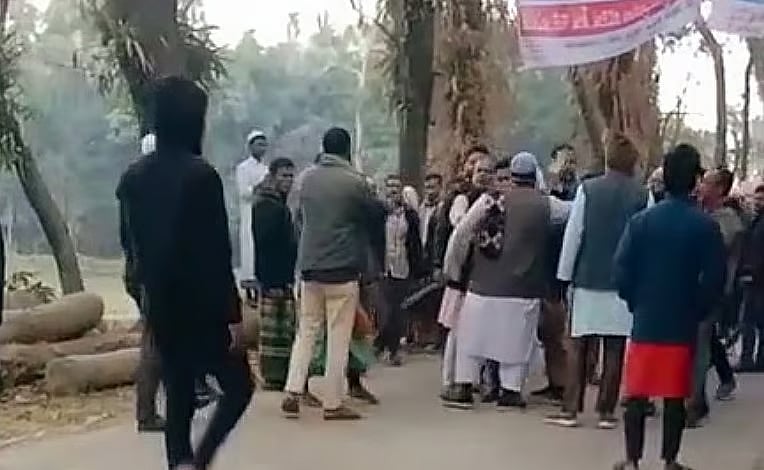
237 incidents of ‘violence’ since schedule announcement
In the 60 days since the announcement of the schedule for the 13th national parliamentary election and referendum, 237 “violent” incidents have occurred, leaving 17 people dead.
The government, however, claims that only five of these deaths can be directly described as politically related. A total of 1,109 people have been injured.
Political violence during elections is not new in Bangladesh. According to Police Headquarters data, between 2001 and 2024, across five national parliamentary elections, 89 people were killed in violence from the day the schedule was announced until four days after polling. A total of 2,651 people were injured.
The highest level of violence occurred during the 2014 tenth parliamentary election, when 53 people died between 25 November, 2013, and 9 January, 2014.
Police records show the lowest level of violence occurred in 2008, when one person was killed and four injured. In that case, however, police statistics covered 2 November to 22 December, while polling was held on 29 December, 2008.
During the five elections from 2001 to 2024, four police personnel were killed (in 2014) and 1,006 were injured during the same monitoring period.
Police data indicate that 200 violent incidents occurred between the schedule announcement on 12 December and 28 January. Analysis of news reports published in Prothom Alo identified an additional 37 incidents through 9 February.
A police report broadly defines violent incidents as attacks on candidates and activists, threats and intimidation, use of illegal weapons, clashes between rival supporters, obstruction of campaign activities, attacks, vandalism and arson targeting election-related offices, and assaults on minority communities.
According to compiled figures from the human rights organization Human Rights Support Society (HRSS), 162 clashes between political parties occurred between the schedule announcement and 31 January, resulting in five deaths. Among those killed were Shaheed Sharif Osman Hadi, convenor of Inqilab Moncho, three BNP members, and one Jamaat-e-Islami member. A total of 970 people were injured.
Separately, based on media reports published in Prothom Alo, 139 more people were injured in violent incidents between 1 February and 9 February, bringing the overall number of injured to 1,109.
Most recently, from late Sunday night to Monday afternoon, candidates and their supporters in five districts alleged attacks by rivals, including crude bomb explosions at homes, arson at offices, and assaults on vehicle convoys.
At least 10 people were injured in these incidents. Among them was an attack on the convoy of independent candidate Shihab Ahmed in the Lalmonirhat-1 constituency, injuring three people on Sunday night.
Additional Inspector General of Police (Crime and Operations) Khondkar Rafiqul Islam told Prothom Alo that some clashes occurred over local dominance. However, he said, the situation was not as severe as in past one-sided elections. He described each incident of violence as undesirable but noted that not all were election-related; some stemmed from local disputes. He added that police are working to prevent further violence in the coming days.
Voting in the 13th national parliamentary election will take place on 12 February, with campaigning set to end at 7:30 am Tuesday. Candidates formally began campaigning on 22 January.
Ahead of the election and referendum, the activities of law enforcement agencies, including the military, have intensified. Security forces will remain specially deployed until 14 February.
Joint forces have already stepped up operations to recover illegal weapons. Approximately 900,000 personnel from various agencies will be deployed to maintain law and order during the election.
According to Police Headquarters, 5,763 weapons were looted during the July mass uprising. Of these, 4,432 have been recovered, leaving 1,330 still unaccounted for.
Killings
The day after the election schedule was announced, Sharif Osman Hadi, convenor of Inqilab Moncho, was shot dead publicly in the capital on 12 December. Police claim that the main accused in the case, banned Chhatra League leader Faisal Karim Masud, fled to India.
On 7 January, Azizur Rahman (alias Musabbir), former general secretary of the Dhaka North unit of the BNP affiliate Swechchhasebak Dal, was shot dead in Tejgaon’s Tejturi Bazar area. Police say the killing stemmed from dominance-related disputes.
Hasan Molla (42), general secretary of the BNP unit in Hazratpur Union, Keraniganj, died in a Dhaka hospital on 24 January, two days after being shot. On 29 January, Rezaul Karim, secretary of Jamaat-e-Islami in Sherpur’s Sreebardi upazila, was killed in clashes between BNP and Jamaat activists in Jhenaigati.
Media analysis indicates that among those killed since the schedule announcement, apart from Hadi, 13 were BNP members, two were Jamaat-e-Islami members, and one was a leader of the banned Jubo League. Seven were shot dead, five were killed with sharp weapons, and the remaining five were murdered through stabbing or strangulation.
Commenting on election violence, Badiul Alam Majumdar, secretary of the civil society group Shujan (Citizens for Good Governance), told Prothom Alo that everyone wants to become a member of parliament at any cost. He said violence in elections stems from political culture, adding that the lack of democratic values, tolerance, and mutual respect contributes to frequent violence during elections.