Dhaka city hawker policy
Hawkers barred from doing business in crowded areas during the day
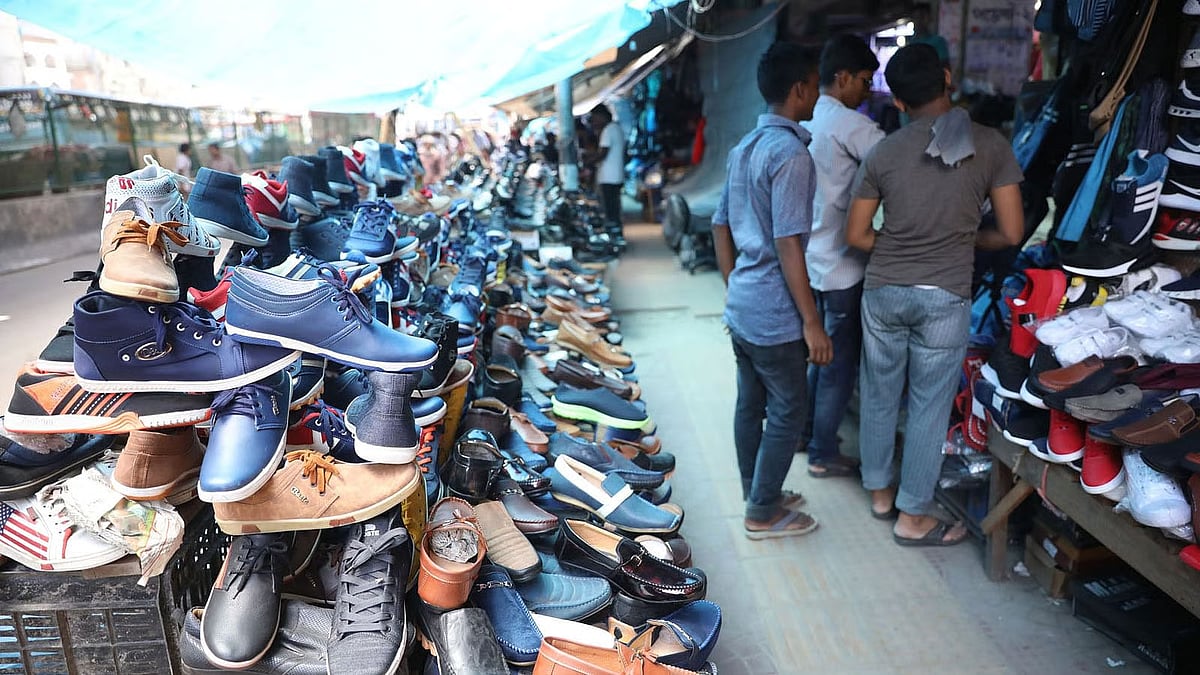
Following long-standing criticism over the occupation of pavements and roads, traffic congestion, obstruction to pedestrian movement, and the unregulated activities of hawkers in the capital, the government has introduced the “Dhaka city hawker management policy–2026”.
Issued by the Local Government Division, the policy, for the first time, establishes a detailed framework for hawker registration, business operations in designated areas, holiday and night markets, licence fees and administrative supervision.
According to the policy, hawkers will not be permitted to operate during daytime in densely populated and busy areas of Dhaka.
In areas where public movement declines after office hours, night markets may operate from the evening until 10:00 pm.
The policy states that its primary objectives are “to ensure the safe movement of pedestrians, improve the living standards of hawkers, create employment opportunities, build a cleaner city, and identify designated areas for hawker activities”.
In the introduction to the policy, the government states that the long-standing unregulated operation of hawkers in Dhaka has disrupted pedestrian movement, intensified traffic congestion, and created disorder in urban management.
At the same time, as a large number of low-income people depend on this sector for their livelihood, the authorities considered it necessary to bring the entire matter under an integrated framework.
No business without registration
Under the policy, the city corporations will establish a “Hawker management committee”. Through this committee, hawkers will receive registration along with digital identity cards for a specified period.
The policy states that the registration process must be completed within one month of application.
Applicants for registration must be at least 18 years old and citizens of Bangladesh. Registration will remain valid for a fixed term and must be renewed upon expiry through payment of the prescribed fee.
Hawkers will have to provide information in a designated form, including their name, address, date of birth, educational qualifications, the type of goods they intend to sell, the area in which they will operate, and the number of family members.
The policy also sets out several clear criteria for determining hawker locations. Hawkers will not be allowed to operate beside major roads and important connecting roads.
Hawker zones must be located 30 to 40 feet away from metro stations, bus stops, or major intersections. In addition, areas allocated for hawkers must leave five to eight feet of unobstructed space for pedestrian movement.
The entire pavement may not be occupied. The policy also instructs authorities to reserve spaces for women and persons with disabilities.
Registration and designated operating areas for hawkers.
Night markets in densely populated and busy areas from the evening until 10:00 pm.
Applicants for registration must be at least 18 years old.
“Holiday markets” and “Night markets” in designated areas on government holidays, Fridays and Saturdays.
Under the policy, the city corporations will establish a “Hawker management committee”. Through this committee, hawkers will receive registration along with digital identity cards for a specified period. The policy states that the registration process must be completed within one month of application.
Concept of holiday markets
The policy allows the introduction of “Holiday markets” in designated areas on government holidays, Fridays, and Saturdays. These markets may operate from 9:00 am to 5:00 pm.
Authorities may permit such markets on roads in front of government offices, near educational institutions, or in special areas designated by the city corporations.
According to the policy, Holiday markets will primarily focus on family-oriented shopping. In addition to food stalls, organisers may also arrange entertainment facilities for children.
The policy also provides for the establishment of “Night markets” in areas that experience severe traffic congestion during the daytime but where public pressure decreases at night.
These markets may operate from 6:00 pm after office hours until 10:00 pm. However, the policy clearly states that no market may be established on playgrounds, school fields, public parks, the grounds of places of worship, or graveyards.
In this regard, the policy specifies that such markets may operate from 6:00 pm to 10:00 pm after office hours in densely populated areas such as Mirpur, Gulistan, New Market, Sadarghat, and Baitul Mukarram.
The policy states that only one person from a family will qualify for a licence or allocation.
No person other than the registered individual may use the allocated space. The licence holder may not rent out or transfer the allocated spot to another person.
Hawkers must conclude their business activities within the specified hours, and authorities may take action against anyone operating beyond the approved schedule.
Hawkers may not conduct business in a way that blocks road entrances or exits.
In addition, anyone selling food products must provide hygienic food. Vendors must also dispose of waste in designated bins to maintain environmental cleanliness.
No market may be established on playgrounds, school fields, public parks, the grounds of places of worship, or graveyards.
Authorities may cancel registration if a hawker damages any government or private property or violates the conditions of the policy.
Registration will be cancelled if the licence holder fails to renew the licence at least one month before its expiry.
The policy specifies that such markets may operate from 6:00 pm to 10:00 pm after office hours in densely populated areas such as Mirpur, Gulistan, New Market, Sadarghat, and Baitul Mukarram.
Action for violations
The policy states that authorities will take immediate action against illegal or unauthorised hawkers.
Authorities may also cancel registration if a hawker damages government or private property or violates the terms of the policy.
The policy further states that, where necessary in the public interest, authorities may declare any area hawker-free.
Registration will also be cancelled if the licence holder fails to renew the licence at least one month before the licence expires.
Concerns over a harmful institutional arrangement
Although Adil Muhammad Khan, executive director of the Institute for Planning and Development (IPD), described the new policy as a positive initiative, he expressed concerns regarding its practical implementation.
He said, “There has long been a need for such a policy, so the government’s initiative is undoubtedly positive. However, the way the policy attempts to balance hawker management with pedestrians’ right to use footpaths remains highly questionable. This plan conflicts with the standards of modern urban planning.”
He also believes that the policy fails to take into account differences in road sizes and the distinct characteristics of various areas.
He said that, in his opinion, hawkers currently occupy pavements in an uncontrolled manner, and if the policy institutionalises this situation, it may instead increase public suffering.
He warned that the policy could create “a dangerous institutional arrangement”.
He added that the new government should prioritise people’s right to free movement and address the hawker issue not merely as a matter of management, but from the perspective of poverty alleviation in order to achieve a permanent and humane solution.