Pilkhana massacre
Awami League organisationally involved in BDR mutiny, Taposh key coordinator: Inquiry Commission
The National Independent Inquiry Commission, formed to investigate the brutal massacre at Pilkhana, submitted its report to chief adviser professor Muhammad Yunus on Sunday.
The commission asserts that the Bangladesh Awami League (AL) was organisationally involved in the BDR killings, with former member of parliament Sheikh Fazle Noor Taposh identified as the principal coordinator.
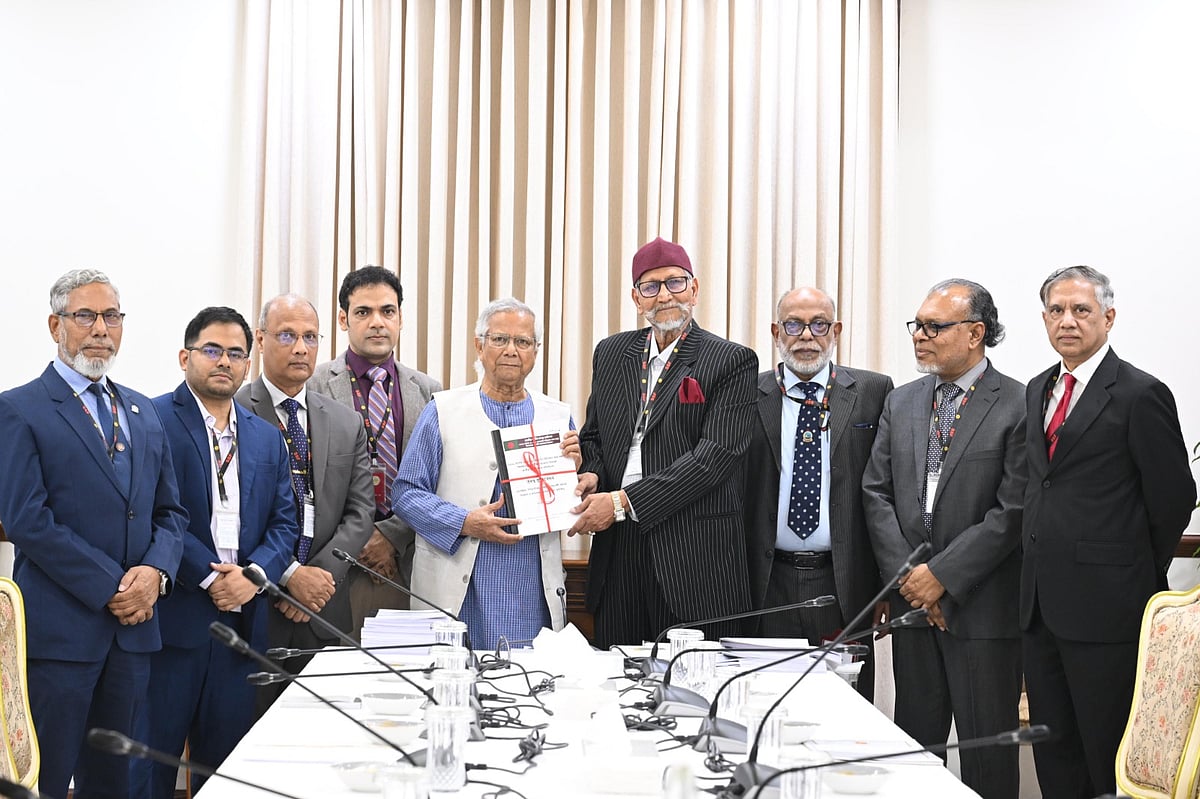
Commission chief Major General (retd.) ALM Fazlur Rahman, along with other members, handed over the report at the state guesthouse Jamuna, the official residence of the chief adviser. The chief adviser’s press wing later shared the findings through a media statement.
Fazlur Rahman said the investigation was conducted with the “highest level of professionalism” to ensure accuracy, impartiality and freedom from errors.
He noted that much of the evidence had been destroyed over the 16 years since the incident, and many individuals connected to the events had left the country.
“We followed two processes: we summoned witnesses, some of whom provided statements for as long as eight hours; and, we spoke to those involved in earlier investigations, collected their reports and examined other materials,” the Commission chief said.
He added that the commission sought answers to every unresolved question surrounding the BDR massacre, including why the army did not intervene at the time.
According to the commission, strong evidence was found of direct involvement by external actors and the then ruling party, the Bangladesh Awami League.
Commission member Major General (retd.) Md Jahangir Kabir Talukder said they identified both the visible and underlying causes of the killings. “The massacre was planned, and the key coordinating role was played by then MP Sheikh Fazle Noor Taposh,” he said.
He added that local Awami League leaders played a direct role in protecting those involved. They entered the Pilkhana with a procession of 20–25 people, which grew to over 200 by the time they exited.
Jahangir Kabir Talukder further said that the events proceeded with the ‘green signal’ of then prime minister Sheikh Hasina. Responsibility, he said, extended from the then head of government to the army chief. The incident, he added, was ultimately resolved through political means.
He also pointed to significant failures by the police, RAB (Rapid Action Battalion), and intelligence agencies.
Commission member Jahangir Kabir Talukder noted that certain print and electronic media outlets, along with some journalists, acted unprofessionally during the crisis. Additionally, the names and identities of BDR members who met Sheikh Hasina at the Jamuna state guesthouse were not properly recorded.
The commission has recommended several measures to prevent similar incidents within the armed forces in the future and to ensure justice for victims.
The chief adviser, upon receiving the report, said, “The nation has remained in the dark for long regarding the BDR massacre. Your role in uncovering the truth will be remembered. On behalf of the nation, I thank you.”
He added that the report addresses many longstanding questions surrounding one of the darkest chapters in the country’s history, and that it contains valuable lessons for the future. “This will remain as an important document for the nation.”
The commission was led by Major General (retd.) ALM Fazlur Rahman. Other members include Major General (retd.) Md Jahangir Kabir Talukder, Brigadier General (retd.) Md Saidur Rahman Bir Protik (retd.), Munshi Alauddin Al Azad, M Akbar Ali, Dhaka University associate professor of political science department Md Shariful Islam, and Jagannath University assistant professor of education and research Md Shahnewaz Khan Chandon.
Also present were national security adviser Khalilur Rahman, the chief adviser’s special assistant on defence and national solidarity Lieutenant General (retd) Abdul Hafiz, and home secretary Nasimul Gani.