Bhaluka, Mymensingh
MP’s wife eyes solar power plant on cropland
A controversy has emerged over the selection of land for a solar power plant in Bhaluka, Mymensingh. The Agriculture Department initially objected to the proposed site for the 45-megawatt plant in Habirbari Union, saying the land was agricultural. The department later issued a no-objection certificate (NOC), reportedly under pressure.
On paper, the developer of the power plant is Bhawal Engineers and Construction Limited. The company’s chairman is Taslima Akter, wife of Fakhar Uddin Ahmed, the BNP (Bangladesh Nationalist Party) lawmaker from Mymensingh-11 (Bhaluka). Locally, Bhawal Engineers and Construction is known as a company owned by the MP.
An NOC from the Agriculture Department is required to participate in a tender for establishing a solar power plant on a designated site. Taslima Akter applied to the upazila agriculture officer for an NOC to establish the plant on 173.13 acres of land in Nandipara and Jhalpaja mouzas of Bhaluka.
Three other companies had applied to establish similar projects in different areas of Bhaluka. They were Gatco Energy Limited, TS Transformer Limited and Mir Ceramic Limited.
As those three applications were deemed inadequate, the application submitted by the local MP’s wife’s company was taken up for consideration on 2 July.
Later, on 16 July, the Bhaluka upazila administration formed a committee to determine the nature of the land.
The committee was headed by the upazila agriculture officer and included the upazila fisheries officer, the Forest Department’s range officer, the member secretary of the Bangladesh Poribesh Andolon’s (BAPA) Bhaluka branch and the Habirbari Union land assistant officer.
The committee was asked to determine whether the proposed land was farmland and, if so, whether it was single-crop or double-crop land.
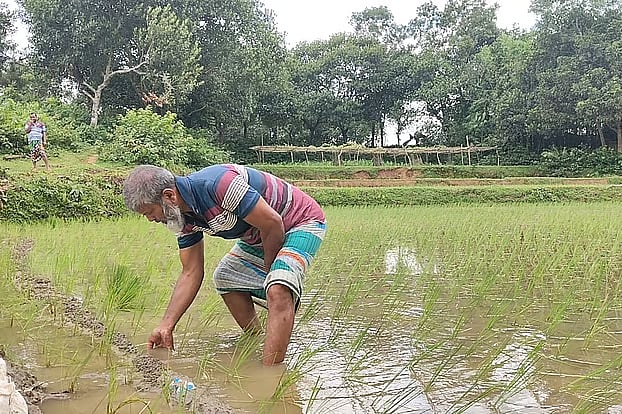
According to Agriculture Department sources, local farmers have been growing two to three crops a year on the land in Nandipara and Jhalpaja mouzas for many years. Some residential homes are also located on the land designated for the power plant.
In April, the Bangladesh Power Development Board (PDB) invited tenders for the establishment of 10 solar power plants in different parts of the country, one of which will be in Bhaluka.
The plant will have a generation capacity of 45 megawatts. The plants are expected to begin generation by January 2029 under the independent power producer (IPP) model. Following evaluation of the tenders, the plan is to award contracts to the lowest qualified bidders in December this year.
Under the IPP model, an independent company generates electricity at its own power plant and sells it to the government under a contractual arrangement.
When contacted by phone about establishing the solar power plant on agricultural land, Bhawal Engineers and Construction Limited Chairman Taslima Akter said, “Please speak to my husband about this.”
Prothom Alo spoke by phone yesterday, Tuesday, with Taslima Akter’s husband, MP Fakhar Uddin Ahmed. Denying the Agriculture Department’s information, he said a six-member committee formed by the upazila administration was inspecting the site and measuring the land using digital and Google maps. He claimed that no more than 18 per cent of the 173 acres was single-crop land.
Fakhar Uddin also denied allegations that officials were being pressured to describe farmland as non-agricultural in their report. He said, “I have never spoken to any agriculture officer or any other official about this, either by phone or in person. There is no question of putting pressure on them through my personal assistant or anyone else. If the allegation is true, evidence of it should be obtained from the concerned official.”
After the July mass uprising, Fakhar Uddin Ahmed faced allegations of attempting to take control of various industrial establishments in Bhaluka and involvement in extortion. He was subsequently expelled from the BNP.
At the time, a joint secretary general of the BNP’s central committee filed a case against him. He was discharged from the case about a year later. He subsequently won the Mymensingh-11 constituency in the 13th parliamentary election on a BNP ticket. He is now the convener of Bhaluka upazila unit BNP.
Objection at first, NOC later
A report submitted by the verification committee to the upazila nirbahi officer (UNO) on 23 July said that of the 167.84 acres of land in Nandipara and Jhalpaja mouzas, 63 acres were single-crop land.
Boro rice is cultivated there during the Rabi season. The report said construction of any kind of structure on the land would reduce Boro production.
Yet before a month had passed, an NOC was issued to Bhawal Engineers and Construction Limited on 19 August. It stated that of the proposed 173.13 acres, 141.97 acres was non-agricultural land and 31.16 acres was single-crop land. It further stated that the power plant would not have any significant adverse impact on agricultural land.
Regarding the matter, Bhaluka Upazila Agriculture Officer Nusrat Zaman told Prothom Alo that she had been pressured to certify the entire area as non-agricultural.
She said she had informed her superiors about the matter. She was told to issue the NOC because the project was a development initiative and the country was facing an electricity shortage.
She said she ultimately had to issue the NOC because of pressure from the MP’s side, the administration and officials within her own department.
Under the Land Use Control and Agricultural Land Protection Act, destruction of cropland and construction of commercial establishments on cropland are strictly prohibited. The law prohibits non-agricultural activities on land that produces two or more crops and provides for imprisonment and fines for damaging designated agricultural zones.
Mymensingh Deputy Director of the Department of Agricultural Extension Md Enamul Haque also acknowledged that the agriculture officer had been pressured by local and “higher-level” authorities to issue the NOC despite being unwilling to do so.
He told Prothom Alo that the land proposed for the solar power plant included both single-crop and double-crop agricultural land. There are around 140 acres of cultivable agricultural land there, he said.
Residents fear losing their land
Local farmers submitted a written application to the Mymensingh deputy commissioner on 9 August, demanding that the solar power plant project on agricultural land in Jhalpaja and Nandipara mouzas be stopped. They said the project was being pushed forward in violation of government directives and by forcing and harming local farmers.
Local residents were unaware that land in Nandipara and Jhalpaja had been selected for the solar power project. They learned about it when officials from the upazila administration visited the area to verify the nature of the land.
Habirbari Union is about 13 kilometres from Bhaluka upazila headquarters. Jhalpaja village is about 4.5 kilometres from the union office, while Nandipara village is about five kilometres away.
At noon on 17 August, this correspondent first went to West Jhalpaja and spoke to 10 local residents.They told Prothom Alo that they would not give up their cropland or homesteads under any circumstances.
More than 70-year-old Jhalpaja resident Sirajul Islam said, “We grow crops on this land. We grow Aman and Boro rice and vegetables.”
UNO calls for excluding agricultural land
Bhaluka UNO Md Firoz Hossain said the upazila administration was carefully examining the matter to avoid complications over the land in the future because the project is a major one.
He told Prothom Alo on 17 August that committee members had conducted site inspections and submitted their report. The applicant was asked to exclude land where a single crop is grown or fish are farmed, based on the site inspection.
The applicants later submitted a revised schedule identifying the plot numbers. About 20 acres of single-crop and fish-farming land were excluded from the revised schedule, he said.
However, Bhaluka Upazila Sub-Assistant Plant Protection Officer Md Moazzem Hossain told Prothom Alo that houses, trees and cropland are present on the land proposed for the solar power plant. Boro rice is cultivated on around 131 acres of the land, he said.
Agricultural land has been declining steadily
According to data from the Mymensingh district office of the Department of Agricultural Extension, the amount of cultivated land in Mymensingh has declined by 4,572 hectares over the past 10 years.
In the 2016–17 fiscal year, the district had 331,823 hectares of cultivated land. By 2025–26, the figure had fallen to 327,251 hectares.
Agriculture Department data show that Bhaluka has experienced the largest decline in agricultural land. Industrialisation has caused agricultural land in the area to shrink steadily. There are 198 industrial establishments in Bhaluka upazila.
According to data from the Bhaluka Upazila Agriculture Department, the upazila currently has 28,335 hectares of agricultural land. The amount has declined by 1,043 hectares over six years.
Regarding the matter, Mymensingh Deputy Director of the Department of Agricultural Extension Enamul Haque told Prothom Alo that before establishing an industrial facility, entrepreneurs seek certification from the agriculture office.
If the land is agricultural, there is no scope for issuing a certificate permitting the establishment of an industrial facility. Nevertheless, he said, officials are sometimes forced to issue NOCs because of local pressure or pressure from the relevant authorities.